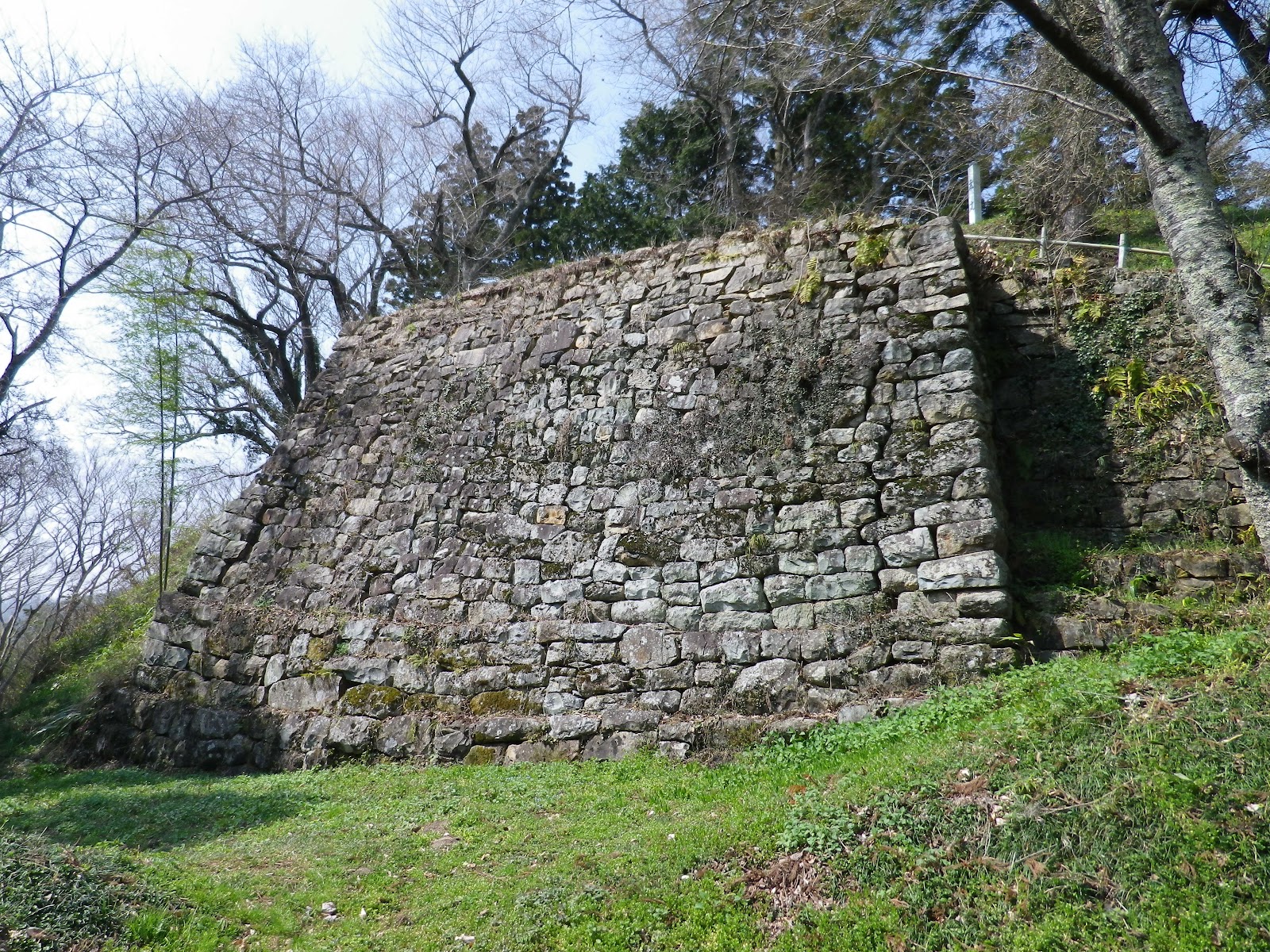
A rugged frontier mountain castle where a teenage Date Masamune saw his first battle, crowned by a striking hand-built stone rampart.
Kaneyama Castle is a mountain fortress site in the far south of Miyagi, in the town of Marumori close to the Fukushima border. It was built in 1566 as a frontier stronghold by the Soma clan, who under Soma Moritane had pushed north across the Abukuma River into the contested Kakuda basin. Kaneyama and the neighboring Marumori Castle served as bridgeheads in a long, bitter border war between the Soma and the rising Date clan, and for years the two families fought over this strategically vital corridor of terraced valleys and forested ridges.
The castle's greatest historical claim is personal. It was at the siege of Kaneyama in 1581 that a young Date Masamune, then still in his teens, is recorded as experiencing his first taste of battle, an early chapter in the career of the warlord who would go on to found Sendai. By 1584 the Soma were forced to make peace with the ascendant Date and withdraw from the Kakuda basin, ceding Kaneyama and Marumori. Under Date control the site was strengthened, and it is the Date-era masonry that draws visitors today.
The highlight is a jutting section of uchikomi-hagi ishigaki, rough-hewn interlocking stone wall, near the top of the mountain. The rectangular blocks resemble, though more coarsely worked, those used at the Date headquarters of Aoba Castle in Sendai, and the lower stones step outward at the base in a distinctive staircase form. Though all the buildings are long gone, the earthworks, cut ridges and this proud stretch of stonewall survive remarkably well on the mountain, making Kaneyama a favorite of castle enthusiasts who value authentic ruins over reconstruction.
The visiting experience is genuinely that of a mountain hike, and this is the most demanding site in the group. Trails climb through forest with uneven, sometimes muddy footing, and there is little in the way of facilities beyond a parking area and limited restrooms near the base, so bring water, sturdy shoes and a trail map. The effort is repaid by a sense of discovery and by views over the Marumori basin, especially in autumn when the surrounding hillsides and terraced fields turn gold and crimson; late spring greenery is a quieter second-best season.
Getting there takes commitment and is not covered by the Japan Rail Pass for the final stretch. From Sendai, ride the JR Tohoku Main Line south to Tsukinoki, then transfer to the private Abukuma Express Line to Marumori Station. From Marumori the trailhead lies roughly 15 minutes away by taxi or car toward the Kaneyama district, after which the climb to the ruins takes another 30 to 40 minutes on foot. Because the Abukuma Express does not accept most IC cards, carry cash for a paper ticket. Marumori is a rewarding rural detour that also offers riverside scenery and traditional townscape, so history-minded travelers may wish to make a full day of the trip.
A local's tip
The reward here is the impressive uchikomi-hagi stone wall near the summit, built by the Date and echoing the masonry of Sendai's Aoba Castle; go in autumn when the terraced hillsides glow.
Best time to visit
Autumn foliage / late spring
Getting there
From Sendai take the JR Tohoku Main Line to Tsukinoki, transfer to the Abukuma Express to Marumori Station, then taxi or drive about 15 minutes toward Kaneyama; the trailhead climb takes another 30-40 minutes on foot.
Good to know
- Parking
- Restrooms
Plan the whole trip offline
Kaneyama Castle Ruins (Marumori) is one of many places in the Real Japan app — with turn-by-turn directions, nearby spots and full offline maps you can use with no signal.