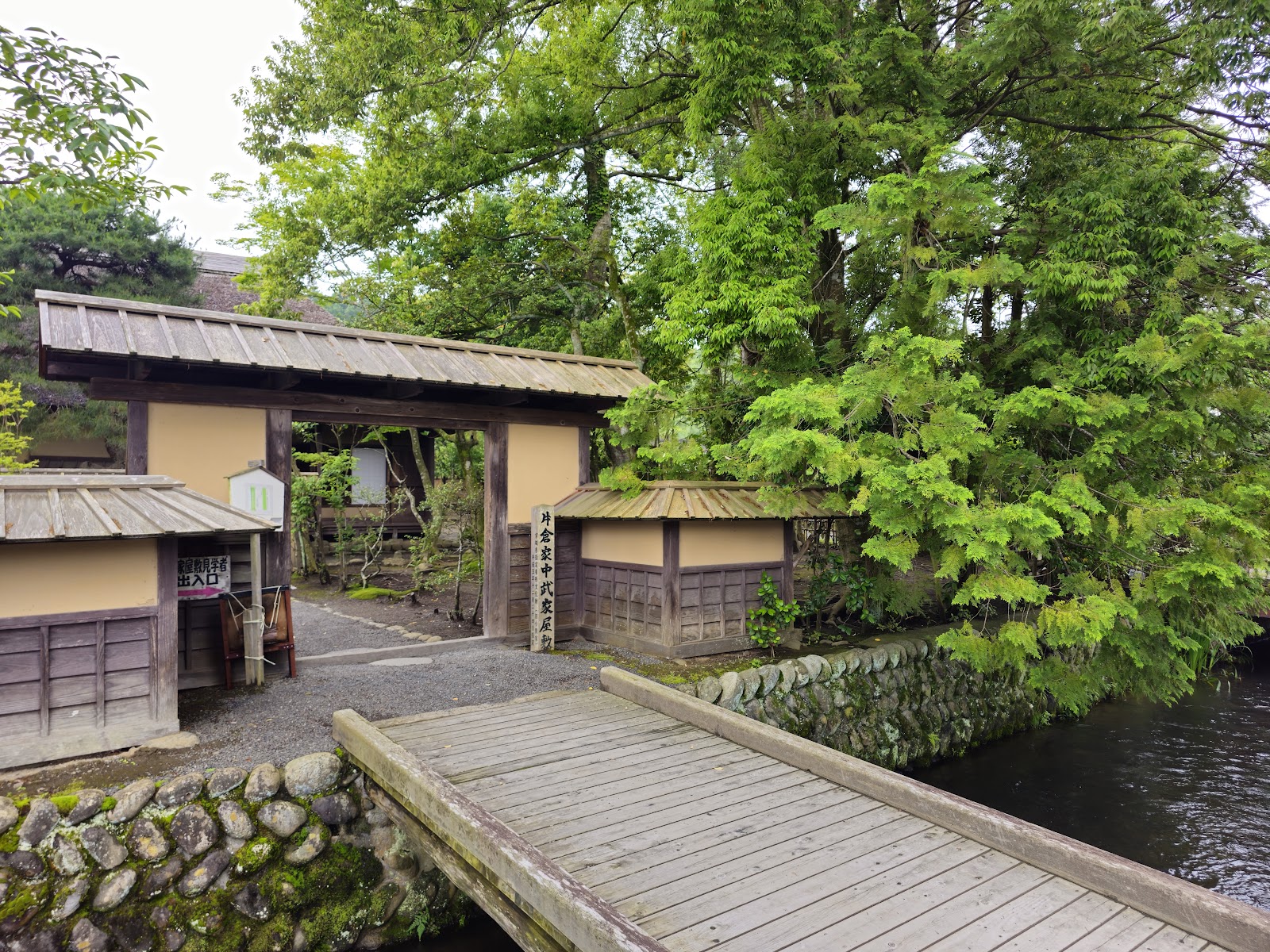
A nearly 300-year-old thatched samurai house from Shiroishi's Katakura retainer quarter, preserved as a Miyagi cultural property.
The Katakura Family Samurai Residence, formally the Former Koseki Family Residence, is a rare surviving Edo-period samurai house in the old castle town of Shiroishi. Built in 1730 by the Koseki family, middle-ranking vassals of the Katakura clan who ruled Shiroishi Castle as senior retainers of the Date domain, it stands along Ushirokoji, a street facing the Sawabata River that once formed the outer moat of the castle's northern third bailey. In its day this district was lined with the homes of the Katakura's kachu retainers, a compact samurai neighborhood clustered protectively around their lord's castle.
The house is a quietly eloquent survivor of that world. Its main building carries a hipped thatched roof, and the interior follows a simple, dignified plan with a Japanese-style living room, a storage room and tatami rooms, reflecting the modest but respectable status of a mid-level warrior family rather than a grand daimyo. The architecture also shows the evolution from rural farmhouse forms toward the refined dwelling of a samurai household, an instructive blend visible in its structure and joinery. After nearly three centuries the residence was donated to Shiroishi City in 1991, restored to its original appearance with main house, gate and enclosing walls, and designated a cultural property by Miyagi Prefecture in 1993.
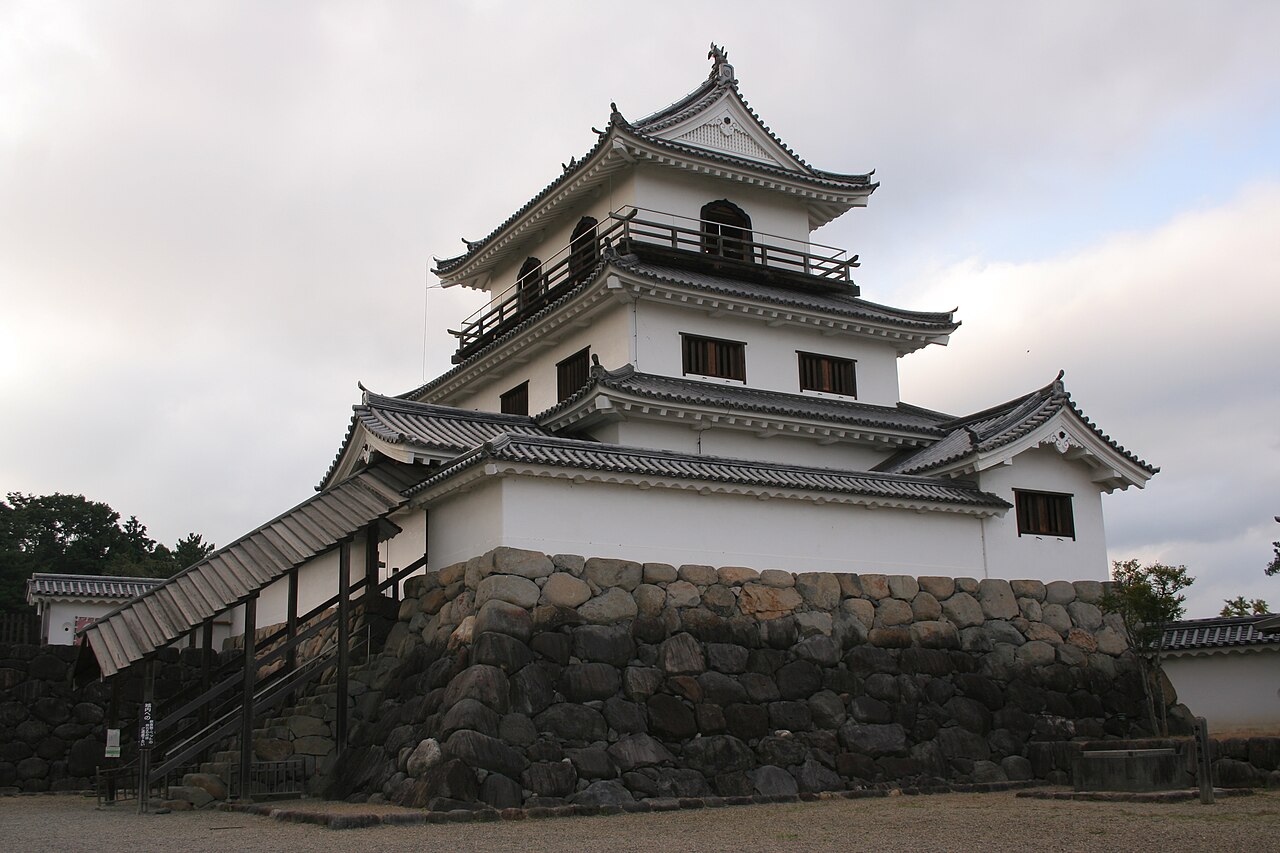
What makes a visit rewarding is the intimacy and authenticity of the place. Where the reconstructed castle keep nearby speaks of power and display, this house speaks of daily life, the tatami rooms, the earthen-floored spaces, the garden of dense trees and moss enclosed by earthen walls, and the sound of the Sawabata River just beyond. It offers a tangible sense of how the samurai who served the Katakura actually lived, and it rounds out the story told by the castle and its history museum. A notable detail is its setting within one of the best-preserved former retainer quarters in the region, so the short walk here from the castle itself passes through streetscape that still echoes the old town plan.
The visiting experience is gentle and unhurried, ideal for those who enjoy traditional architecture and gardens. The grounds are small and level, a visit takes around forty minutes, and the atmosphere is peaceful, particularly in the early morning. Spring brings blossom and fresh green to the garden while autumn tints the trees, making both the finest seasons. Restrooms are available and parking is limited, as most visitors arrive on foot from the castle. Entry is an inexpensive 200 yen, or 600 yen on the combined ticket that also admits you to Shiroishi Castle and the Katakura history museum, which is the best-value option.
To reach the residence, take a JR Tohoku Main Line local train from Sendai Station about 50 minutes to Shiroishi Station, then walk roughly 15 minutes to the house, which sits just north of Shiroishi Castle along the river; the Tohoku Shinkansen to Shiroishi-Zao Station is a faster alternative followed by a short taxi ride. Pair the visit with the castle keep and a bowl of Shiroishi's famous umen noodles for a satisfying half-day in this atmospheric samurai town.
A local's tip
The 600-yen combined ticket bundles this house with Shiroishi Castle and its museum; come in the morning to have the thatched-roof interior and mossy garden almost to yourself.
Best time to visit
Spring / autumn
Getting there
From Sendai Station take the JR Tohoku Main Line about 50 minutes to Shiroishi Station, then walk roughly 15 minutes to the residence, just north of Shiroishi Castle along the Sawabata River.
Good to know
- Parking
- Restrooms
Plan the whole trip offline
Katakura Family Samurai Residence (Former Koseki House) is one of many places in the Real Japan app — with turn-by-turn directions, nearby spots and full offline maps you can use with no signal.