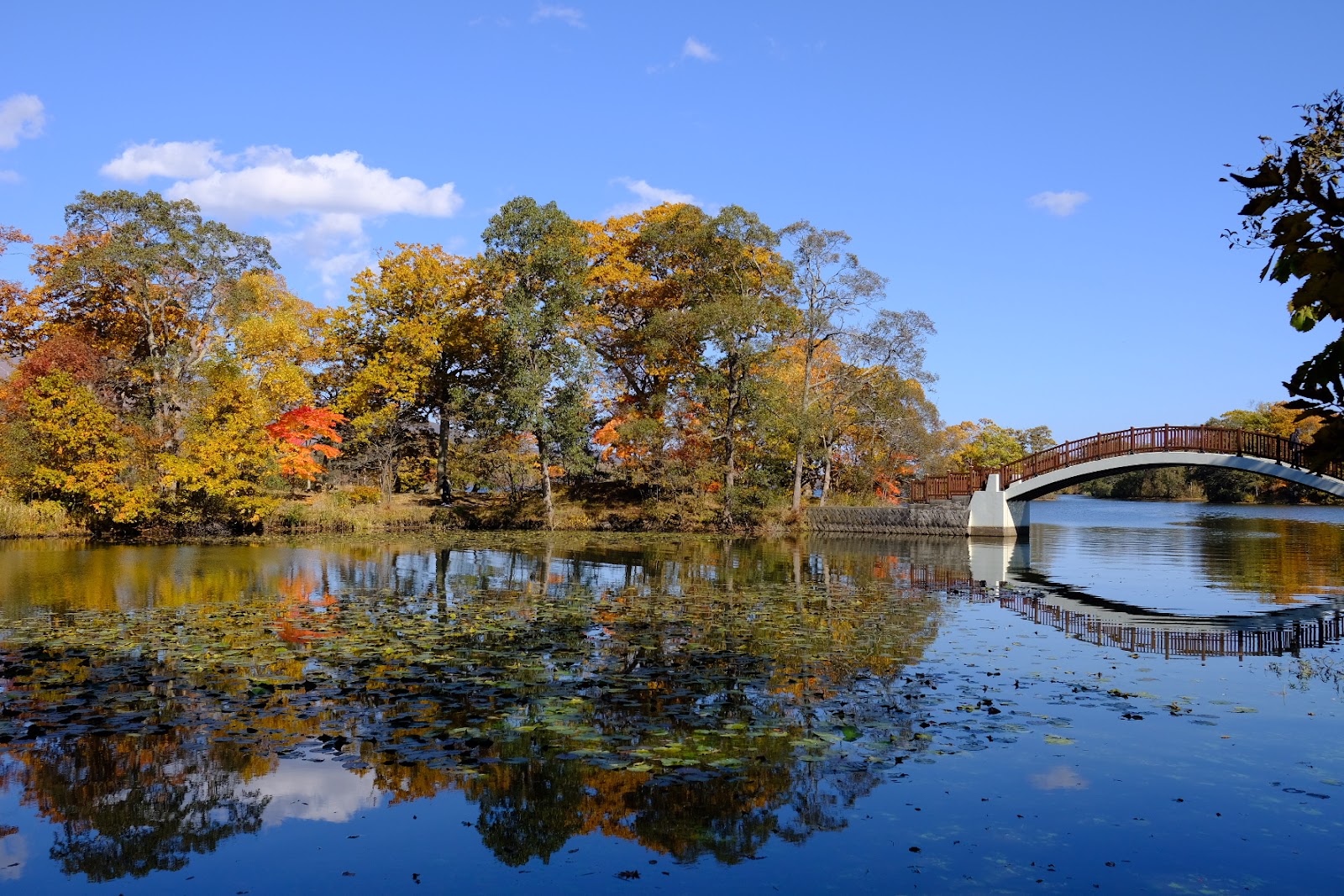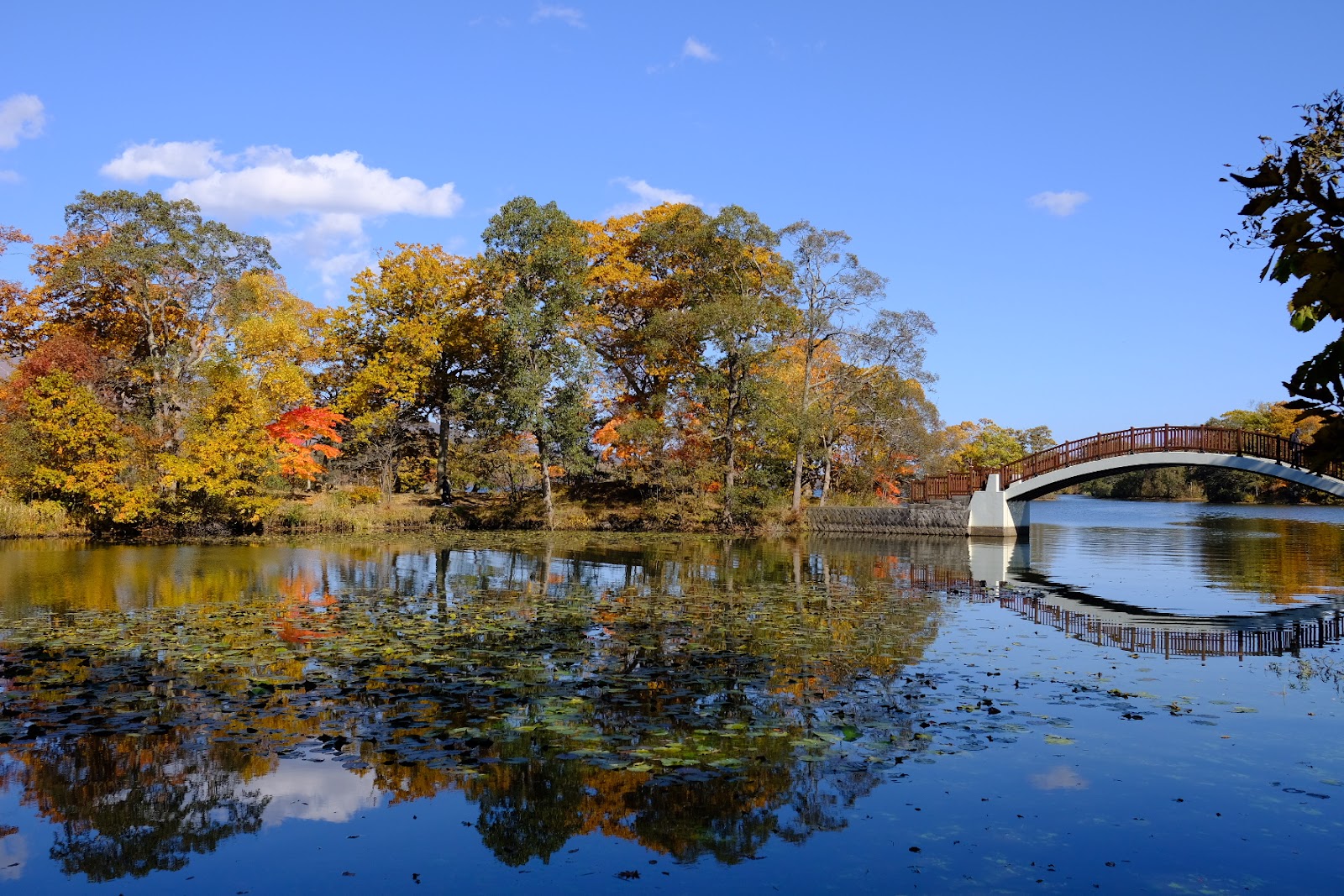
The wild, marshy third lake of Onuma Park, named for the edible water shield harvested on its surface.
Junsainuma is the wildest and least visited of the three lakes that make up Onuma Quasi-National Park, and for lovers of quiet nature that is precisely its charm. Lying northeast of Onuma, deeper into the park, it was created along with its sister lakes by the great 1640 eruption of Mount Komagatake, whose volcanic debris dammed the surrounding streams. Where Onuma has bridges and promenades and Konuma has open reflective water, Junsainuma is a marshier, more untamed place, its surface carpeted in aquatic plants and its shores thick with reeds and woodland.
The pond takes its name from junsai, or water shield, an edible aquatic plant prized in Japanese cuisine for its delicate, jelly-coated young shoots. Junsainuma is one of the traditional harvesting grounds for this delicacy, and in early summer you may see small flat-bottomed boats gliding among the lily pads as gatherers pluck the tender sprouts by hand, a scene that has changed little in generations. It is an unusual and quietly memorable sight, and a reminder that these lakes are working parts of the local landscape as well as scenic ones.
The marshy, undisturbed character of Junsainuma makes it a haven for wildlife. The wetlands and surrounding forest attract a rich variety of birds, and the pond is a rewarding, low-key spot for birdwatching, especially in the soft light of early morning. With Mount Komagatake looming beyond and clouds drifting across the still water, the whole scene has a hushed, almost primeval quality. In autumn the encircling trees turn brilliant colours that reflect in the dark water, while summer brings deep greenery and the flowering of aquatic plants.
Because it sits farther from the main visitor facilities, Junsainuma sees only a fraction of Onuma's crowds. There are fewer amenities here and the paths are simpler, so it rewards those content to slow down and simply observe. Most travellers reach it by car from Onuma-koen Station or fold it into a longer cycling loop of the lakes, following the quiet back roads that link the three bodies of water. Access is free and unrestricted at any hour.
Junsainuma works best as the contemplative final stop on an Onuma circuit. After the busier promenades of central Onuma and the reflections of Konuma, this third lake offers solitude, birdsong and a sense of genuine wilderness only 40 minutes from Hakodate. Allow around an hour to walk a stretch of shoreline, watch for birds and, if your timing is right, the water-shield harvest.
For travellers who value tranquillity and a closer encounter with Hokkaido's wetland nature, Junsainuma completes the trio of Onuma's lakes on a note of wild, understated beauty, and shows a quieter, more local side of a park that is deservedly one of southern Hokkaido's natural treasures.
A local's tip
The pond is named for junsai (water shield), an edible aquatic plant harvested here in early summer; look for the small boats gathering it among the lily pads.
Best time to visit
Early summer for water shield sprouts; autumn for colour
Getting there
Junsainuma lies northeast of Onuma, deeper into the park. It is best reached by car from Onuma-koen Station or as part of a wider cycling loop of the lakes.
Good to know
- Parking
- Restrooms
Plan the whole trip offline
Junsainuma Pond is one of many places in the Real Japan app — with turn-by-turn directions, nearby spots and full offline maps you can use with no signal.