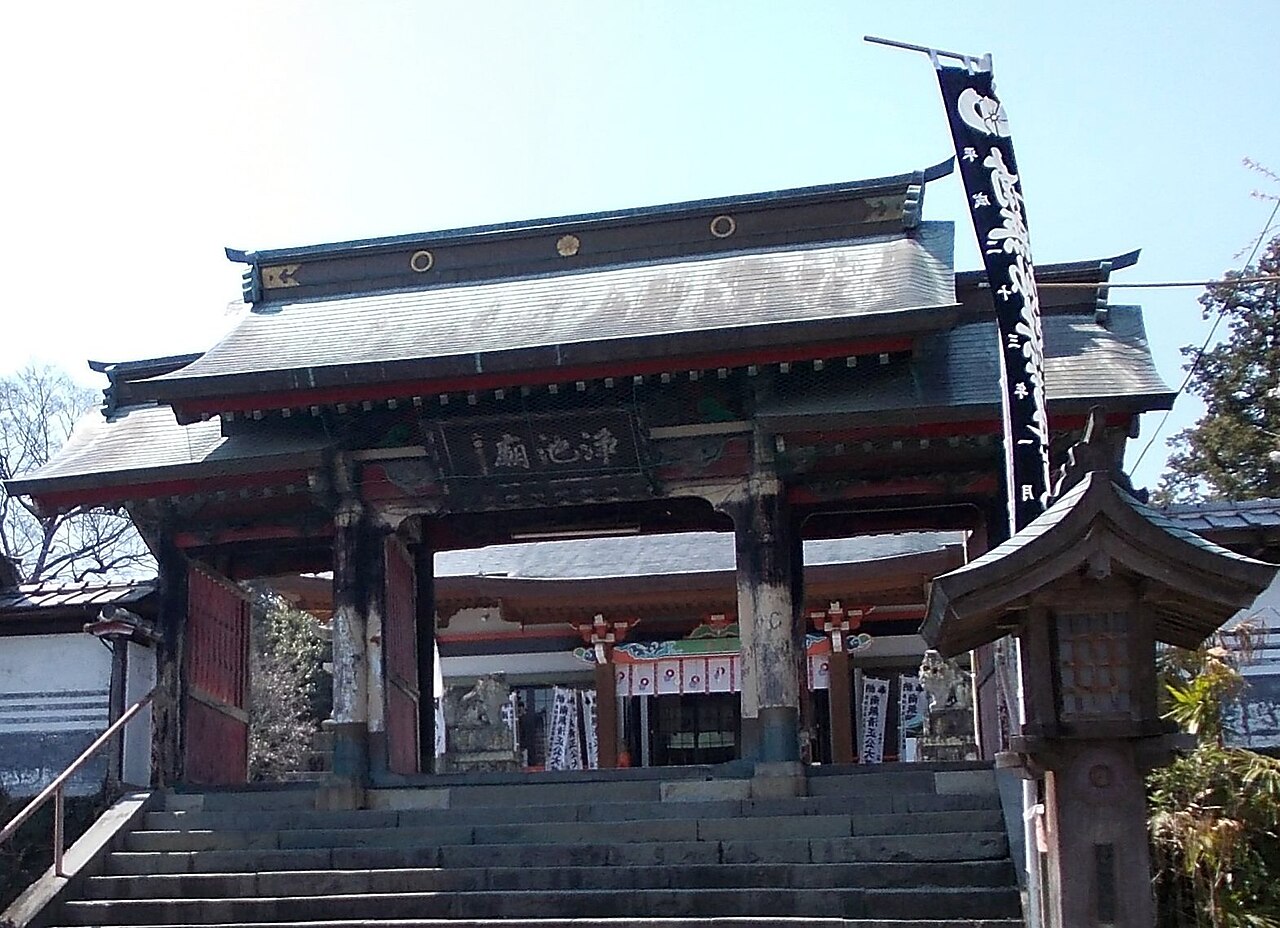
The grand Nichiren temple and hillside mausoleum of Kato Kiyomasa, positioned to overlook his castle for eternity.
Honmyo-ji is the great Buddhist temple of the Kato family and the final resting place of Kato Kiyomasa, the warlord who built Kumamoto Castle, making it one of the most historically resonant religious sites in the city. A temple of the Nichiren school, of which Kiyomasa was a fervent adherent, Honmyo-ji was moved to its present hillside location west of the centre after his death in 1611, and it has served ever since as the spiritual memorial to the lord whom the people of Kumamoto still revere.
The temple complex is far larger and more layered than first appears. From the main gate, a broad approach leads past subsidiary temple buildings and halls to the principal structures, and beyond them a long, steep stone staircase climbs the hillside to the Jochi-byo, Kiyomasa's mausoleum, set high above the city. The placement is deliberate and moving: tradition holds that the mausoleum was positioned at the same elevation as the top of the castle keep, so that in death Kiyomasa could continue to gaze upon and watch over the castle and the city he created. Climbing the many steps to reach it, and looking back toward the distant castle, gives visitors a tangible sense of that enduring bond between lord and city.
Along the way, the grounds hold numerous halls, statues, memorial stones and lanterns, and the atmosphere shifts from the busier lower precincts to a quieter, more contemplative mood higher up among the trees. A treasure hall displays artefacts connected with Kiyomasa and the temple, including armour, documents and personal items, offering insight into the life of this formidable and pious warrior. The hillside setting also makes the temple beautiful in spring, when cherry blossom lines the approach and steps, and in autumn, when the surrounding trees colour.
Honmyo-ji functions as an active temple and a place of pilgrimage, particularly for those who venerate Kiyomasa, and events and memorial services connected to him are held here through the year. For visitors, it combines genuine spiritual atmosphere, notable history and a rewarding physical journey up the hillside, capped by fine views. It offers a deeper, more reflective complement to the martial spectacle of the castle itself.
The temple lies west of central Kumamoto and is reached by taking the B-line tram to the Honmyoji-iriguchi stop, from which it is about a 15-minute walk up the approach and steps to the mausoleum; those who prefer can ascend partway before the final staircase. The grounds are freely open, with a modest charge for the treasure hall. Allow around an hour to explore the complex and climb to the mausoleum, wearing comfortable shoes for the steps. For anyone captivated by the story of Kumamoto Castle and its builder, Honmyo-ji completes the picture, following Kiyomasa from the fortress he raised to the hill from which he still watches over it.
A local's tip
Climb the long stone staircase behind the main halls to Kato Kiyomasa's hilltop mausoleum — it is deliberately set at the same elevation as the castle keep so the lord could 'watch over' his castle forever.
Best time to visit
Late March for cherry blossoms along the hillside approach
Getting there
West of central Kumamoto; take the B-line tram to Honmyoji-iriguchi, then walk about 15 minutes up the temple approach and steps to the hilltop mausoleum.
Good to know
- Restrooms
- Treasure hall
Plan the whole trip offline
Honmyo-ji Temple is one of many places in the Real Japan app — with turn-by-turn directions, nearby spots and full offline maps you can use with no signal.