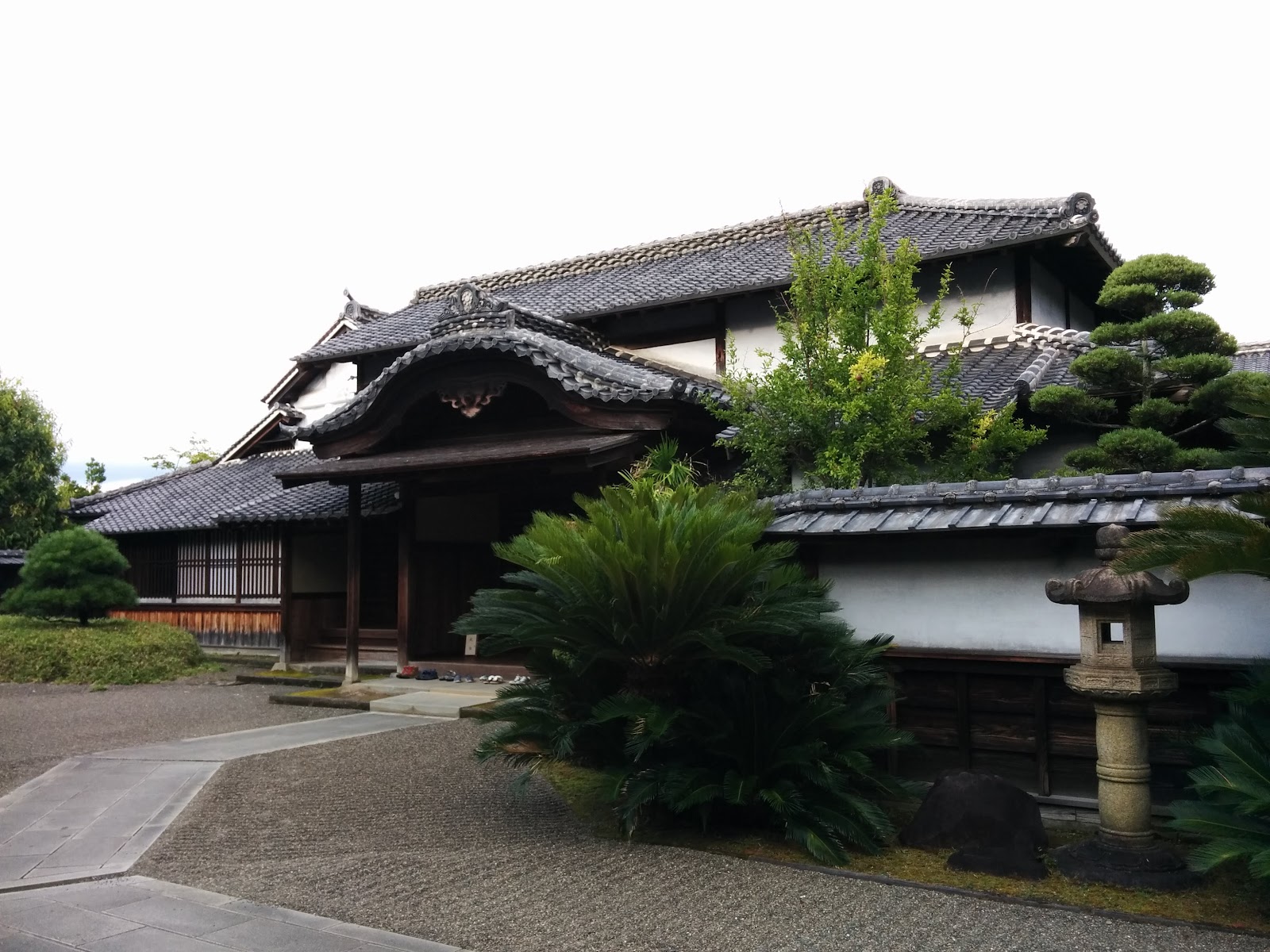
An elegant restored samurai mansion of the Hosokawa lords, showing how Kumamoto's ruling family lived in refined Edo style.
Hosokawa Gyobutei is one of the best-preserved samurai residences in Kyushu and offers an intimate counterpoint to the martial grandeur of Kumamoto Castle just uphill. The mansion belonged to the Gyobu branch of the Hosokawa family, the clan that governed the Higo domain from 1632 until the end of the samurai era. While the castle shows how the daimyo projected power, the Gyobutei shows how they actually lived.
The residence dates in its present form to the early 1990s, when it was carefully relocated and reconstructed from surviving Edo-period buildings, preserving original timbers, sliding-screen rooms and the distinctive layered roofline. The layout follows the classic 'shoin' style, with reception rooms arranged in descending rank so that a visitor's importance determined how deep into the house they were received. The grandest space is the sunken guest hall, its ceilings and transoms finished to a level of craftsmanship reserved for entertaining senior retainers and honoured guests.
Walking the polished wooden corridors, you pass a working kitchen with its great hearth, tatami rooms whose screens can be slid open to merge interior and garden, and small courtyards that channel light and air through the building. Interpretive panels explain the daily rhythms of a high-ranking samurai household, from tea ceremony to the reception of visitors and the strict etiquette that governed every threshold.
The garden is the quiet highlight. A gentle stroll design with a pond, stone lanterns and carefully placed maples, it is especially beautiful in late November when the leaves turn, and a small tea service lets you sit on the veranda with matcha and a sweet while overlooking the water. Because the residence sees far fewer visitors than the castle itself, it is often peaceful even in high season, and the sense of stepping into a lived-in Edo-era home is remarkably vivid.
The Hosokawa family, incidentally, remains one of Japan's most distinguished lineages; a twentieth-century descendant, Morihiro Hosokawa, served as Prime Minister in the 1990s, a reminder that this house sits on a living thread of Japanese history.
A visit takes about 45 minutes and pairs naturally with Kumamoto Castle, being a 15-minute walk northwest of the Ninomaru grounds. Combined tickets covering the castle, the Gyobutei and the nearby prefectural museum are available and offer good value. The residence is closed on Mondays, so plan around that if you are in the city for only a short time.
A local's tip
Sit on the veranda facing the garden with a bowl of matcha (available on site) — the sunken 'kagai' guest hall was where the family entertained important visitors and has the best view.
Best time to visit
Autumn for maples in the garden
Getting there
A 15-minute walk northwest of Kumamoto Castle's Ninomaru parking area, or take the Shiro-megurin loop bus to the Hosokawa Gyobutei stop.
Good to know
- Restrooms
- Tea service
Plan the whole trip offline
Hosokawa Gyobutei is one of many places in the Real Japan app — with turn-by-turn directions, nearby spots and full offline maps you can use with no signal.