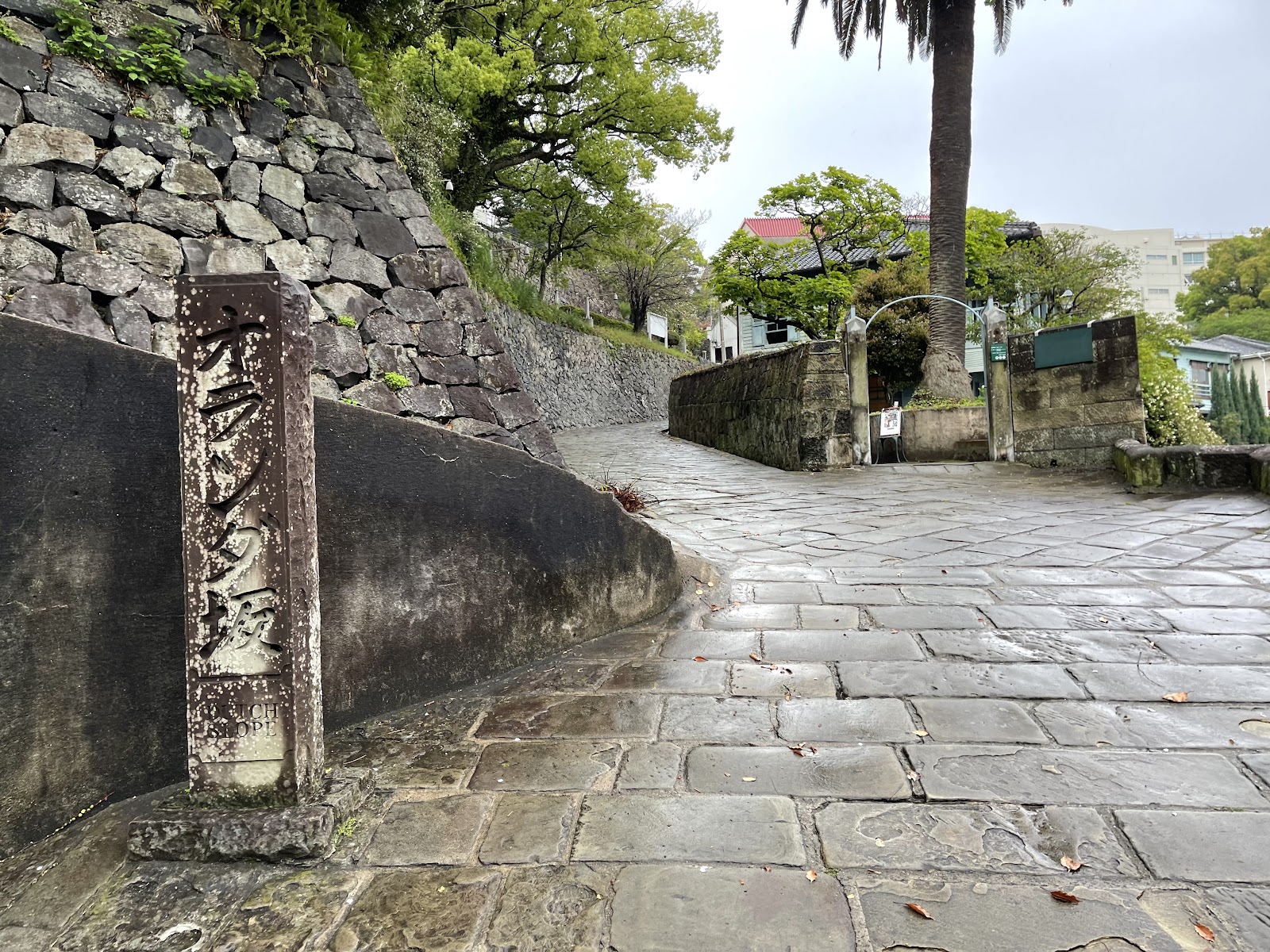
A cobbled hillside street of preserved Western residences that recalls Nagasaki's era of foreign settlement.
Hollander Slope (Oranda-zaka) is an evocative stone-paved street winding up the Higashi-Yamate hillside in southern Nagasaki, lined with preserved Western-style wooden houses that recall the days when the port was Japan's great gateway to the outside world. Quieter and more understated than the famous Glover Garden nearby, it offers an atmospheric, largely free stroll through the neighbourhood where nineteenth-century foreign residents made their homes.
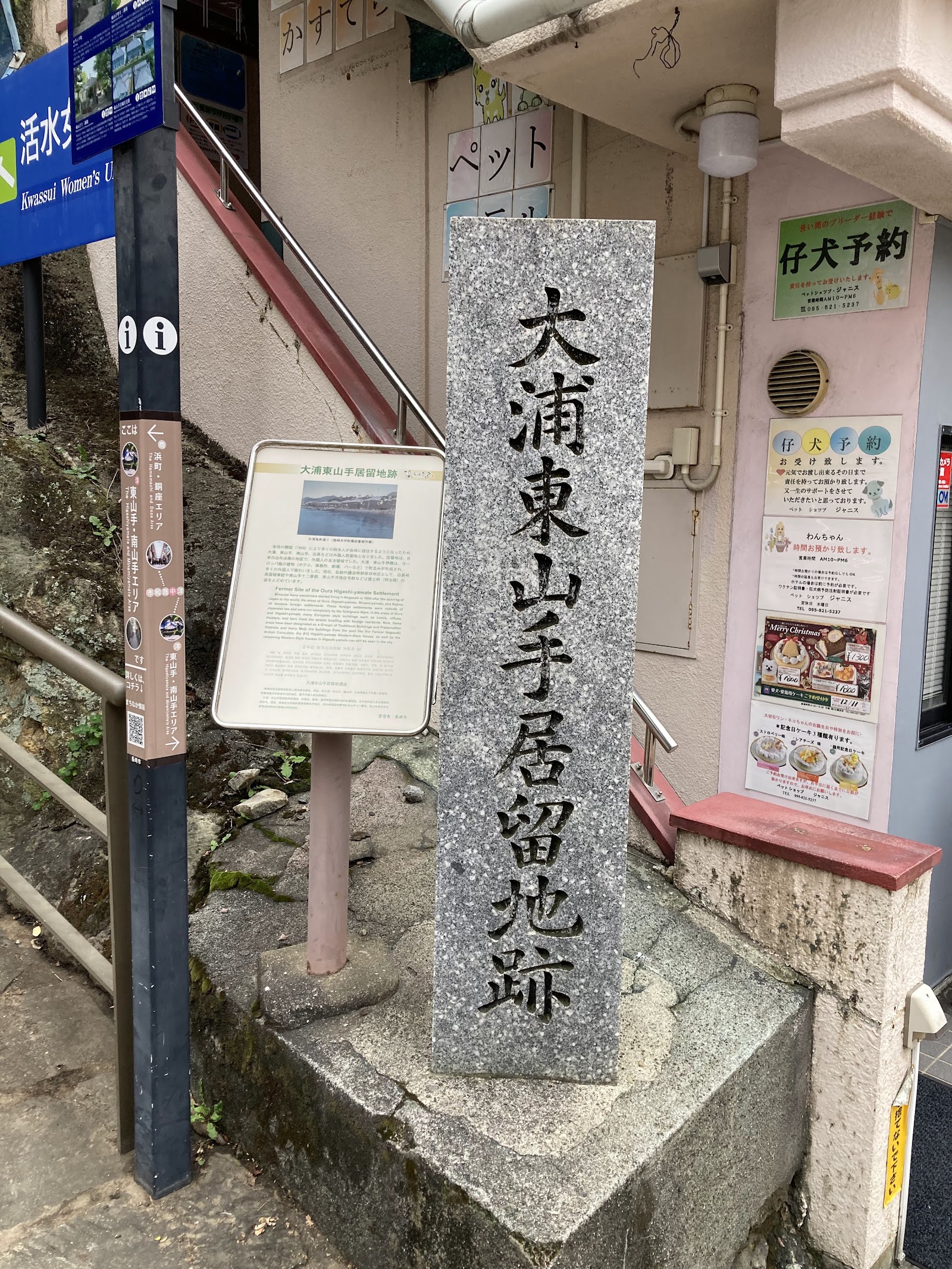
The name reflects a habit of the times. After Japan reopened to the world in the mid-nineteenth century and a foreign settlement was established in Nagasaki, locals tended to call all Westerners "Hollanders" — a legacy of the long Edo-period arrangement in which the Dutch had been the only Europeans permitted to trade at Dejima. So the slopes where these Western residents lived became known as Oranda-zaka, the "Dutch slopes," even though the inhabitants came from many nations. The Higashi-Yamate area, along with the neighbouring Minami-Yamate where Glover Garden stands, formed the heart of this cosmopolitan quarter.
Walking up the slope today, you pass beneath old stone walls and along cobbled paving, with handsome timber Western houses set among the greenery. Several of these preserved residences are open to the public, some free of charge, their verandas, shuttered windows and period interiors conveying how the merchants, missionaries and diplomats of Meiji-era Nagasaki lived. Buildings that once served as consulates, schools and homes now function as small museums and community spaces, and the overall effect is of a peaceful, faintly European enclave suspended on a Japanese hillside overlooking the harbour.
The charm of Oranda-zaka lies in its atmosphere rather than any single grand monument. The mix of stone steps, retaining walls, foreign architecture and glimpses of the city and port below makes it highly photogenic, and because far fewer tourists venture here than to the ticketed attractions, you can often have the slope largely to yourself. It rewards slow, curious wandering, ducking into open houses and pausing at viewpoints.
Historically, this settlement district is where many of the influences that made Nagasaki unique took hold — Western architecture, education, religion and cuisine all flowed in through these hills — so a walk here complements the bigger sights by filling in the everyday texture of that era. The slope connects naturally with Glover Garden, Oura Church and the Confucius Shrine, all within walking distance on the same hillside, making it easy to string them together into a single half-day of foreign-heritage sightseeing.
Reached by tram to Ishibashi and a short uphill walk, Oranda-zaka asks only around forty-five minutes and little or no money, rewarding visitors with a quieter, more intimate glimpse of Nagasaki's international past. For those who enjoy history at a human scale and streets with genuine character, Hollander Slope is a delightful detour.
A local's tip
Wander into the preserved Higashi-Yamate wooden Western houses along the slope — several are free to enter and give a real sense of expat life in Meiji-era Nagasaki, minus the crowds of Glover Garden.
Best time to visit
Morning light for the stone-paved slope and old houses
Getting there
Take a Nagasaki tram to Ishibashi, then walk a few minutes uphill into the Higashi-Yamate district; it connects easily with Glover Garden and Oura Church.
Good to know
- Cafes
- Restrooms
Plan the whole trip offline
Hollander Slope is one of many places in the Real Japan app — with turn-by-turn directions, nearby spots and full offline maps you can use with no signal.