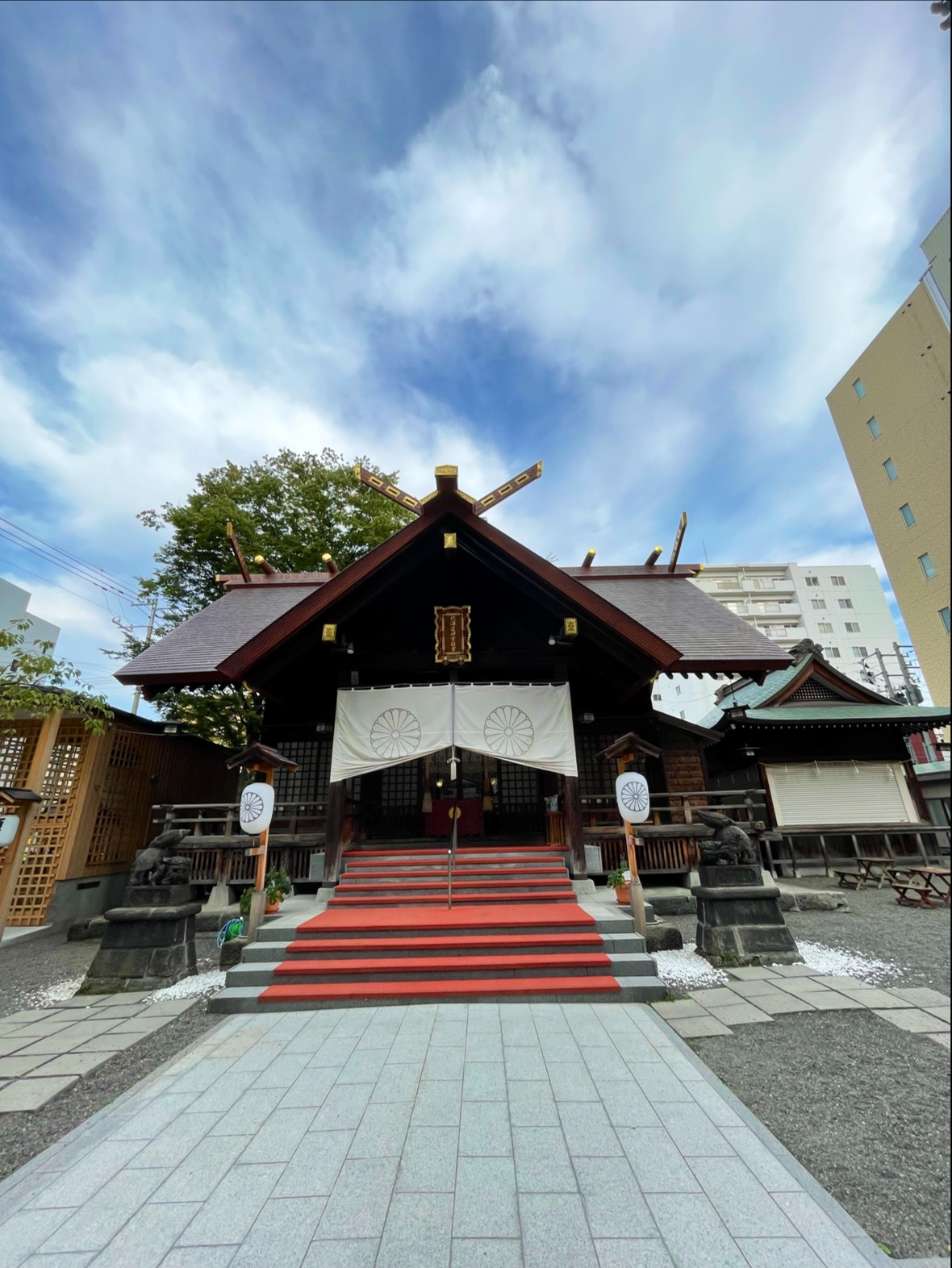
The compact downtown branch of Hokkaido Shrine, founded so central-city residents could worship without the long trek to Maruyama.
Hokkaido Jingu Tongu is the city-centre branch of the great Hokkaido Shrine at Maruyama Park, tucked into a block near the Sapporo Bus Center just east of Susukino. The word tongu denotes a subsidiary or auxiliary shrine, and that is precisely its purpose: when Hokkaido Shrine was established at Maruyama in the Meiji era, the distance from the growing downtown proved a hardship for elderly residents and worshippers during Sapporo's fierce winters. In 1878 this smaller precinct was founded so that people in the heart of the city could pay their respects to the same guardian deities without the long, snowbound journey to the western hills.
Despite its compact footprint, the tongu enshrines the same protective spirits as its parent shrine, including the deities charged with watching over the development and prosperity of Hokkaido. The grounds are small and urban, hemmed in by city blocks, yet they retain the essential features of a Shinto shrine: a torii gate, a purification basin, a modest but well-tended main hall, and a shrine office selling charms, ema, and seasonal goods. A pair of guardian komainu lions stands watch at the entrance, and the atmosphere shifts from workaday quiet on an ordinary afternoon to bustling energy on ceremonial days.
What to see is best appreciated as a quick, meaningful pause rather than an extended visit. The precinct is genuinely small, so most travellers spend only fifteen or twenty minutes here, offering a prayer, collecting a goshuin shrine stamp, and admiring the way a pocket of traditional sacred space survives amid the surrounding city. Its greatest moment is New Year, when hatsumode crowds from the downtown neighbourhoods stream in to make their first prayers of the year, and the little grounds fill with the smoke of offerings and the murmur of well-wishes.
The visiting experience is defined by convenience. Flat, central, and only a few minutes on foot from Susukino, Odori, and the subway, it is the kind of place you can fold into a shopping or dining outing without detouring. Facilities are limited given the small size, but the shrine office is staffed during daytime hours, and the goshuin here is a nice keepsake for collectors who also visit the main shrine.
The best time to visit is New Year for the full atmosphere of hatsumode, or simply whenever you happen to be exploring the central districts. Winter gives the precinct a hushed, snow-dusted charm. Getting there is effortless: ride the Tozai subway line to Bus Center-mae Station and walk about four minutes, or approach on foot from Susukino. For visitors short on time who still want to experience Sapporo's principal shrine tradition, Hokkaido Jingu Tongu offers a small but authentic downtown alternative to the trek out to Maruyama.
A local's tip
If you can't make the trek out to the main Hokkaido Shrine at Maruyama, this downtown branch lets you pay respects in minutes.
Best time to visit
New Year, when city-centre worshippers pack the small precinct
Getting there
Take the Tozai subway line to Bus Center-mae Station and walk about four minutes; it also sits within walking distance of Susukino and Odori.
Good to know
- Restrooms
Plan the whole trip offline
Hokkaido Jingu Tongu is one of many places in the Real Japan app — with turn-by-turn directions, nearby spots and full offline maps you can use with no signal.