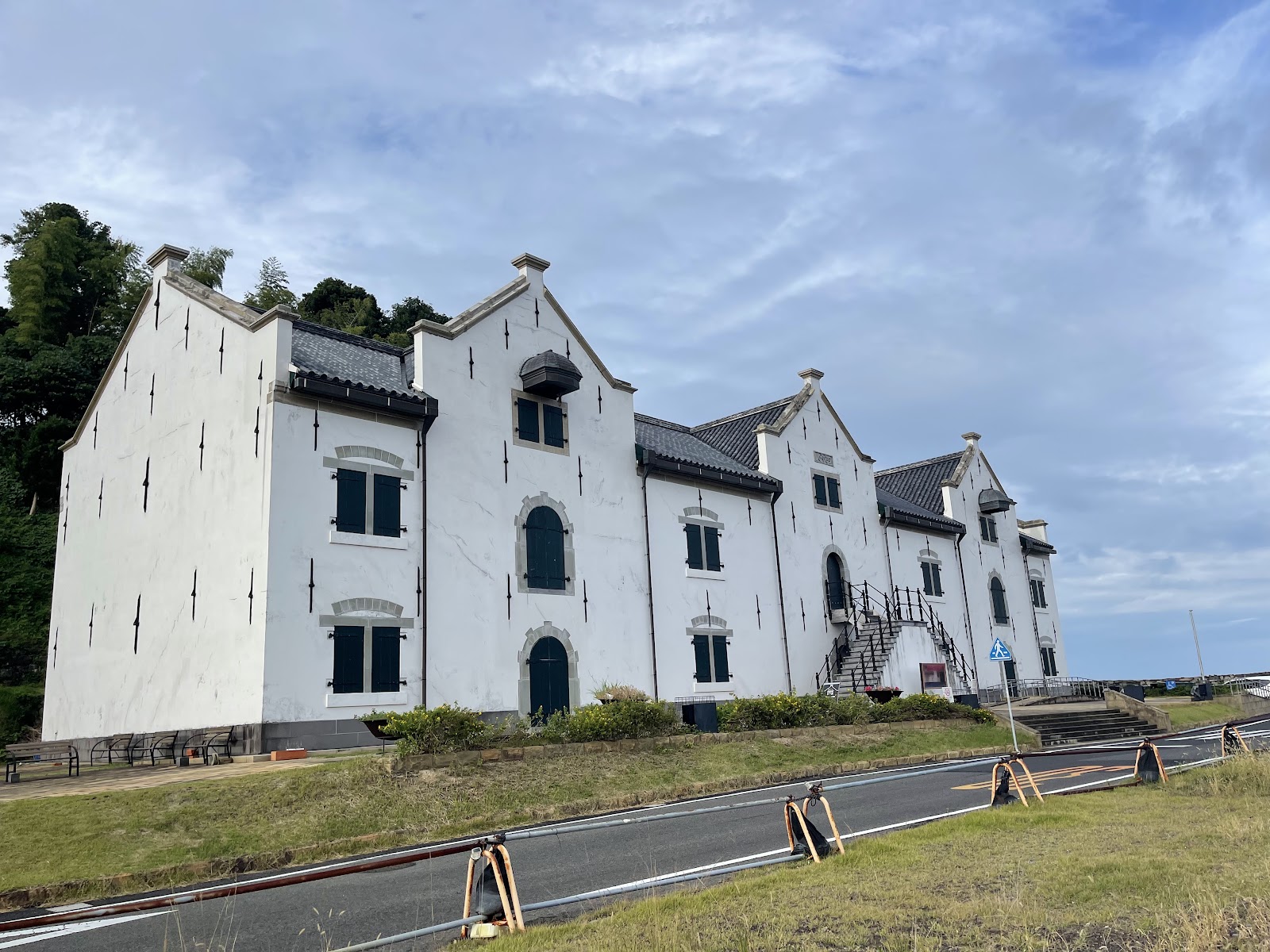
A faithfully rebuilt stone warehouse marking the original Dutch East India Company base at Hirado, before trade moved to Dejima.
The Hirado Dutch Trading Post stands on the harbour front of Hirado town, a faithful reconstruction of the great stone warehouse that once formed the heart of the Dutch East India Company's earliest base in Japan. From 1609 the Dutch operated a trading factory here, decades before their more famous confinement on the fan-shaped island of Dejima in Nagasaki, and Hirado buzzed with the exchange of silk, spices, ceramics, silver, and ideas between Japan and Europe. The trading post is a tangible reminder that this quiet port was, for a time, one of the most cosmopolitan places in the country.
The centrepiece is the reconstructed 1639 stone warehouse, an imposing building that was, in its day, one of the largest Western-style structures in Japan. Its story carries a sharp historical irony: the Christian-calendar date carved into the stonework gave the increasingly anti-Christian shogunate a pretext to order the original building demolished, and shortly afterward the Dutch were forced to relocate their entire operation to Dejima in Nagasaki, ending Hirado's role as an international port. The modern reconstruction, completed using traditional methods, revives that lost landmark and houses exhibits on the trade, the Dutch presence, and the wider history of foreign contact in the region.
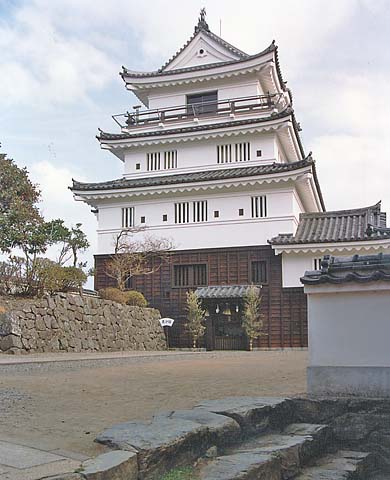
What to see includes the striking exterior of the rebuilt warehouse, the interior displays of trade goods, documents, maps, and artefacts, and the interpretive material that sets Hirado's story within the larger sweep of Japan's early engagement with, and eventual withdrawal from, the outside world. The harbour-front setting is atmospheric, and the trading post connects naturally with Hirado Castle on the hill above and the town's old churches and streets, which together preserve the memory of this once-thriving international gateway.
The visiting experience is compact and informative, well suited to a focused hour of history. The building is largely accessible, with exhibits arranged over its floors, and restrooms and parking are available nearby. Because it sits right on the waterfront in the centre of town, it is easy to combine with a stroll along the harbour and visits to Hirado's other historic sights.
The best time to visit is any clear day; the site is enjoyable year-round, though pairing it with a harbour walk is most pleasant in mild weather. Getting there involves reaching the somewhat remote Hirado island by car across the Hirado Bridge, or by the Matsuura railway to Tabira-Hiradoguchi followed by a bus into town. For travellers drawn to the story of Japan's early trade with Europe and the events that led to two centuries of seclusion, the Hirado Dutch Trading Post is an evocative and worthwhile stop.
A local's tip
Note the year 1639 carved into the stone warehouse wall, the detail the shogunate cited as a pretext to order the building's destruction.
Best time to visit
Any clear day; combine with a harbour-front stroll
Getting there
Reach Hirado by car or by rail to Tabira-Hiradoguchi then a bus across the Hirado Bridge; the trading post sits on the harbour front in town.
Good to know
- Wi-Fi
- Parking
- Restrooms
Plan the whole trip offline
Hirado Dutch Trading Post is one of many places in the Real Japan app — with turn-by-turn directions, nearby spots and full offline maps you can use with no signal.