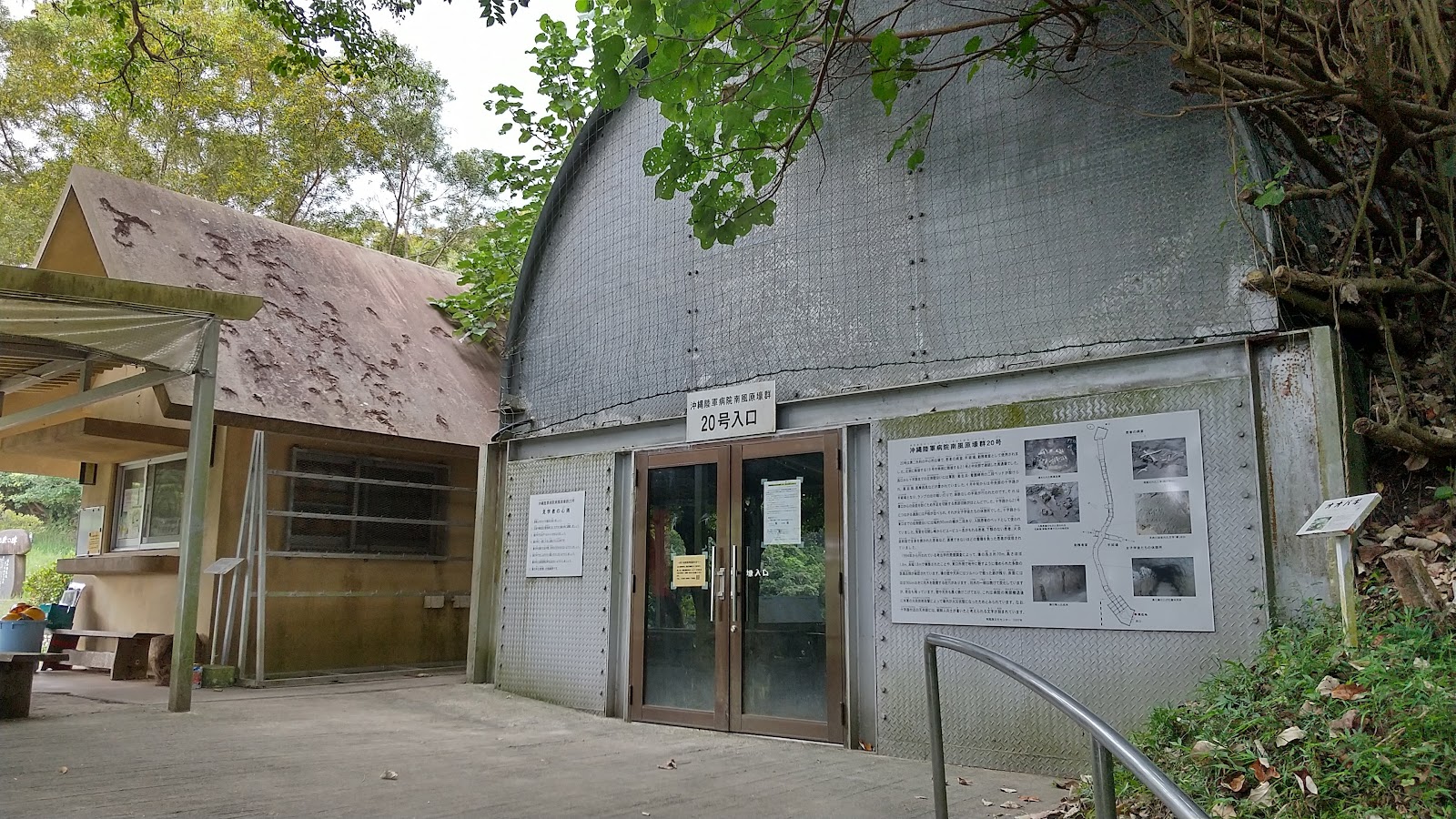
A preserved underground army field hospital cave from the Battle of Okinawa, a stark memorial to the island's wartime suffering.
The Former Haebaru Army Field Hospital Cave is a preserved section of the vast underground tunnel network that the Japanese army dug beneath the town of Haebaru during the Battle of Okinawa in 1945. Opened to the public as a memorial and educational site, it offers one of the most direct and moving encounters with the reality of the war for anyone visiting the island.
As American forces advanced during the battle, the Japanese military established a field hospital in a system of caves excavated into the hills at Haebaru, close to the front lines around Shuri. Wounded soldiers were carried here in enormous numbers, and the underground wards were staffed in part by mobilised local students, including teenage girls conscripted as nurses. Conditions in the tunnels were horrific: overcrowded, airless and dark, without adequate medicine, food or sanitation, and under constant threat from the fighting above. As the front collapsed, the hospital was abandoned and the staff and patients forced into the chaos of the retreat south, where many died.
Today one of these tunnels has been stabilised and opened for guided visits, allowing people to walk a short distance into the actual space where these events unfolded. Inside, the rough-hewn walls, the cramped dimensions and the darkness convey, far more powerfully than any book, what it meant to shelter and suffer underground during the battle. Tours are conducted with care and context, and because the cave is a genuine wartime relic with uneven ground and low ceilings, visitors are equipped and guided accordingly.
The cave is closely connected to the nearby Haebaru Culture Center and its museum, which presents the wider history of the town during the war, including the story of the student nurses, through photographs, testimony and artefacts. Visiting the museum before entering the cave provides essential background and turns the experience into a coherent act of remembrance rather than mere sightseeing. Because the tunnels are fragile and the subject matter grave, access is managed through advance reservation and guided tours, so travellers should arrange their visit in advance.
The Haebaru cave belongs to a network of war memorial sites across southern Okinawa, the region where the battle reached its terrible climax and where a large share of the island's civilian population perished. Together with the Peace Memorial Park, the Himeyuri monument and other sites, it forms part of a landscape of remembrance that Okinawans have carefully preserved so that the lessons of 1945 are not forgotten.
Allow around an hour for the combined museum and cave experience, and approach it in a spirit of respect. This is not a conventional attraction but a place of memory, one that leaves a lasting impression and deepens any traveller's understanding of the profound cost the Battle of Okinawa exacted from the island and its people.
A local's tip
Reserve ahead through the Haebaru Culture Center, which provides context before you enter the tunnels; the museum and cave together tell the story of the student nurses and the wounded who sheltered here.
Best time to visit
Booked tour times; bring a torch and sturdy shoes
Getting there
Haebaru lies just south-east of Naha. Reach it by car in about 20 minutes, or by local bus toward Haebaru. Tours of the preserved cave are run by the town and generally require advance reservation, so arrange your visit before arriving.
Good to know
- Museum
- Restrooms
- Guided tour
Plan the whole trip offline
Former Haebaru Army Field Hospital Cave is one of many places in the Real Japan app — with turn-by-turn directions, nearby spots and full offline maps you can use with no signal.