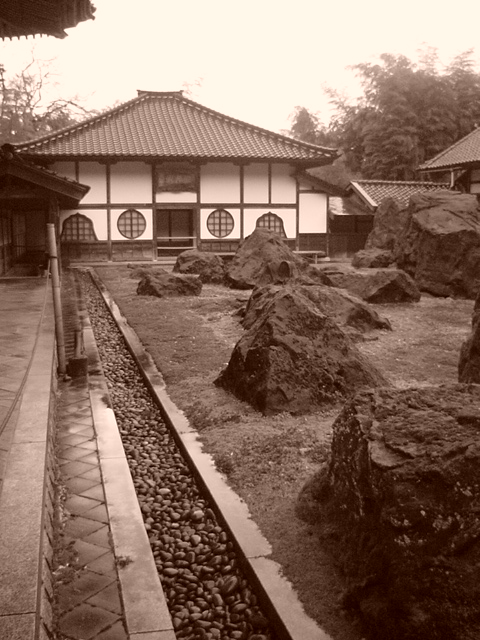
The site of the ancient provincial temple of Etchu, a quiet link to eighth-century Nara-period Japan.
The Etchu Kokubunji ruins mark the site of the ancient provincial temple of Etchu Province, one of the network of state-sponsored Buddhist temples established across Japan in the eighth century by imperial decree. Tucked into the old provincial-capital district near the coast in what is now Takaoka, it is a quiet, understated site whose significance far outweighs its modest appearance — a tangible link to the Nara period, when this stretch of the Toyama coast was the administrative and cultural heart of the province.
The kokubunji system was created by Emperor Shomu in 741, who ordered every province to build a state temple and nunnery to protect the nation through Buddhist devotion. Etchu Kokubunji was the provincial temple for this region, standing close to the seat of the provincial government (kokufu) where the governor and his officials administered the land. It was during this era, in the mid-eighth century, that the celebrated poet Otomo no Yakamochi served as governor of Etchu and composed many of the poems preserved in the Manyoshu, Japan's oldest poetry anthology, so the ground here is bound up with one of the foundational works of Japanese literature. The original grand temple did not survive the centuries intact, but the site remained sacred, and a smaller hall stands on the historic grounds today, carrying the ancient name forward.
A visit is quiet and contemplative rather than spectacular. The atmosphere is that of a hallowed old precinct — a modest hall, stone markers, and the sense of standing on ground continuously venerated for more than 1,200 years. Interpretive signs explain the history of the provincial temple and its place in the wider landscape of the old capital, and the setting encourages a slow, reflective pause rather than a hurried look. For those who appreciate the deep layers of Japanese history, being able to stand at the very site of an eighth-century state temple, in the province where Yakamochi wrote his verses, gives the place a resonance out of all proportion to its size.
Practically, the ruins are easy and free to visit. The grounds are flat and accessible, a short walk or taxi ride from Fushiki Station on the Himi Line, and half an hour is enough to absorb the site. Facilities are minimal, with restrooms and limited parking nearby, and it is best appreciated together with the surrounding historic district. It pairs especially well with the Takaoka Manyo Historical Museum a short distance away, which brings the poetry and the world of Yakamochi's Etchu vividly to life and gives context to these silent grounds.
Etchu Kokubunji will appeal most to travellers with a genuine interest in early Japanese history and literature rather than those seeking grand sights. But for anyone willing to slow down and read the landscape, it offers a rare, direct connection to the Nara-period roots of the region — the ancient capital, the state temples, and the poems that first gave this coast its enduring place in Japanese culture.
A local's tip
This is the ancient provincial temple linked to the poet-governor Otomo no Yakamochi's Etchu — pair it with the Manyo Historical Museum nearby to connect the ruins to the poetry written here.
Best time to visit
Any time; quiet and contemplative year-round
Getting there
A 15-minute walk or short taxi from Fushiki Station on the Himi Line, in the old provincial-capital area near the Takaoka coast. A car is convenient for combining with nearby historic sites.
Good to know
- Parking
- Restrooms
Plan the whole trip offline
Etchu Kokubunji Temple Ruins is one of many places in the Real Japan app — with turn-by-turn directions, nearby spots and full offline maps you can use with no signal.