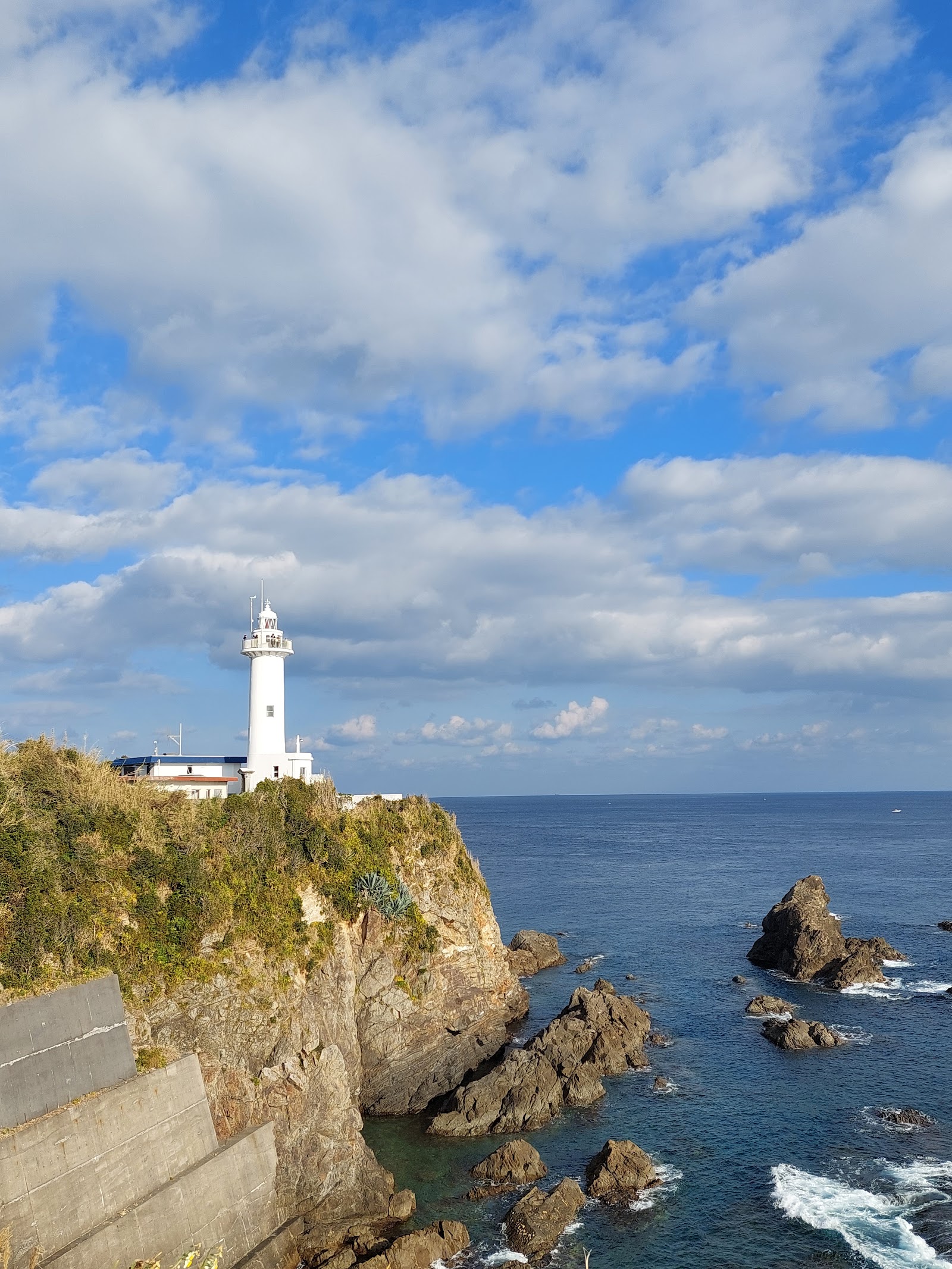
A climbable white lighthouse on the wild Pacific cape at Daio, above the painterly fishing town of Nakiri.
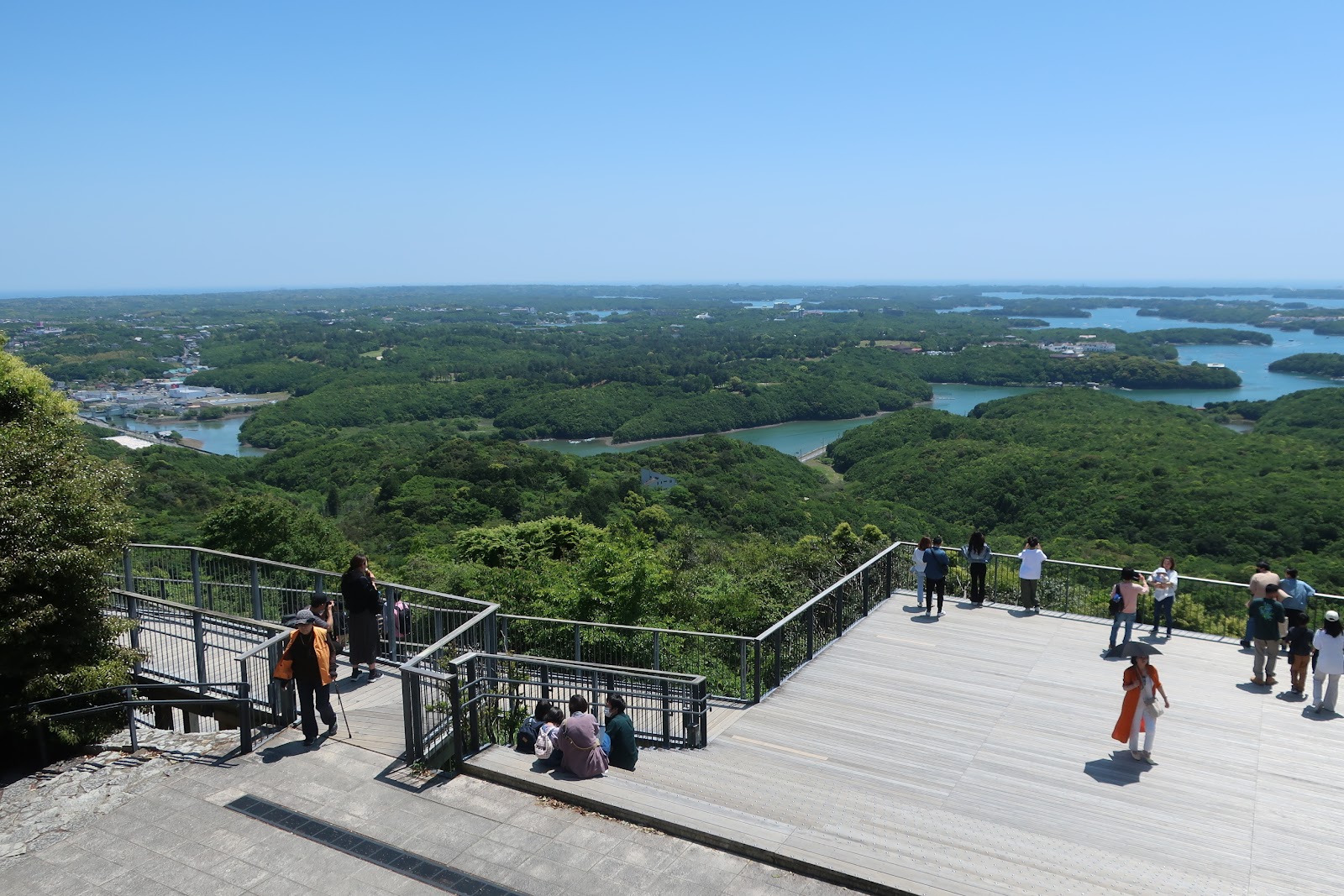
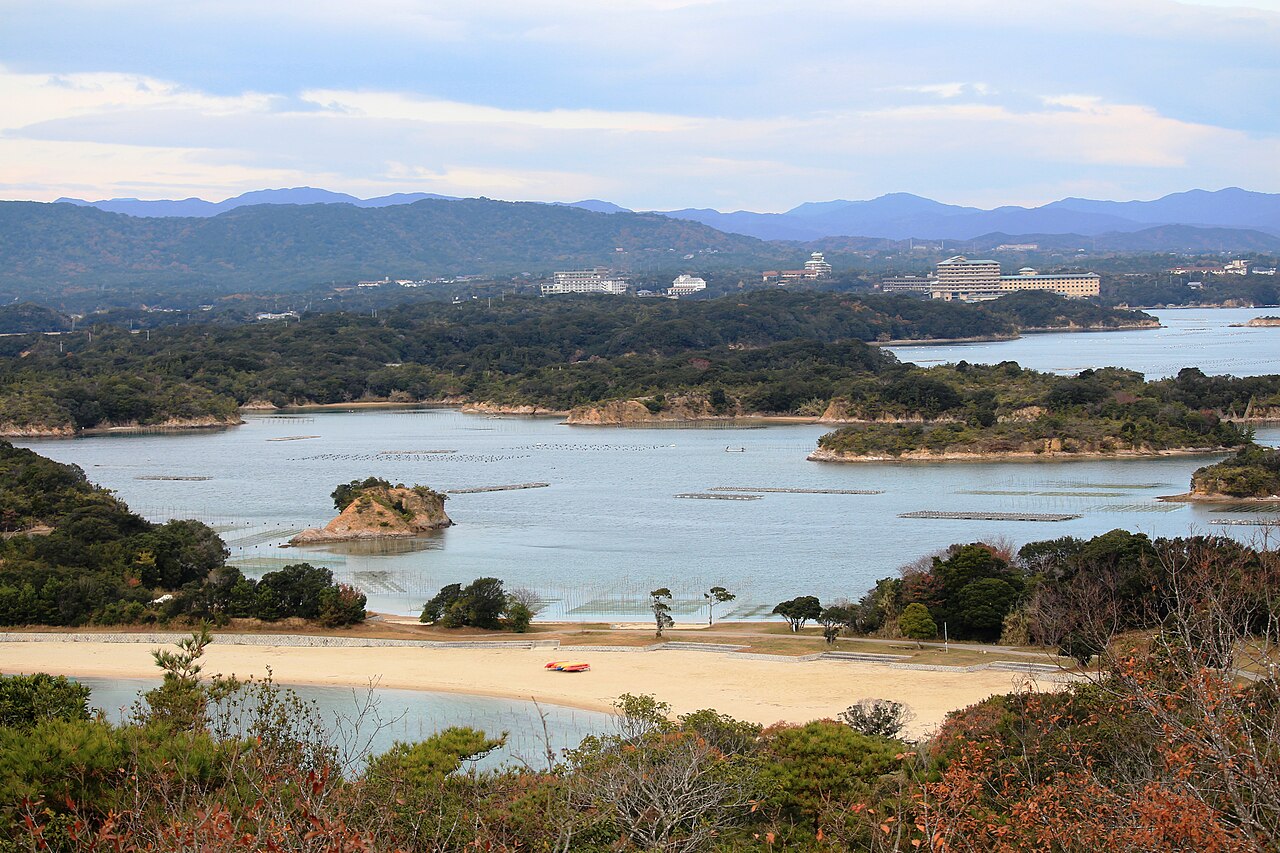
Daiozaki Lighthouse stands on a rugged headland at the southeastern tip of the Shima peninsula, where the sheltered bays of Ise-Shima give way abruptly to the open, often wild Pacific. First lit in 1927, this handsome white tower is one of the relatively few lighthouses in Japan that visitors can actually climb, and the reward at the top is a magnificent 360-degree panorama: the boundless ocean on one side, the rocky, surf-battered coast below, and the indented shoreline of the peninsula stretching away. On clear days the horizon seems endless, and the contrast between the calm inner bays and this exposed, dramatic cape is one of the defining experiences of the Shima coast.
The lighthouse marks a stretch of sea long feared by sailors. The waters off Daio-zaki are notorious for their rough conditions and hidden rocks, and for centuries shipwrecks were common here, which is precisely why a light was eventually built to guard the passage. Standing on the gallery in a stiff sea wind, watching the swells break white against the cliffs, you sense immediately why this coast earned its dangerous reputation and why the lighthouse mattered so much to the fishing communities that depend on these waters.
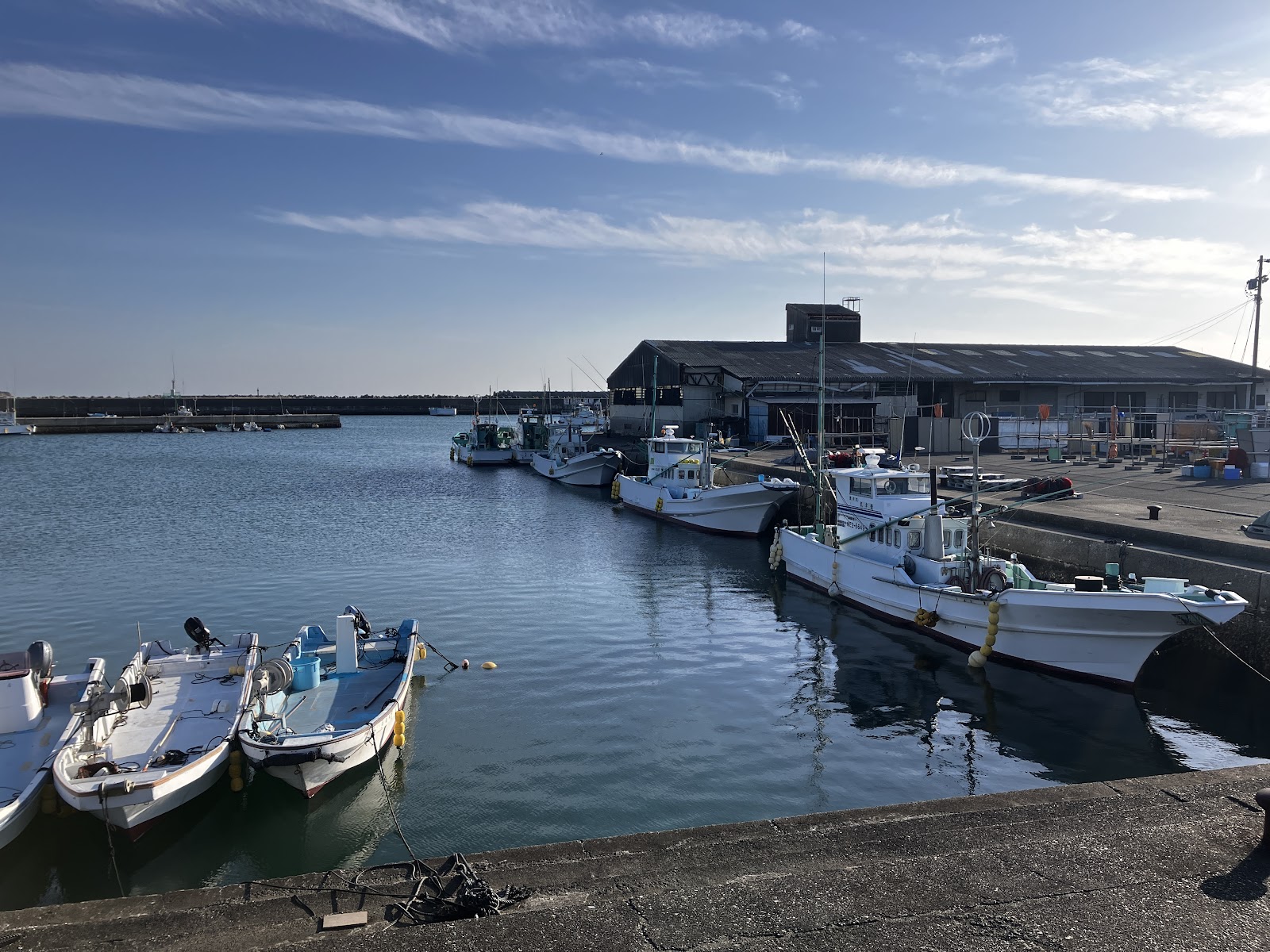
Just as memorable as the lighthouse is the town that clusters beneath it. Nakiri is a classic Japanese fishing village of tightly packed houses and a labyrinth of narrow, stepped stone lanes winding up the hillside toward the cape. Its picturesque, timeworn alleys, glimpses of the harbour, and the quality of the coastal light have drawn painters and photographers for generations, and Daio is affectionately known as an artists' town. Wandering these lanes, past old houses, tiny shrines and shops selling dried seafood and the local himono fish, is every bit as rewarding as the view from the tower, and gives a real sense of traditional maritime life.
The approach to the lighthouse leads up through the town and along the cape, passing small shops and viewpoints, and there is a modest admission to climb the tower itself. Inside, exhibits touch on the history of the lighthouse and the coast, before the final steps up to the windswept gallery. Around the base, paths lead to further lookouts over the cliffs and the crashing sea.
The best conditions are clear days, when the Pacific horizon is sharp and the light is strong; the cape is especially atmospheric in the crisp air of autumn and winter, though the wind can be bracing. Sunrise and the golden hours lend the white tower and the rocky coast a particular beauty.
Getting to Daio-zaki takes a little effort, which helps keep it uncrowded. From Ugata Station on the Kintetsu Shima Line, buses run toward the cape in about twenty-five minutes, followed by a walk up through Nakiri; drivers will find parking near the lighthouse approach. For travellers exploring the Shima peninsula, Daiozaki Lighthouse offers a compelling change of mood from the tranquil pearl bays — a wild Pacific headland, a rare climbable lighthouse with a sweeping ocean view, and one of the most charming old fishing towns on the entire coast.
A local's tip
Wander the atmospheric artists' lanes of Nakiri below the lighthouse — the town's picturesque alleys have drawn painters for a century and are half the charm.
Best time to visit
Clear mornings for sharp Pacific views
Getting there
From Ugata Station take the bus toward Daio-zaki (about 25 minutes) then walk up through the fishing town of Nakiri; drivers can use the car park near the lighthouse approach.
Good to know
- Shops
- Parking
- Restrooms
Plan the whole trip offline
Daiozaki Lighthouse is one of many places in the Real Japan app — with turn-by-turn directions, nearby spots and full offline maps you can use with no signal.