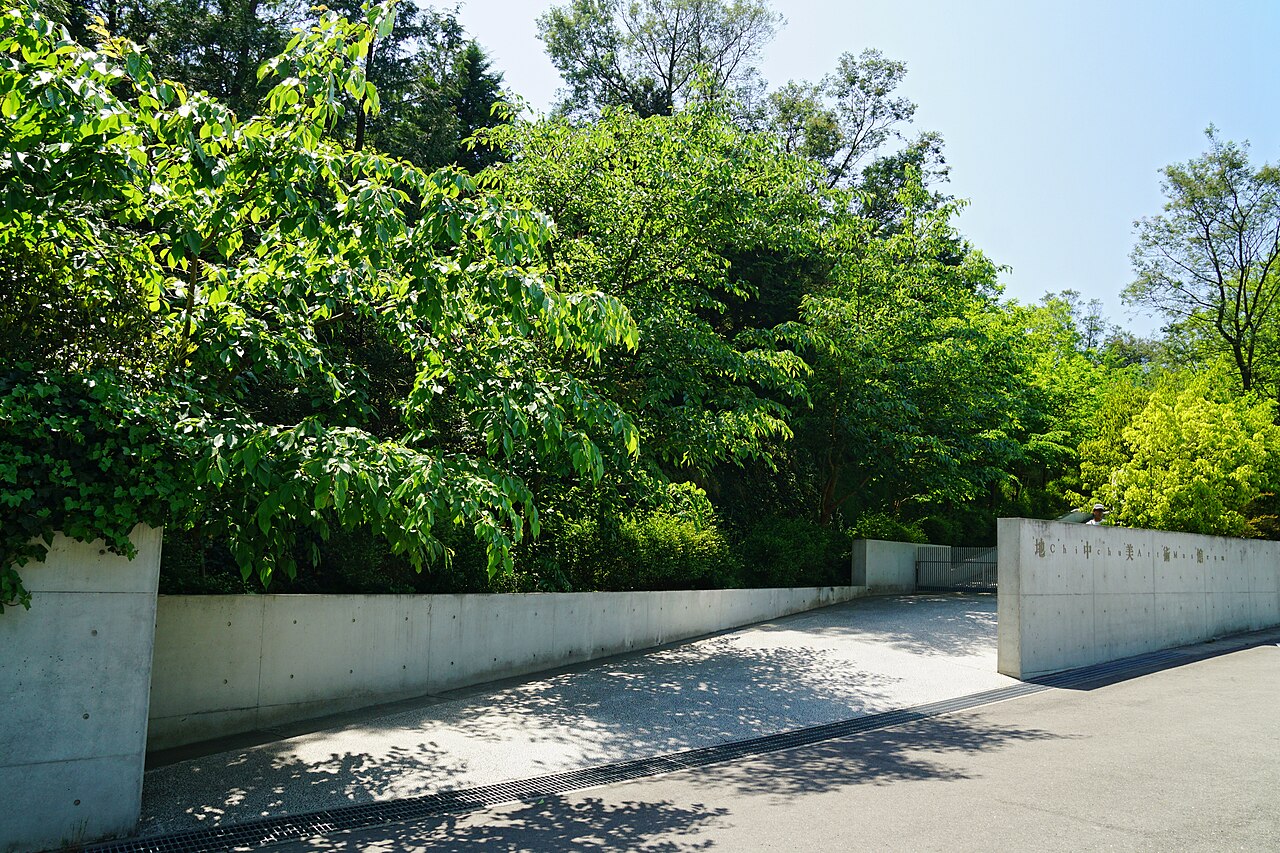
A Tadao Ando museum built into a Naoshima hillside, lit only by natural light, housing Monet, Turrell, and De Maria.
The Chichu Art Museum is the architectural and artistic centerpiece of Naoshima, and one of the most acclaimed art spaces built anywhere in recent decades. Its name means 'in the earth,' and that is quite literally what it is: designed by the master architect Tadao Ando and opened in 2004, the museum is built almost entirely underground, carved into a hillside overlooking the Seto Inland Sea so as not to disturb the island's natural landscape. From outside, only geometric openings and courtyards are visible; the building reveals itself only as visitors descend into it, moving through Ando's characteristic play of raw concrete, sharp angles, and shafts of daylight.
The museum's guiding concept is the relationship between art, architecture, and natural light. Remarkably, almost the entire space is illuminated only by daylight admitted through carefully engineered openings, so the artworks and the rooms change continuously with the weather, the season, and the time of day. A visit in the morning differs from one at noon or on a cloudy afternoon, making the museum feel alive and never quite the same twice. This dependence on natural light also means the experience shifts with the sun's movement, rewarding unhurried visits.
The collection is tiny but extraordinary, devoted to just three artists, each given purpose-built galleries. A luminous white room displays several of Claude Monet's late Water Lilies paintings, viewed in socked feet on a floor of countless small marble tiles, bathed in soft natural light that echoes the atmosphere Monet sought. The American artist James Turrell contributes immersive light installations that play with perception and the very act of seeing, including a space visitors can step into. And Walter De Maria's monumental installation fills a grand stepped chamber with a large polished granite sphere and gilded geometric forms, transformed hour by hour by the shifting light from above. Together, the three create a meditative, almost spiritual sequence.
Because the museum is small and deliberately limits the number of visitors to preserve its contemplative atmosphere, timed-entry tickets are required and should be reserved online well in advance; walk-up tickets frequently sell out, especially in peak seasons. Photography is not permitted inside, which encourages visitors to simply be present with the art and architecture. A cafe near the entrance offers views over the sea and a moment to reflect.
The museum sits within the Benesse Art Site area on Naoshima, close to other highlights such as the Benesse House Museum and the famous Kusama pumpkins, and the island shuttle bus connects them, so it is easily folded into a day or overnight exploring the art island. Reaching Naoshima itself requires a ferry of roughly 50 to 60 minutes from Takamatsu Port in Kagawa Prefecture.
For lovers of art and architecture, the Chichu Art Museum is a pilgrimage in its own right — a place where a handful of masterpieces, a singular building, and the natural light of the Inland Sea combine into an experience that lingers long after the ferry home.
A local's tip
Book your timed-entry ticket well ahead online — the museum limits numbers, and same-day tickets often sell out.
Best time to visit
Midday, when natural light fills the Monet gallery most fully
Getting there
From Miyanoura or Honmura on Naoshima, take the island shuttle bus toward the Benesse Art Site and alight near the Chichu Art Museum.
Good to know
- Cafe
- Shop
- Restrooms
Plan the whole trip offline
Chichu Art Museum is one of many places in the Real Japan app — with turn-by-turn directions, nearby spots and full offline maps you can use with no signal.