Secluded mountain temple above Tonosawa, reached by a steep hydrangea-lined path, where a biwa-playing priest welcomes visitors.
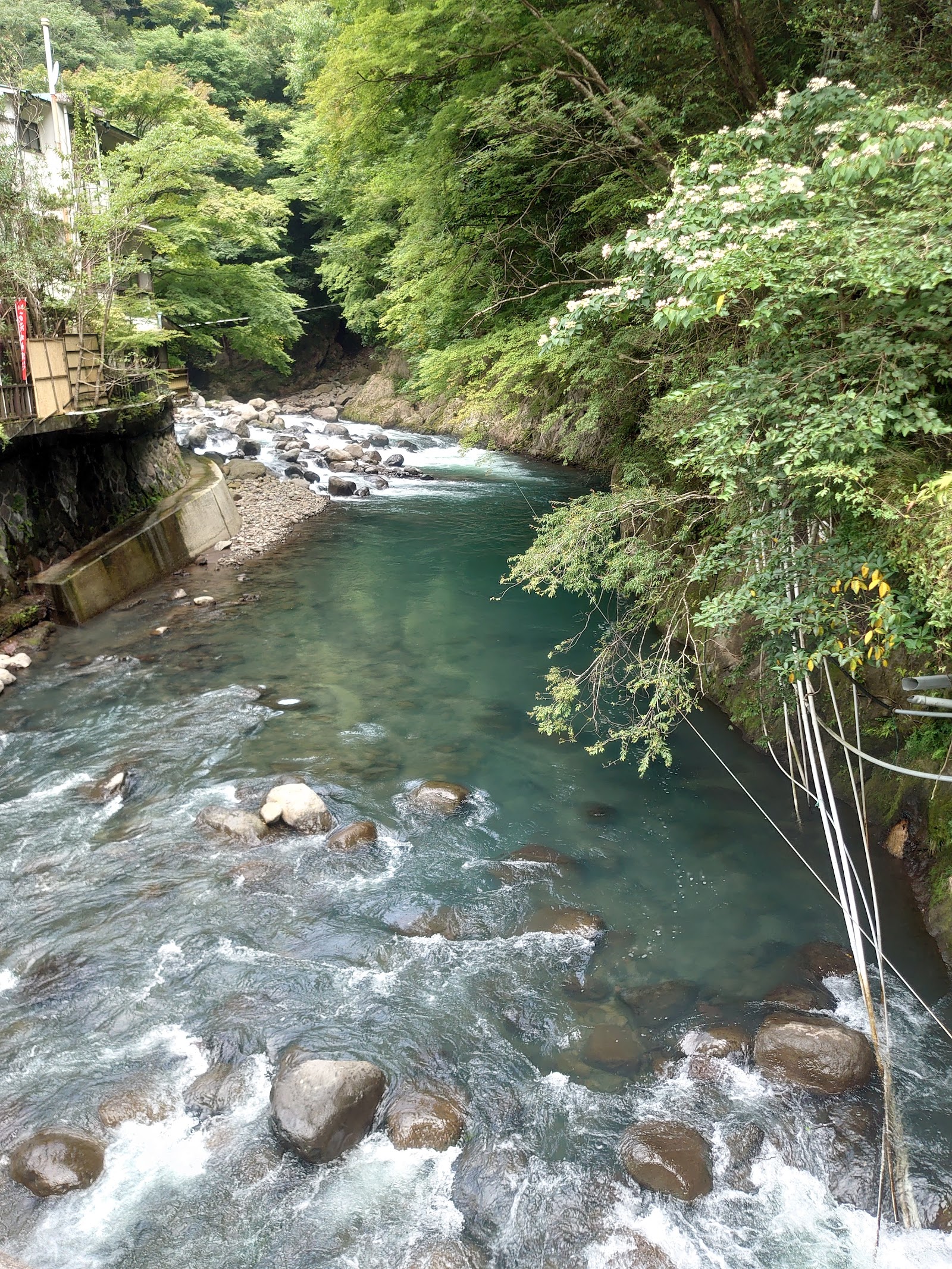
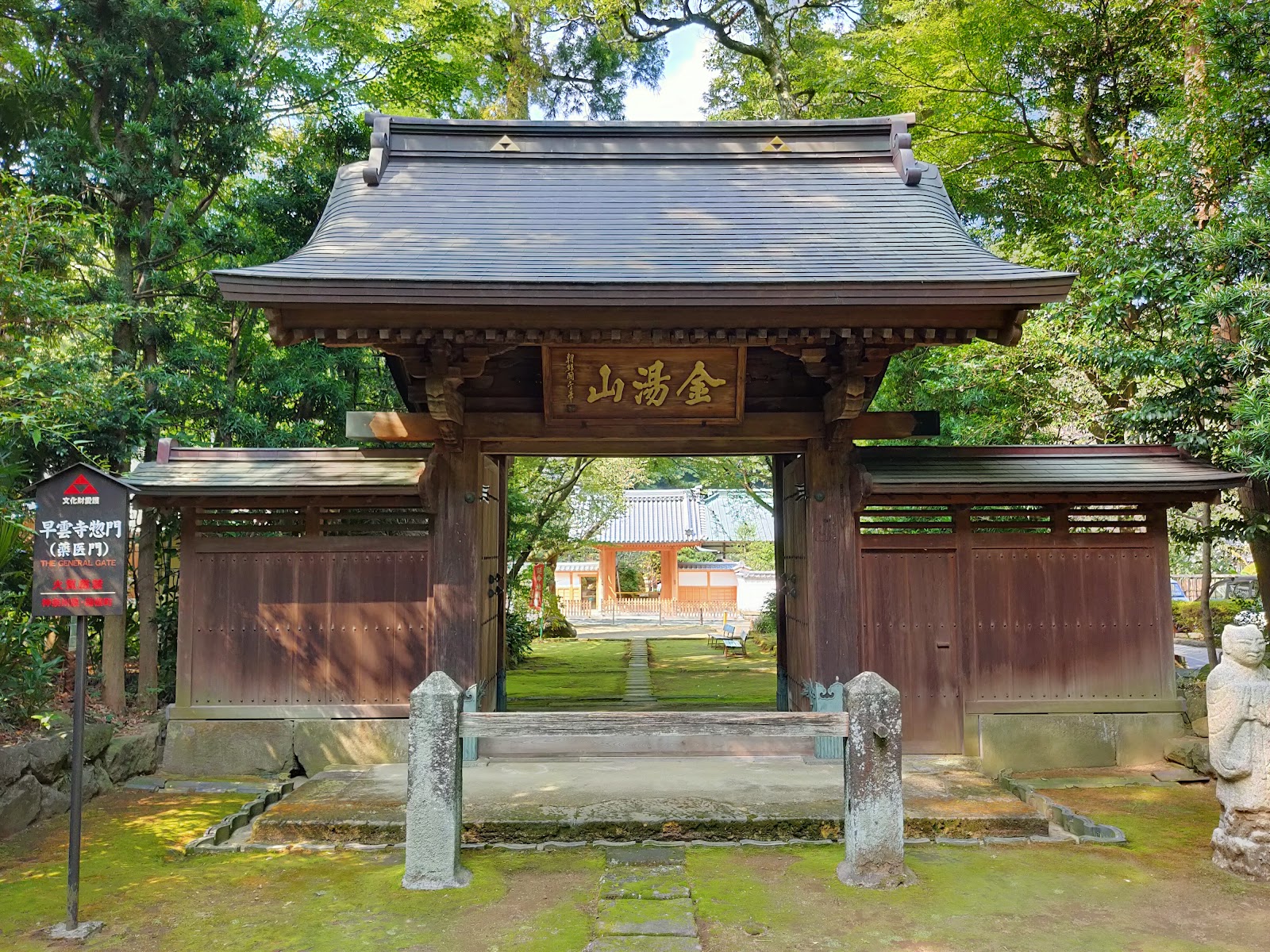
Amida-ji is a secluded mountain temple set high in the forested hills above the Tonosawa hot-spring hamlet, one of the most atmospheric and hard-won destinations in all of Hakone. Reaching it requires effort: from Tonosawa Station a stone stairway climbs into the mountains and grows steadily steeper, winding upward for around twenty minutes past a line of small stone Buddha statues before the temple gate finally appears amid the trees. That sense of pilgrimage, of leaving the busy valley behind and ascending into quiet forest, is central to the temple's appeal.
The temple's origins reach back to 1604, when the monk Dansei, a wandering ascetic, arrived in these mountains and took up meditation in a nearby cave. From that hermitage grew Amida-ji, dedicated to Amida Buddha, the Buddha of the Western Pure Land whose vow promises rebirth in paradise to those who call upon him. Over the centuries the temple gathered its own history and traditions, remaining a place of retreat and devotion far from the main highways of the region.
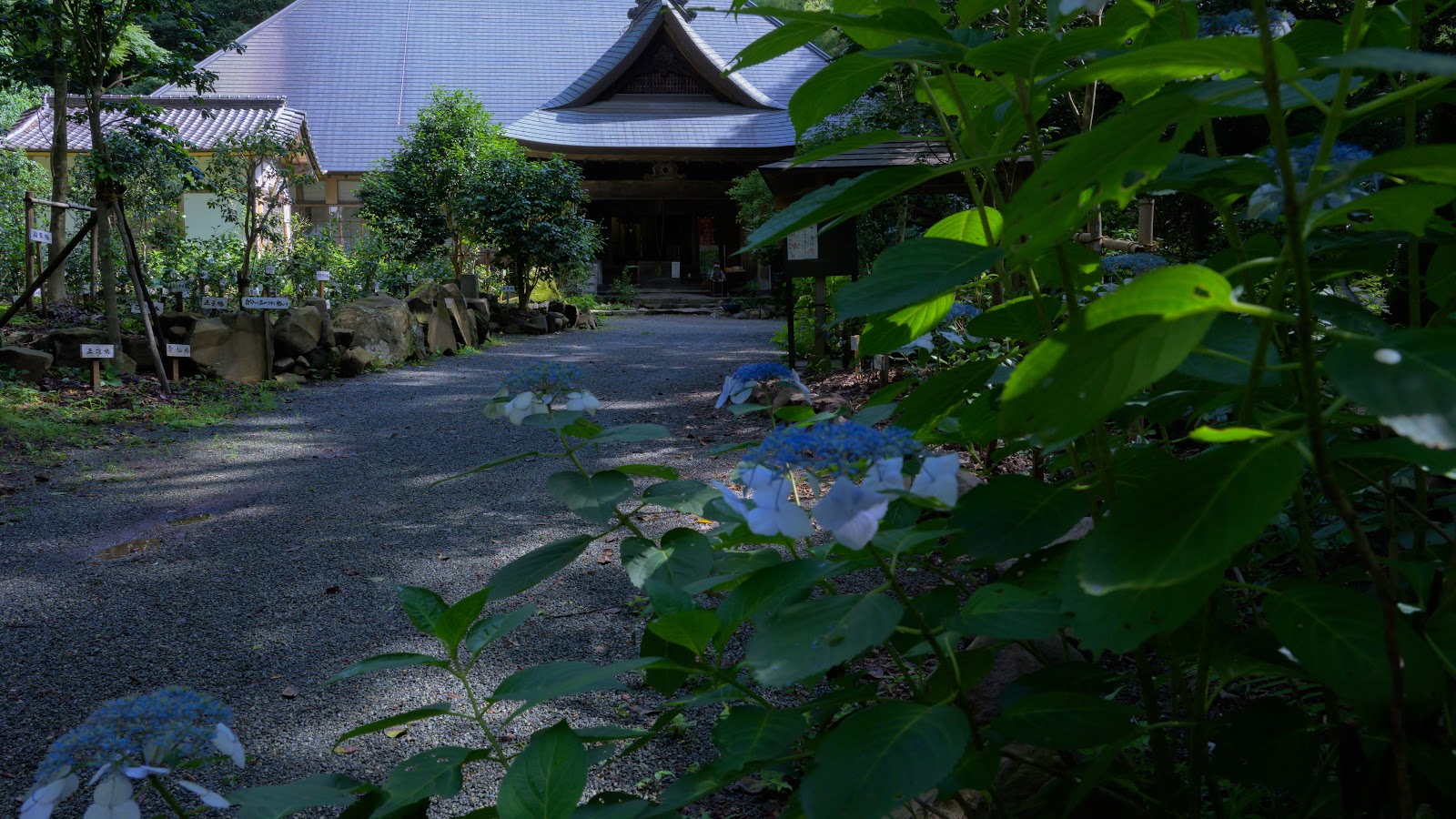
Amida-ji is affectionately known as the 'ajisai-dera', the hydrangea temple, and it is for its flowers that most visitors make the climb. From late June to the middle of July the steep approach path and the temple grounds fill with thousands of hydrangeas in shades of blue, purple, pink and white, transforming the mountain trail into a corridor of blossom. The combination of the small roadside Buddhas, the mossy steps and the massed flowers under the forest canopy is genuinely magical, and it is the reason the temple features on so many Hakone hydrangea itineraries despite its out-of-the-way location.
The temple has another distinctive tradition: its priest is known for welcoming visitors with music, performing on the biwa, the Japanese lute, and offering tea. This personal, human touch, rare among Japan's grander temples, leaves a lasting impression and rewards those who have made the strenuous walk up. Sitting in the quiet hall, listening to the biwa's resonant notes with the forest all around, is an experience quite unlike the polished tourism of Hakone's lakeside and museum district.
The visiting experience is more demanding than most sites in the region and should not be underestimated. The path is genuinely steep and can be slippery in wet weather, so sturdy footwear and a reasonable level of fitness are needed; it is not suitable for those with mobility difficulties. Basic facilities and tea service are available at the top, and the effort is amply repaid by the seclusion and beauty of the setting.
Early summer, during hydrangea season, is unquestionably the best time to visit, when the flowers are at their peak and the temple is at its most photogenic. Autumn brings quieter charm as maples colour the surrounding slopes, and at any time of year the temple offers deep calm and forest air. For travellers willing to trade convenience for atmosphere, Amida-ji is one of Hakone's true hidden gems, a mountain refuge of flowers, music and Pure Land devotion far above the hot-spring valley below.
A local's tip
Known as the 'ajisai-dera' or hydrangea temple, its steep approach path is lined with small Buddha statues and, in early summer, thousands of blue and purple hydrangeas; the resident priest is famed for playing the biwa lute for visitors.
Best time to visit
Late June to mid-July for the hydrangea-lined approach
Getting there
From Tonosawa Station on the Hakone Tozan Line, walk roughly 20 minutes up a stone stairway and mountain path that grows progressively steeper. The temple is hidden deep in the hills above the Tonosawa hot-spring area, so allow time and wear proper shoes.
Good to know
- Restrooms
- Tea service
Plan the whole trip offline
Amida-ji Temple is one of many places in the Real Japan app — with turn-by-turn directions, nearby spots and full offline maps you can use with no signal.