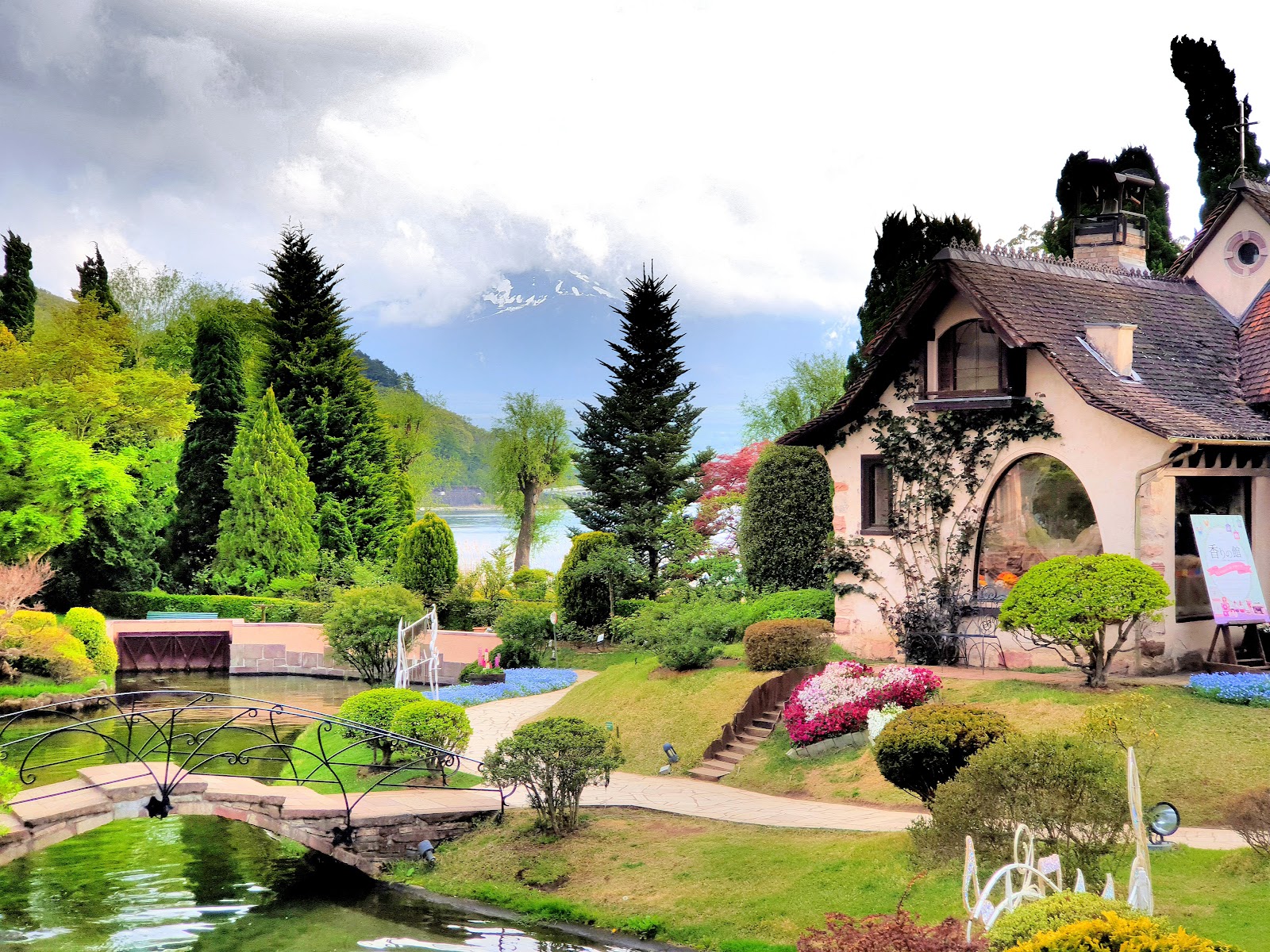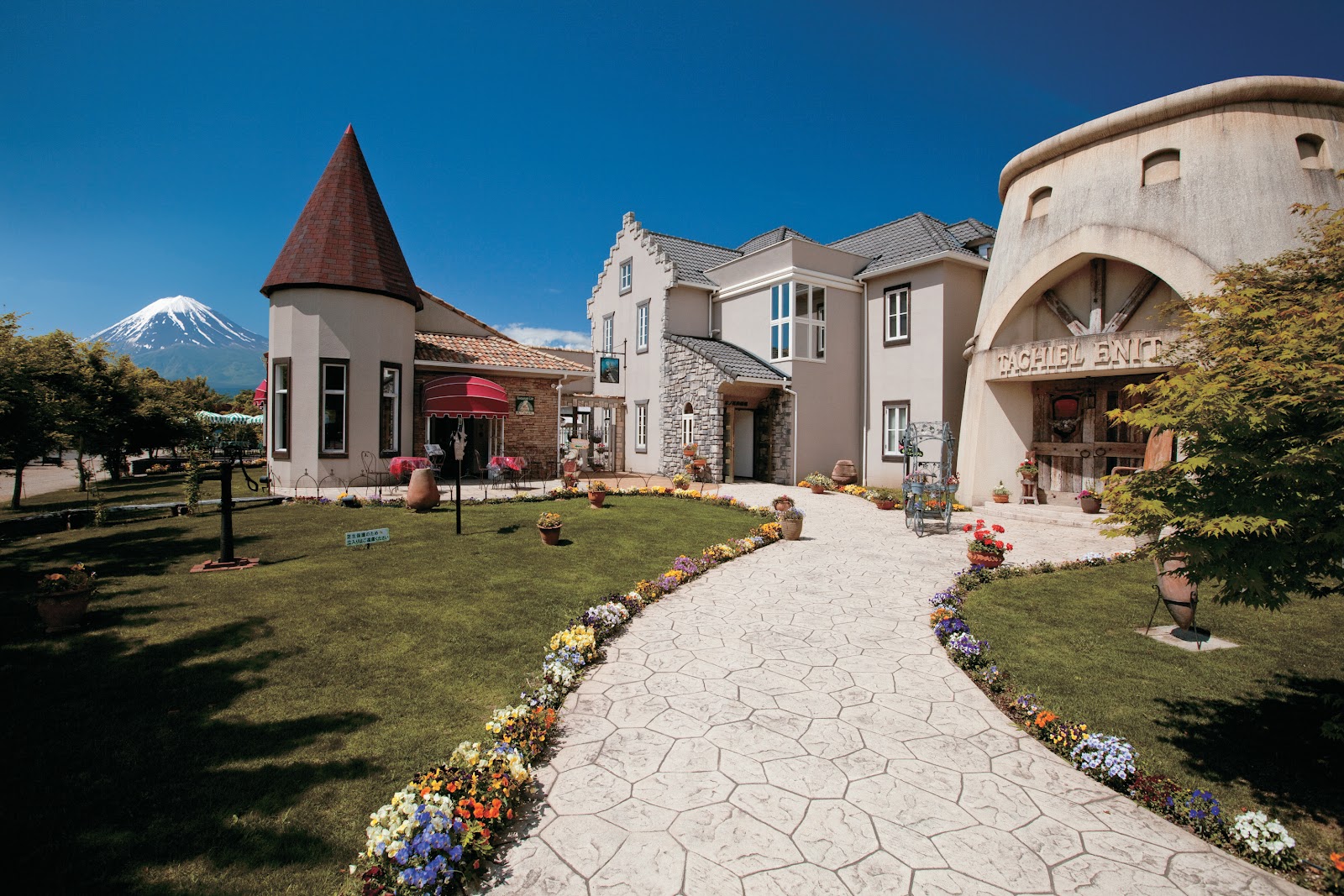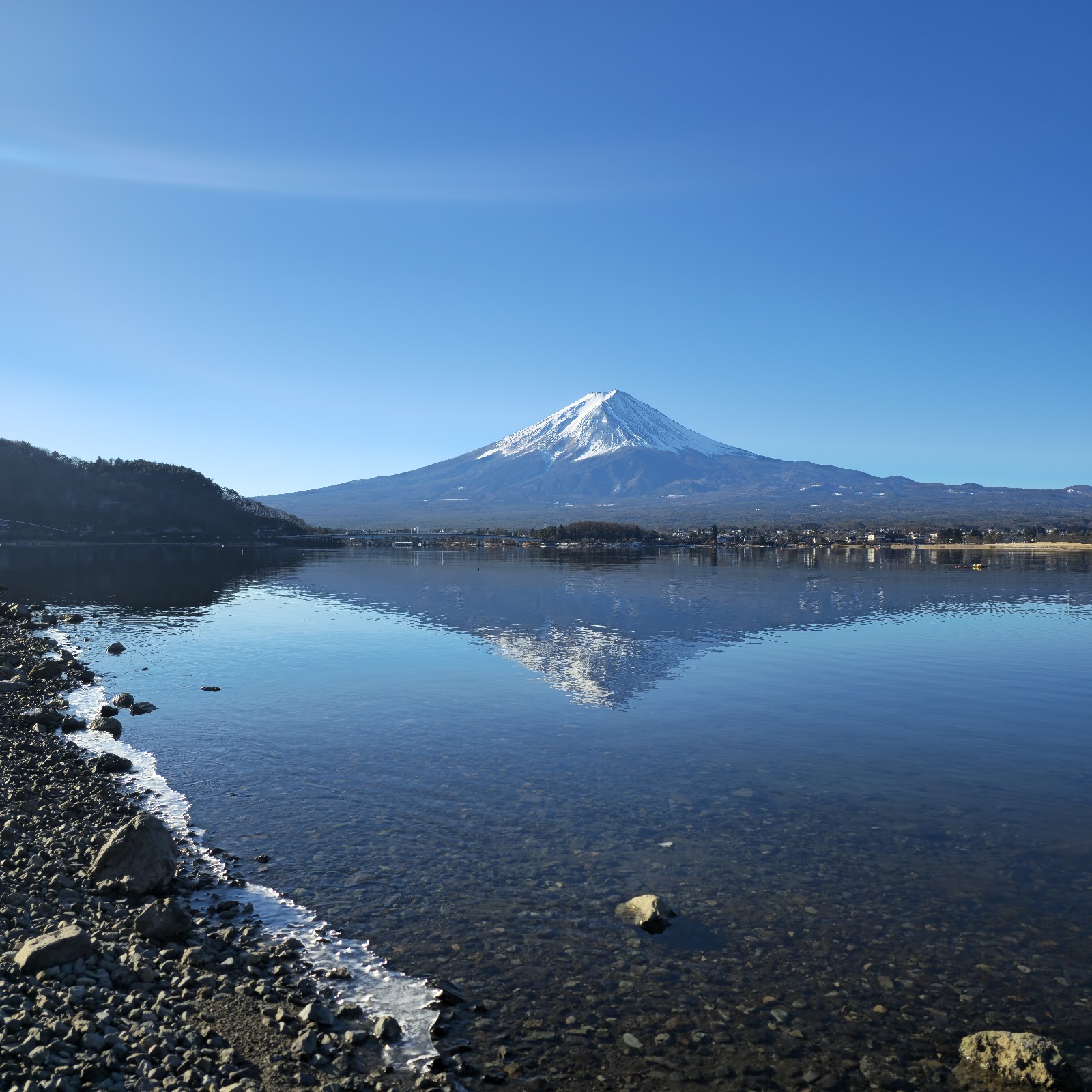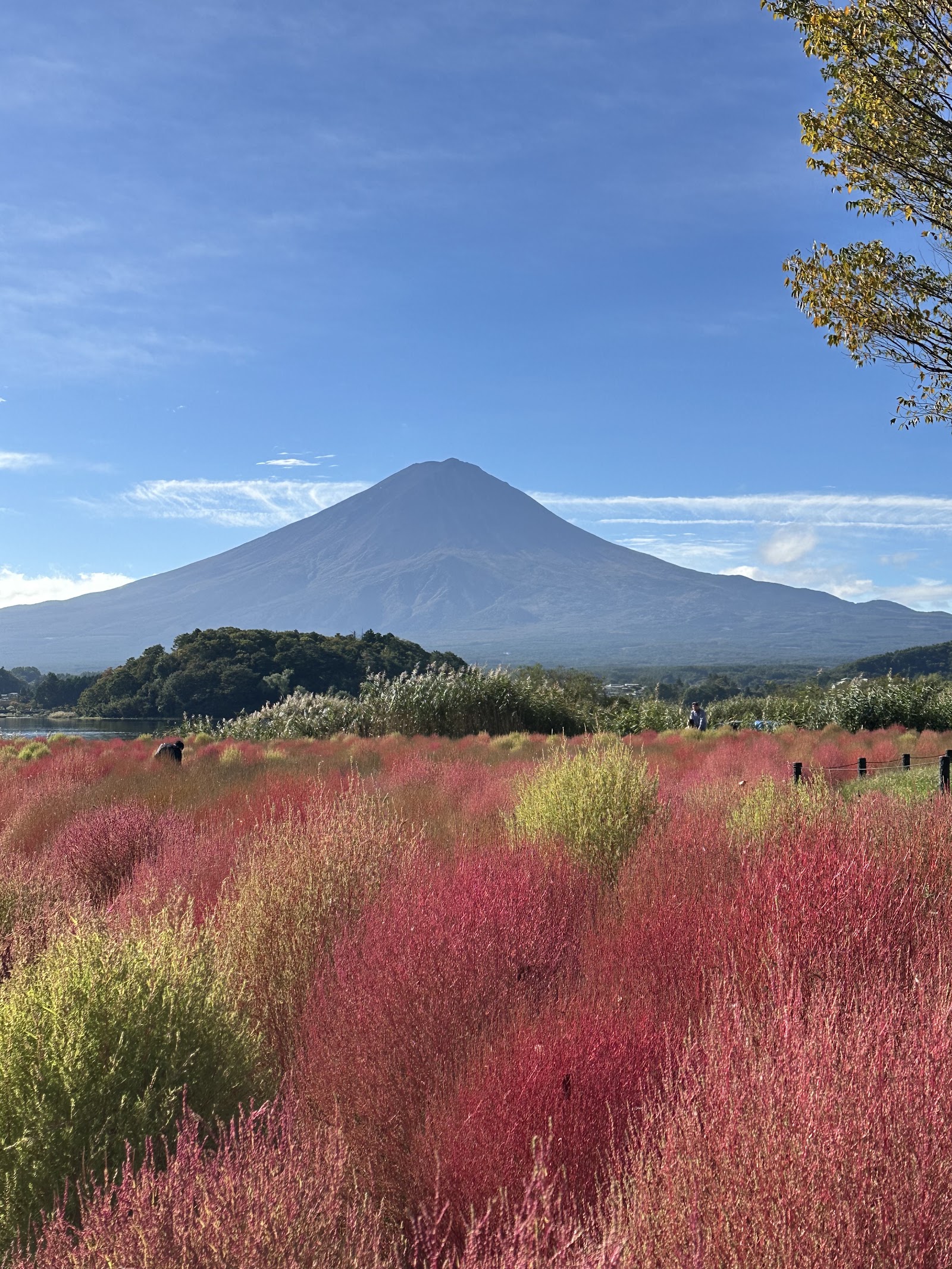
A flower-filled park on Lake Kawaguchi's northern shore with seasonal blooms framing an unobstructed Mount Fuji.
Oishi Park sits on the quiet northern shore of Lake Kawaguchi, directly opposite Mount Fuji, and offers one of the most photogenic combinations in the region: a foreground of seasonal flowers, the broad blue lake in the middle distance, and the snow-capped mountain rising clean and unobstructed behind. Managed alongside the adjacent Kawaguchiko Natural Living Center, it is a favourite of photographers and a relaxed, wide-open counterpoint to the busier southern lakeshore.
The park's centrepiece is its 'flower street', a landscaped belt of blossoms that changes with the calendar and runs along the water's edge for roughly 350 metres. Its most celebrated season is early summer, when lavender scents the air during the Kawaguchiko Herb Festival in late June and July, but the park is designed to bloom nearly year-round: tulips and other spring flowers, summer perennials, and in autumn the famous kochia bushes, feathery mounds that flush from green to brilliant crimson in October. Because the northern shore looks south, Fuji stands squarely behind the flowers for much of the day.
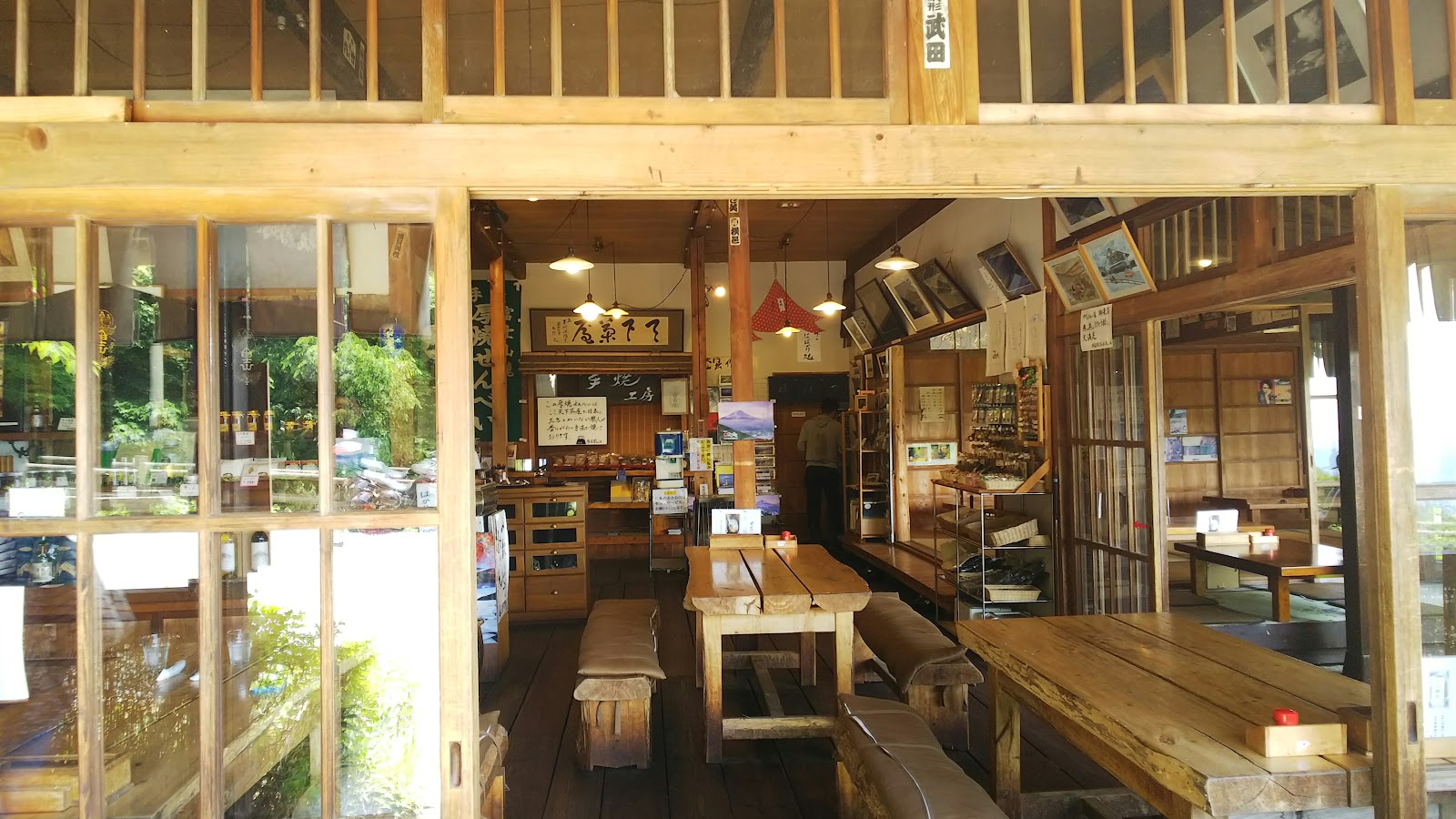
Beyond the blooms, the park is a genuine viewpoint in its own right. A lakeside promenade allows an unhurried walk with the mountain in constant view, the Natural Living Center houses a shop selling local blueberry and lavender products and a cafe with picture-window views, and interpretive displays cover the natural history of the lake and Fuji. A notable fact: this stretch of shoreline is close to the spot from which the Fuji reflection on the 1,000 yen banknote is framed, underlining its status as a benchmark viewpoint.
Visiting is easy and pleasant. The park is free, the ground is flat, paved and largely accessible for wheelchairs and strollers, and an hour is enough to stroll the flower street, walk the promenade and browse the shop. Its northern-shore location means it is a short bus ride rather than a walk from the station, which keeps casual foot traffic lower and the atmosphere calmer than the central lakefront, especially outside peak flower weeks.
Season is everything here. Late June through mid-July is the headline period for lavender, while October delivers the crimson kochia and clearer autumn air. Spring brings tulips and cherry-tinted greenery, and even winter, though the flower beds rest, offers stark, crisp views of a heavily snow-covered Fuji across the still lake. Mornings generally provide the calmest water and the best light on the mountain's southern face, before afternoon haze or cloud can build.
Getting there is simplest by the local sightseeing bus. From Kawaguchiko Station, board the red-line Kawaguchiko loop bus, which runs anticlockwise around the northern shore, and alight at the Oishi Park or Shizen Seikatsukan stop after about 25 to 30 minutes. The Fujikyuko Line trains serving Kawaguchiko are not covered by the Japan Rail Pass, but IC cards are accepted on both trains and buses, and there is free parking for those arriving by car.
A local's tip
Visit during the Herb Festival in late June to mid-July when the lavender belt is in full bloom and perfumes the entire lakefront with Fuji directly behind it.
Best time to visit
Late June to mid-July for lavender, or October for kochia
Getting there
From Kawaguchiko Station take the red-line Kawaguchiko sightseeing bus around the northern shore to the Oishi Park (Shizen Seikatsukan) stop, about a 25-30 minute ride.
Good to know
- Cafe
- Shop
- Parking
- Restrooms
Plan the whole trip offline
Oishi Park is one of many places in the Real Japan app — with turn-by-turn directions, nearby spots and full offline maps you can use with no signal.