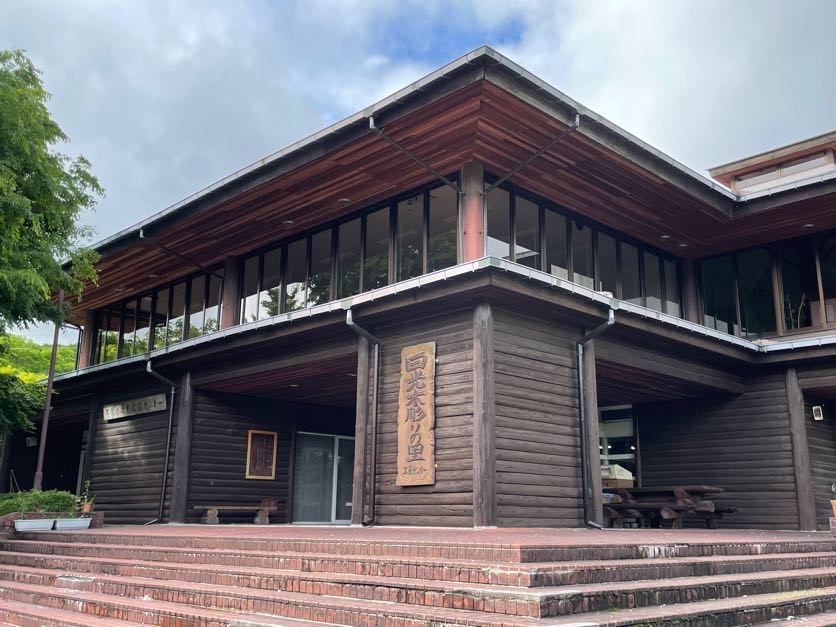
Craft center devoted to Nikko-bori woodcarving, with demonstrations, exhibits and hands-on carving workshops.
The Nikko Kibori no Sato Craft Center is dedicated to Nikko-bori, the distinctive style of decorative woodcarving that grew up alongside the building of the great Toshogu shrine in the seventeenth century. When the shogunate summoned Japan's finest carpenters and carvers to adorn the shrine with its famous menagerie of dragons, phoenixes, cats and monkeys, the craftsmen settled in the town, and over generations their descendants developed Nikko-bori as a refined local craft, carving trays, boxes, mirrors, furniture and ornaments with flowing floral and leaf motifs, often finished with a characteristic lacquer that lets the grain show through.
The center functions as both a museum and a working craft village. In the exhibition areas visitors can admire finished pieces that show the range of the tradition, from delicate small items to large decorative panels, and learn through displays how a design moves from drawing to gouge to finished surface. Resident craftsmen give demonstrations, and on many days you can watch chisels shaving curls of wood from a panel as a pattern slowly emerges, a quietly hypnotic thing to witness. A shop sells authentic Nikko-bori work directly from the makers, offering souvenirs with real provenance rather than mass-produced trinkets.
The highlight for many visitors is the hands-on workshop. Under the patient guidance of a professional carver, even complete beginners can try their hand at a small carving, learning to hold the tools and follow a simple traditional motif, and finish with a piece to take home. Longer and more advanced courses are available for those who catch the bug. It is an engaging, tactile way to connect with the same craft heritage that produced the sculptures you admire up at the shrines, and it appeals to families, couples and solo travellers alike.
Because it lies on the western edge of the town below the sacred mountain, the center is a relaxed, uncommercial place that sees fewer tourists than the shrine district, and admission to the exhibits is free, with charges only for the workshops and materials. It makes an excellent rainy-day or half-day option, a chance to slow down and do something with your hands after the visual feast of Toshogu, and it gives context that makes the shrine carvings all the more impressive once you have felt for yourself how difficult the work is.
To get there, take a bus from either Nikko station heading toward Kiyotaki or Chuzenji and alight near the craft center, or hop in a taxi for the short ride from the stations. Allow about an hour to browse and watch demonstrations, or half a day if you join a workshop, which is well worth booking ahead. The center is closed on Wednesdays and keeps slightly shorter winter hours, and the surrounding area is pretty in autumn when the hills above the town turn colour.
A local's tip
Book the beginner carving workshop ahead if you can, because guided by a resident craftsman even first-timers can finish a small Nikko-style relief to take home.
Best time to visit
Weekdays when craftsmen are working
Getting there
Take a bus from either Nikko station toward the Kiyotaki or Chuzenji direction and alight near the Nikko Kibori no Sato craft center, or reach it by taxi in about ten minutes from the stations; it sits on the western edge of the town below the shrines.
Good to know
- Shop
- Parking
- Workshop
- Restrooms
Plan the whole trip offline
Nikko Kibori no Sato Woodcarving Center is one of many places in the Real Japan app — with turn-by-turn directions, nearby spots and full offline maps you can use with no signal.