One of Kobe's three great ancient shrines, dedicated to the god of commerce and famous for its fiery demon-dance ritual.
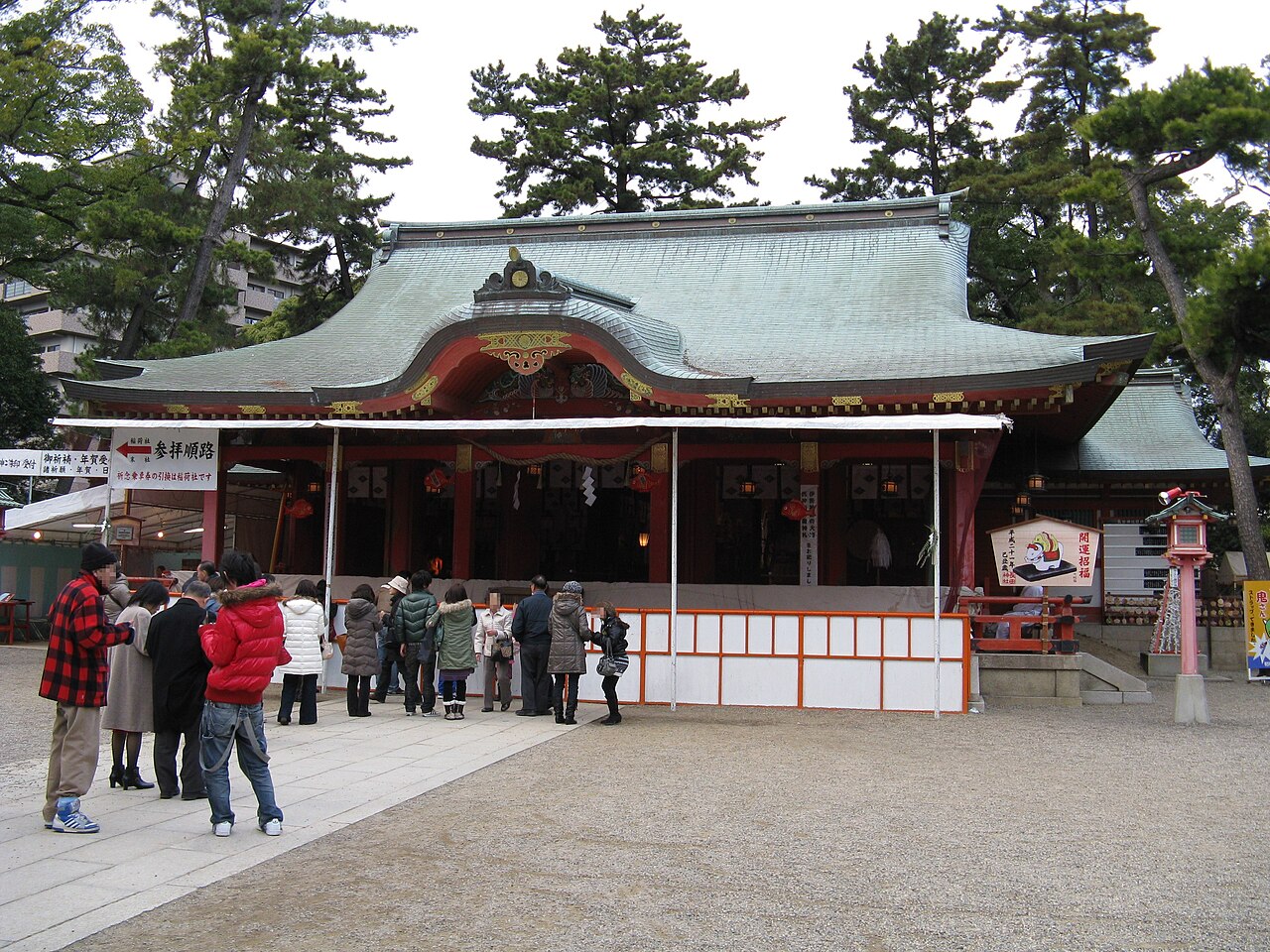
Nagata Shrine, in the western part of Kobe, is one of the city's three great and most ancient Shinto shrines, together with Ikuta and Minatogawa, and its origins reach back into the mists of Japanese mythology. Dedicated to Kotoshironushi-no-Okami - a deity associated with business, commerce and good fortune, often identified with the popular god Ebisu - the shrine has been a spiritual anchor for the region for many centuries and remains a beloved local place of worship, particularly among merchants and business owners who pray here for prosperity.
The shrine's founding is recorded in the Nihon Shoki, Japan's ancient eighth-century chronicle, which places its establishment in the mythic age of the Empress Jingu, giving it a claim to some seventeen centuries of history. According to tradition, the deity requested to be enshrined at this spot, and the shrine has stood as a guardian of the Nagata district ever since. Though the surrounding neighborhood is now thoroughly urban - and was heavily damaged in the 1995 Great Hanshin earthquake, from which the shrine and community have recovered - the precinct retains a dignified, sacred calm, with a handsome main hall in classic Shinto style, torii gates and mature trees.
What most distinguishes Nagata Shrine is its extraordinary annual ritual, the Oni-Oi-Shiki, or demon-chasing ceremony, held in early February. In this centuries-old rite, performers dressed as seven fearsome oni - demons - wield flaming torches and dance through the shrine grounds in a swirl of fire and smoke. Far from being figures of evil, these demons are here understood as agents that burn away the misfortunes and impurities of the past year and usher in health, safety and good harvests. The spectacle of the torch-bearing demons stamping and whirling in the winter darkness is one of the most dramatic and atmospheric festivals in the Kobe region, drawing crowds who come to be blessed by the sparks that fall from the sacred flames.
The everyday visiting experience is more tranquil - a short, easy stop of half an hour to pass beneath the torii, admire the architecture, offer a prayer for good fortune, and perhaps buy an Ebisu-related charm for business luck. Because the deity is linked to commerce, the shrine is especially popular around the January Toka Ebisu period and at New Year, when locals come to pray for a prosperous year ahead.
Accessibility is straightforward: the shrine is about seven minutes on foot from Nagata Station on the Kobe Municipal Subway, or from Kosoku-Nagata on the Hanshin line, placing it within easy reach of central Kobe. Admission is free. For travelers who want to step beyond Kobe's cosmopolitan port image and touch the ancient, mythic layer of the city - and especially for anyone who can time a visit to the fiery February ritual - Nagata Shrine offers a genuine encounter with one of the oldest continuous religious traditions in the Kansai region.
A local's tip
Come for the Oni-Oi-Shiki in February, when torch-wielding 'demons' dance to drive out misfortune - one of Kobe's most dramatic rituals.
Best time to visit
Early February for the fire-and-devil Oni-Oi-Shiki ritual
Getting there
About a 7-minute walk from Nagata Station on the Kobe subway, or from Kosoku-Nagata on the Hanshin line, in western Kobe.
Good to know
- Omamori
- Parking
- Restrooms
Plan the whole trip offline
Nagata Shrine is one of many places in the Real Japan app — with turn-by-turn directions, nearby spots and full offline maps you can use with no signal.