The legendary 'ten-million-dollar night view' from Mt. Maya, one of Japan's three greatest cityscapes.
Kikuseidai (掬星台) is the crown jewel of Kobe's viewpoints — a broad observation terrace just below the 700-metre summit of Mt. Maya, celebrated for a night panorama so brilliant it is officially counted among the three finest night views in all of Japan, alongside Nagasaki and Hakodate. The nickname says it all: locals call it the 'ten-million-dollar night view', an inflation-adjusted upgrade on the older 'million-dollar' tag once given to the lights of the Hanshin conurbation.
The view is extraordinary because of geography. Kobe is squeezed into a narrow ribbon between the Rokko mountain range and the Seto Inland Sea, so from Kikuseidai the whole city fans out directly beneath you in a glittering crescent, curving away east toward Osaka and its bay. On a clear night the lights stretch unbroken for tens of kilometres, the dark shapes of the sea and the offshore islands framing the electric sprawl. The terrace's name, meaning roughly 'the platform where you can scoop up the stars', captures the sensation of standing suspended between the constellations above and the city-lights below.
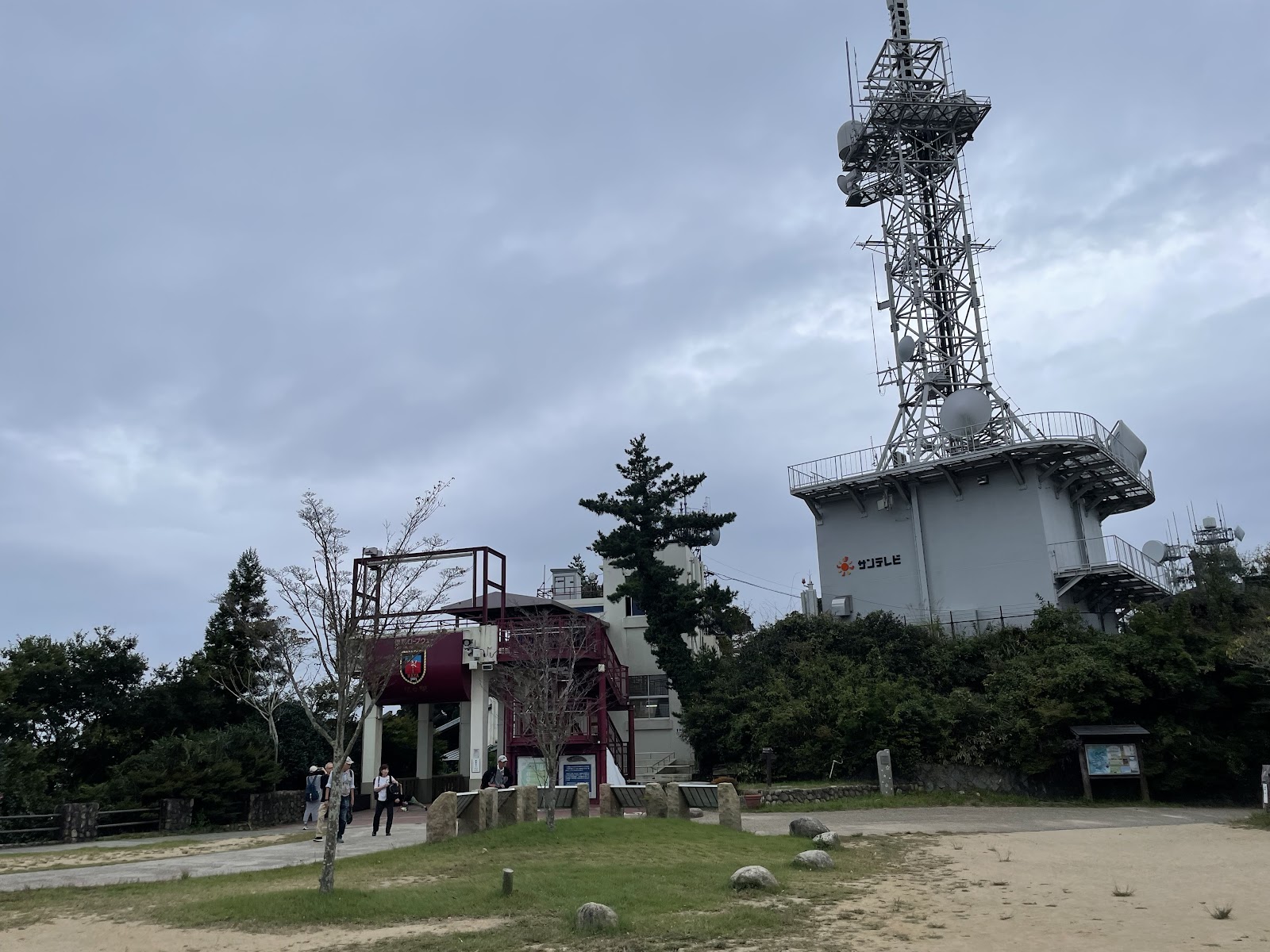
The site has an unexpected history. Before the war the hill was known humbly as Donguri-yama, 'Acorn Mountain'; during the Second World War the trees were cleared and the summit pressed into service as an anti-aircraft artillery position. That wartime clearing is part of why the panorama today is so open and unobstructed. In the decades since it has been landscaped into a proper observation park, with railings, seating, a cafe, and — a modern touch — an installation that reads the constellations, all reached by a charming retro cablecar-and-ropeway combination up the mountain.
Getting there is half the adventure. From central Sannomiya, a city bus climbs to the Maya Cable Station, where the vintage Maya Cablecar hauls you up the lower slope to Nunobiki-dake, and the Maya Ropeway carries you the rest of the way to Mayasanjō, the summit station a three-minute stroll from the terrace. It is crucial to check operating days and the last-descent time in advance: the ropeway runs a limited schedule, is closed certain weekdays and in bad weather, and the final gondola down leaves relatively early — missing it leaves you stranded on a dark mountain.
The reward for the effort is total. Come about half an hour before sunset so you can watch the transition — the sea turning pewter, the mountains blackening, and then, in a slow ripple, the city igniting into a field of white, amber and neon light. Photographers prize the blue-hour window when there is still faint colour in the sky above the illuminated cityscape. By day the same view is impressive in a different, sweeping way, taking in Osaka Bay, the Akashi Kaikyo Bridge to the west, and Awaji Island beyond.
Entry to the terrace itself is free; you pay only for the cablecar and ropeway. Dress warmly — the summit is markedly cooler and windier than the city below, especially after dark. Allow at least an hour, and ideally straddle sunset. Of all the many viewpoints ringing Kobe, Kikuseidai is the one that earns its legendary reputation.
A local's tip
Arrive 30 minutes before sunset to watch the city switch from gold to a carpet of lights — then take the last ropeway down, but confirm its departure time on arrival, as missing it means a long, dark mountain descent.
Best time to visit
Just after sunset for the night view
Getting there
From Sannomiya take a city bus (route 18) to Maya Cable Station, ride the Maya Cablecar then the Maya Ropeway up to Mayasanjō; the platform is a 3-minute walk. Check the ropeway's limited operating days before going.
Good to know
- Cafe
- Parking
- Restrooms
Plan the whole trip offline
Mt. Maya Kikuseidai Observation Platform is one of many places in the Real Japan app — with turn-by-turn directions, nearby spots and full offline maps you can use with no signal.