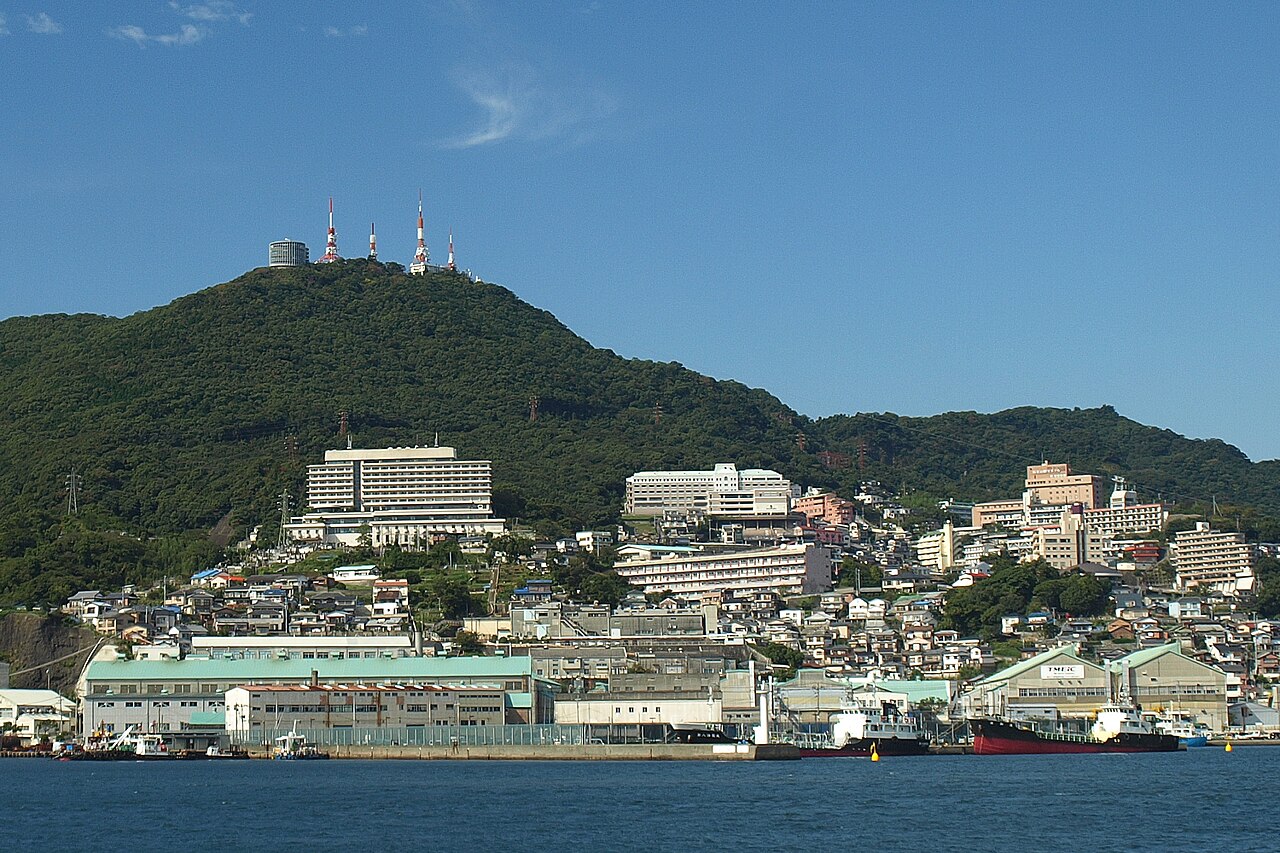
The mountain over Nagasaki whose summit offers one of Japan's three greatest night views across the harbour.
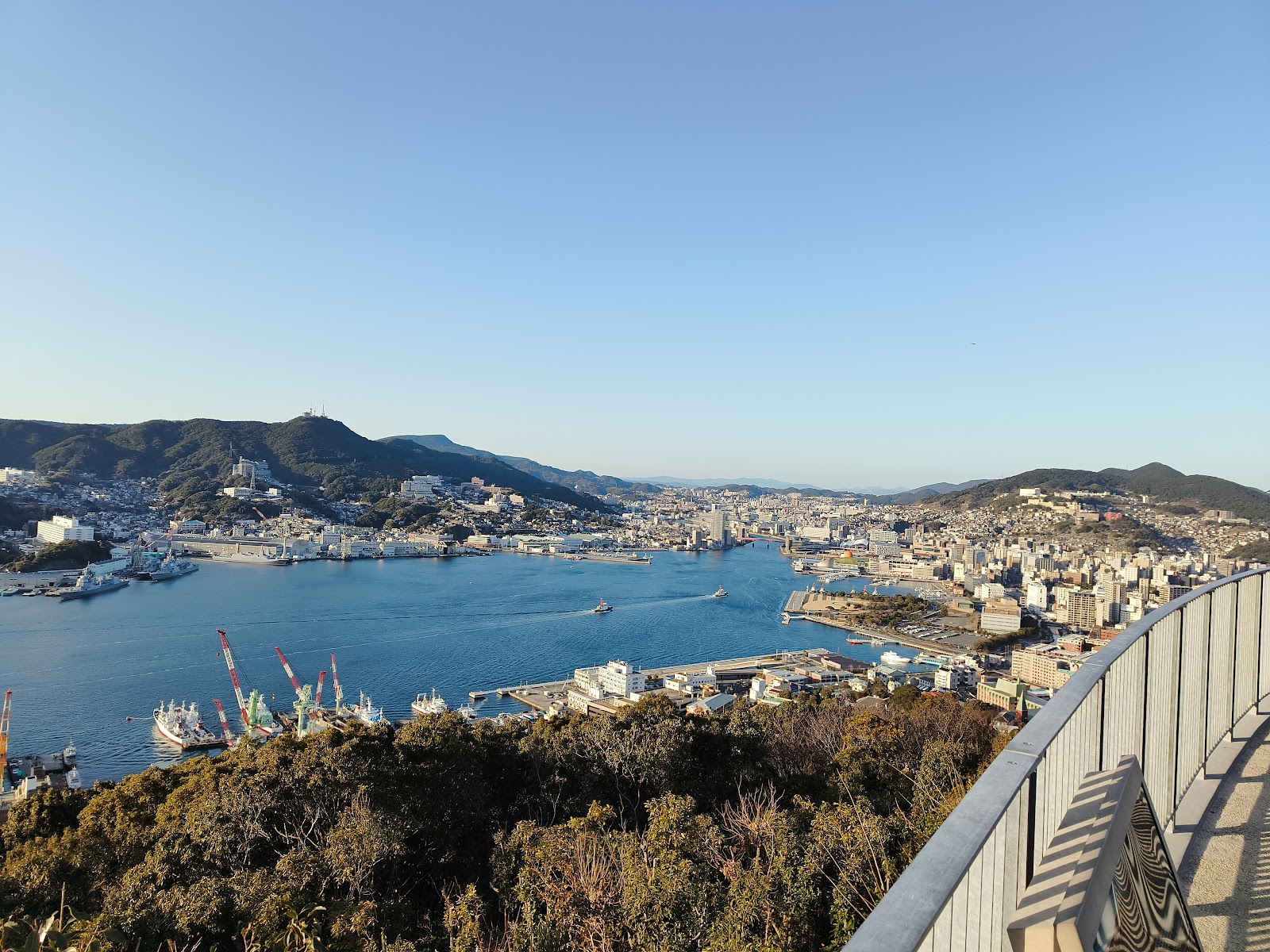
Mount Inasa rises 333 metres directly above Nagasaki, and from its summit unfolds a panorama celebrated as one of the finest night views in Japan. The city's distinctive geography, a harbour hemmed in by steep hills, means that after dark Nagasaki appears as a great bowl of light: houses climbing the slopes on every side glitter like scattered jewels, the black water of the port cuts through the middle, and the whole scene sparkles in a way that has earned it a place among the country's most admired nightscapes.
The summit is reached most easily by ropeway, a smooth cable-car ride that glides up from the base station near Fuchi Shrine, offering expanding views as the city drops away below. At the top stands a modern observation building with indoor and outdoor decks, a restaurant and shops. The circular rooftop terrace gives an unobstructed 360-degree view: by day you can see the harbour, the shipyards, the surrounding mountains and, on clear days, distant islands and even the peaks of neighbouring regions; by night the same view transforms into the famous carpet of lights.
Because Nagasaki's residential districts cling to the hillsides right up to steep heights, the lights of the city rise up around the viewer rather than lying flat, wrapping the harbour in a luminous amphitheatre. This three-dimensional quality is what sets the Inasa night view apart and why it is so often ranked alongside the great nightscapes of other Japanese cities. The best strategy is to arrive around dusk, so that a single trip captures the city in daylight, then bathed in the colours of sunset, and finally ablaze with lights, each stage more beautiful than the last.
The experience is easy and comfortable. The ropeway does all the climbing, the observation building is heated and accessible, and families and travellers of all ages make the trip. Most people spend around ninety minutes including the ride up, time on the deck and perhaps a meal or drink while watching the lights. Beyond the ropeway, the mountain is also served by road, and buses, taxis and some hotel shuttles carry visitors to or near the top for those who prefer not to take the cable car.
A notable point is the setting of the base station beside Fuchi Shrine, and the mountain's broadcasting towers that crown the summit, their red lights a familiar sight above the city. The peak has long been a natural lookout over the port that shaped Nagasaki's history, and standing there it is easy to grasp how the city's dramatic topography, so central to its story as a harbour and its fate in 1945, also gives it such singular beauty.
The best time to visit is the transition from dusk into night, ideally on a clear evening. Reach the base station by bus or taxi to the Ropeway Mae stop, or use a hotel shuttle, and ride the ropeway to the summit. Whether you come for the sunset, the sweeping daytime views or above all the glittering night panorama, Mount Inasa is the crowning viewpoint of Nagasaki and a highlight of any visit to the city.
A local's tip
Board the ropeway about half an hour before sunset so you ascend in daylight and watch the city lights switch on from the summit, avoiding the after-dark queue at the base.
Best time to visit
Arrive around dusk to see the harbour by day, at sunset and lit up at night
Getting there
Take a bus or taxi to the Fuchi Shrine ropeway base station, then ride the ropeway to the summit; some hotels run shuttles.
Good to know
- Gift shop
- Restrooms
- Restaurant
- Observation deck
Plan the whole trip offline
Mount Inasa is one of many places in the Real Japan app — with turn-by-turn directions, nearby spots and full offline maps you can use with no signal.