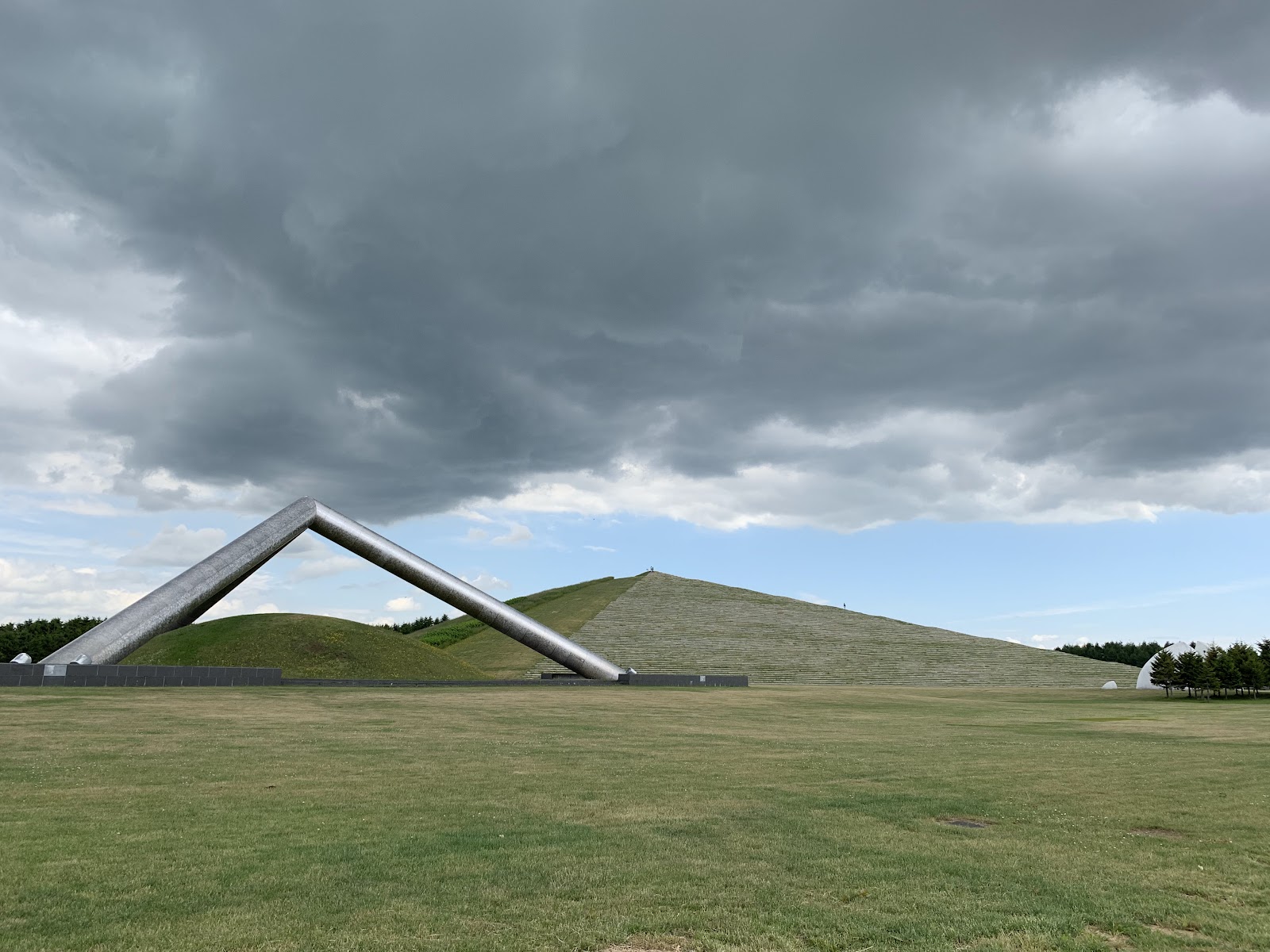
A vast park designed as a single sculpture by Isamu Noguchi, built on a former landfill on Sapporo's northeast edge.
Moerenuma Park is one of the most remarkable public spaces in Japan: an entire 189-hectare park conceived as a single work of art by the Japanese-American sculptor Isamu Noguchi. Noguchi accepted the commission in 1988, envisioning the whole site — built on top of a former waste-treatment landfill — as one continuous sculpture that fuses nature and geometry. He died only months after finalizing the master plan, and the park was completed to his design and formally opened in 2005, a posthumous masterpiece and a fitting culmination of a career spent blurring the line between landscape and sculpture.
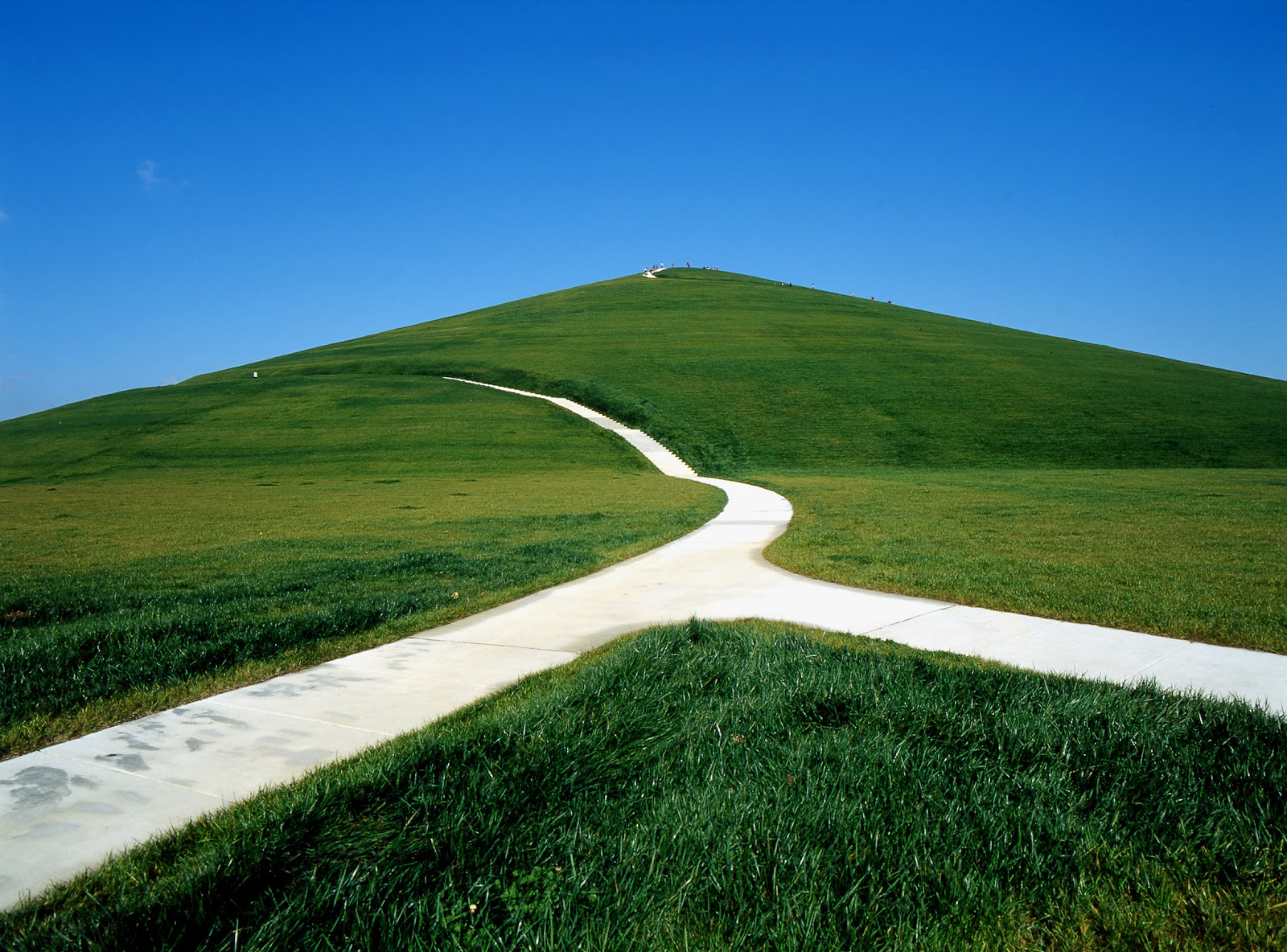
The park is organized around bold geometric forms rising from flat reclaimed land. Its centerpiece is Mount Moere, a perfectly shaped artificial hill 62 meters high, reached by spiralling paths and stone stairways that reward the climb with a 360-degree panorama of the Ishikari Plain and, on clear days, the mountains beyond. Nearby stands the Glass Pyramid "Hidamari," a triangular glass-and-steel structure that serves as the park's visitor hub, housing a gallery, a restaurant and event spaces bathed in natural light. Play Mountain, a stepped stone pyramid, and a scatter of sculptural play equipment turn Noguchi's abstract vocabulary into something children can climb and explore.
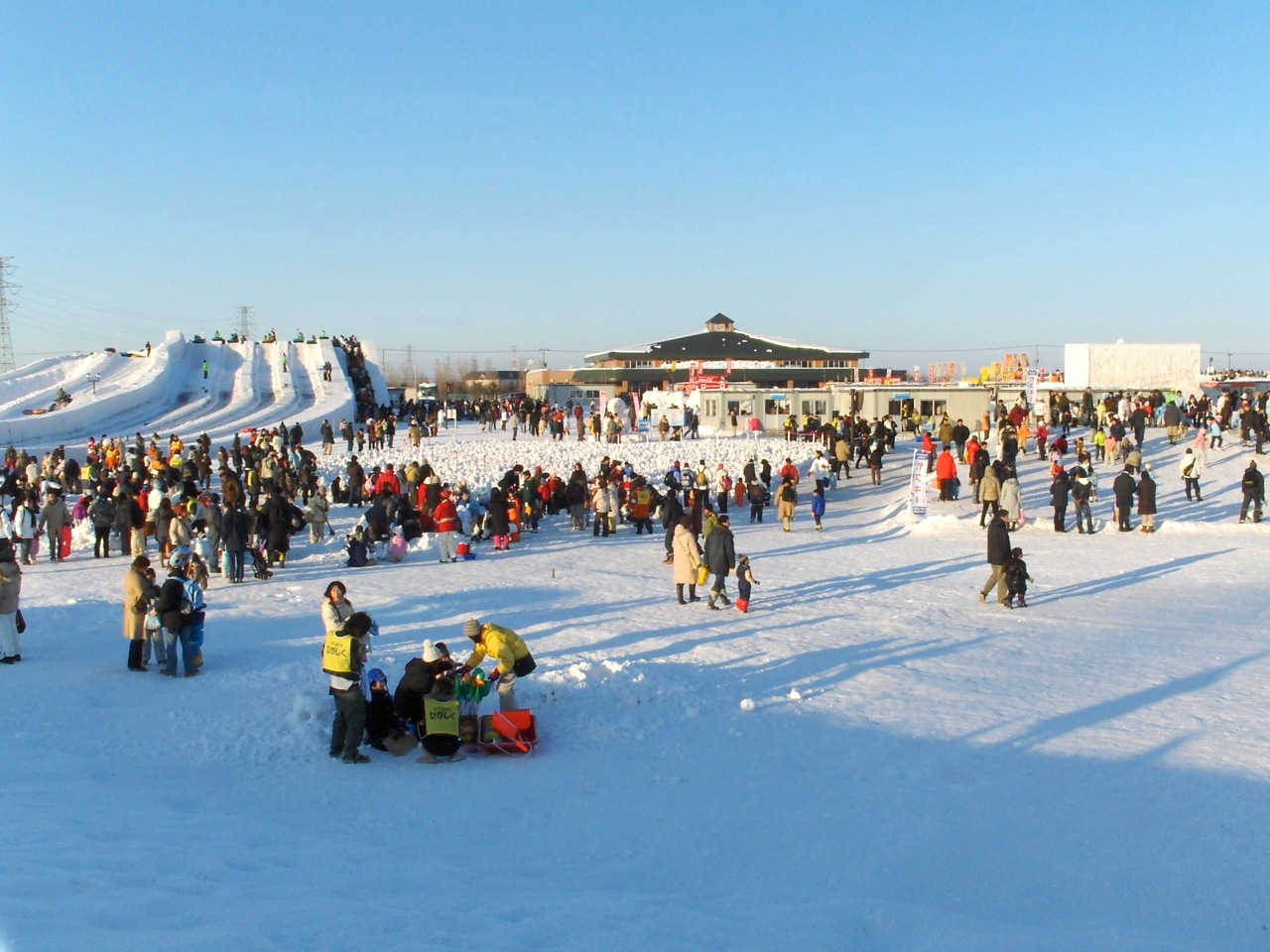
Water is the park's summer star. The Sea Fountain performs several choreographed shows a day between spring and autumn, its jets rising and falling in long sequences that can reach 25 meters, mimicking the rhythm of ocean waves. In the warmer months the Moere Beach — a shallow water plaza — fills with families, while cherry trees bloom across the forest of some 3,000 sakura in spring. Autumn brings fiery foliage, and winter transforms the whole park into a white expanse where locals cross-country ski, sled down Mount Moere and build snow sculptures.
What makes Moerenuma so special is the sense of walking through a completed idea. Every path, mound and reflecting basin was placed to relate to the others, so the park reads as a coherent composition rather than a collection of features. It is also a quiet lesson in renewal: a scarred, buried landfill reimagined as a serene civic landscape that draws visitors from around the world.
Because it sits on the city's northeastern fringe, reaching Moerenuma takes a little effort — subway to Kanjodori-Higashi, then a bus — but the journey filters out the crowds and the park never feels busy. Rent a bicycle at the Glass Pyramid to cover the generous distances comfortably, and allow at least two to three hours. Come in the morning light for photography, or in the late afternoon when the low sun rakes across the geometric hills and the whole of Noguchi's vision seems to glow.
A local's tip
Time your visit to catch one of the daily Sea Fountain shows (about 40 minutes, several times a day in the warm season) — the water choreography is genuinely spectacular.
Best time to visit
Summer for the fountain; winter for snow play
Getting there
From Sapporo Station take the Toho Subway Line to Kanjodori-Higashi, then the Chuo Bus (Higashi 69 or 79) to Moerenuma-koen Higashiguchi.
Good to know
- Cafe
- Parking
- Restrooms
- Bike rental
Plan the whole trip offline
Moerenuma Park is one of many places in the Real Japan app — with turn-by-turn directions, nearby spots and full offline maps you can use with no signal.