A downtown Kobe shrine honoring the loyal 14th-century samurai Kusunoki Masashige, with his grave on the grounds.
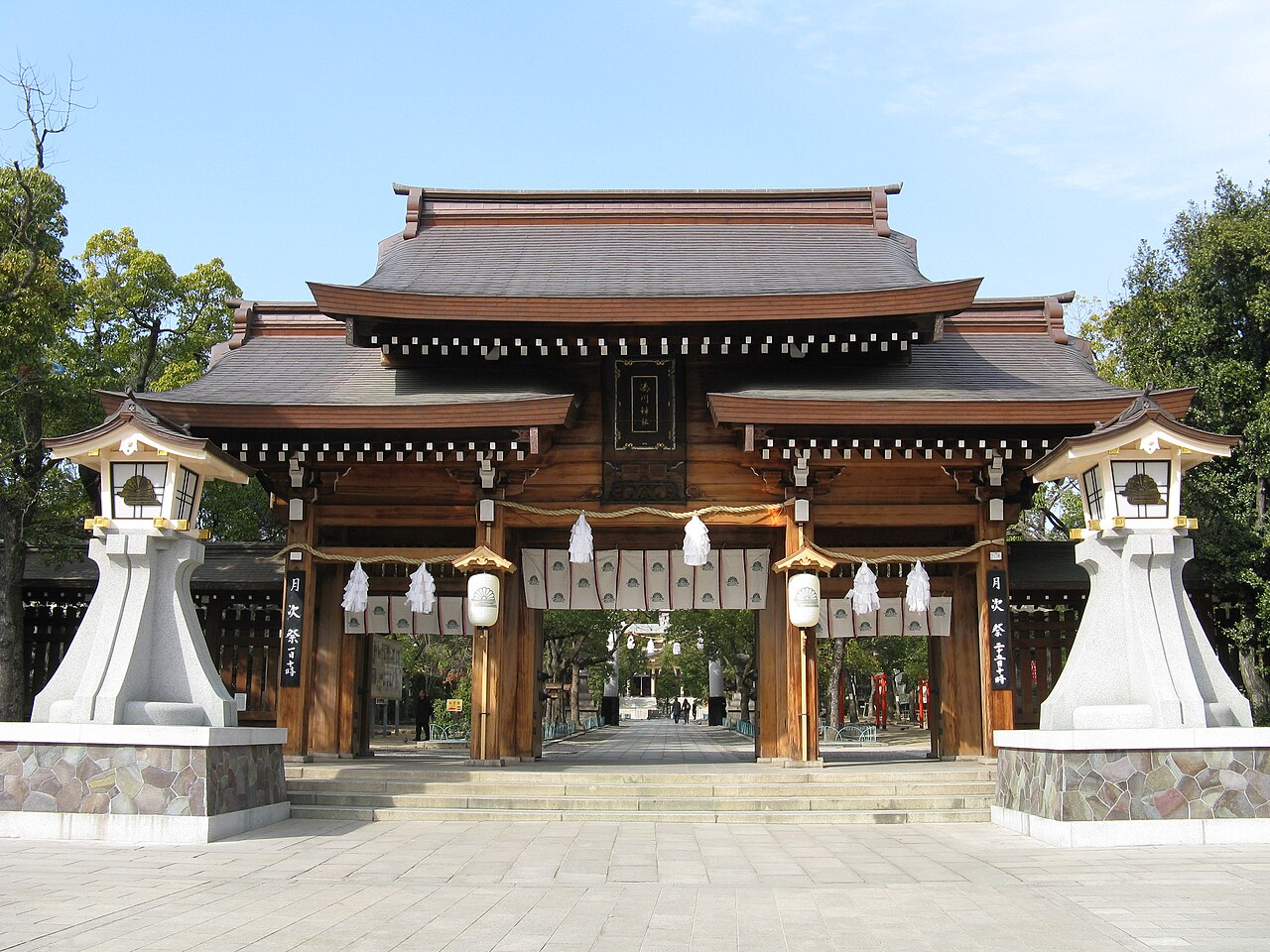
Minatogawa Shrine, known affectionately in Kobe as Nanko-san, is one of the city's most historically resonant Shinto sites, dedicated to Kusunoki Masashige, the fourteenth-century samurai whose name became a byword for loyalty in Japan. Set in the busy downtown a few minutes from Kobe and Kosoku-Kobe stations, the shrine is a calm, dignified green island amid the city, and it draws a steady stream of worshippers who come to honor one of the nation's most admired historical figures.
Kusunoki Masashige was a warrior and strategist who fought for Emperor Go-Daigo during the turbulent struggles of the early fourteenth century. In 1336, ordered into a battle he knew was hopeless, he obeyed out of absolute loyalty to the emperor and died here at the Battle of Minatogawa, choosing death over dishonor. Over the following centuries his unwavering devotion made him a legendary symbol of loyalty and self-sacrifice, revered especially during the age when the imperial ideal was celebrated. His grave on this site became a place of pilgrimage - even the feudal lord Tokugawa Mitsukuni, the famous Mito Komon, is said to have honored it - and in 1872, in the early Meiji era, the emperor ordered a grand shrine built over the spot to enshrine his spirit.
The shrine grounds are spacious and well-kept, with a stately main hall and, most movingly, the tomb of Masashige himself, marked by a stone monument. A small treasure museum on the precinct displays relics, armor-related items and artworks connected to the Kusunoki legend, deepening the visit for those who want to understand why this man still commands such respect. Because of his association with steadfastness and fulfilling one's duty, the shrine is a popular place to pray for success, perseverance and protection, and it is especially busy at New Year, when crowds come for hatsumode, the first shrine visit of the year.
The visiting experience is quiet and reflective rather than spectacular. This is not a shrine of vast vermilion gates but of history and meaning - a place to walk the gravel paths, pay respects at the hall, stand a moment at the grave of a man who died for his principles nearly seven hundred years ago, and feel the weight of that story. Cherry trees on the grounds make spring a lovely time to come, and the shrine's annual festival in early May honors Masashige with ceremonies and processions.
Accessibility is excellent: the shrine sits right in central Kobe, a three-minute walk from Kosoku-Kobe Station on the Hanshin and Hankyu lines and about seven minutes from JR Kobe Station, so it is easy to fold into a day of city sightseeing near Harborland and Motomachi. Entry to the grounds is free, with a modest charge for the museum. For travelers who want to touch the deeper layers of Japanese history and understand the samurai ideal of loyalty not as a cliche but as a real man's fatal choice, Minatogawa Shrine is one of Kobe's most quietly powerful places.
A local's tip
Visit the small museum on the grounds to see relics tied to Kusunoki Masashige, the tragic samurai hero enshrined here.
Best time to visit
Early May for the Kusunoki festival; New Year for hatsumode
Getting there
Three minutes on foot from Kosoku-Kobe Station, or about seven minutes from JR Kobe Station, in the heart of downtown Kobe.
Good to know
- Museum
- Omamori
- Restrooms
Plan the whole trip offline
Minatogawa Shrine is one of many places in the Real Japan app — with turn-by-turn directions, nearby spots and full offline maps you can use with no signal.