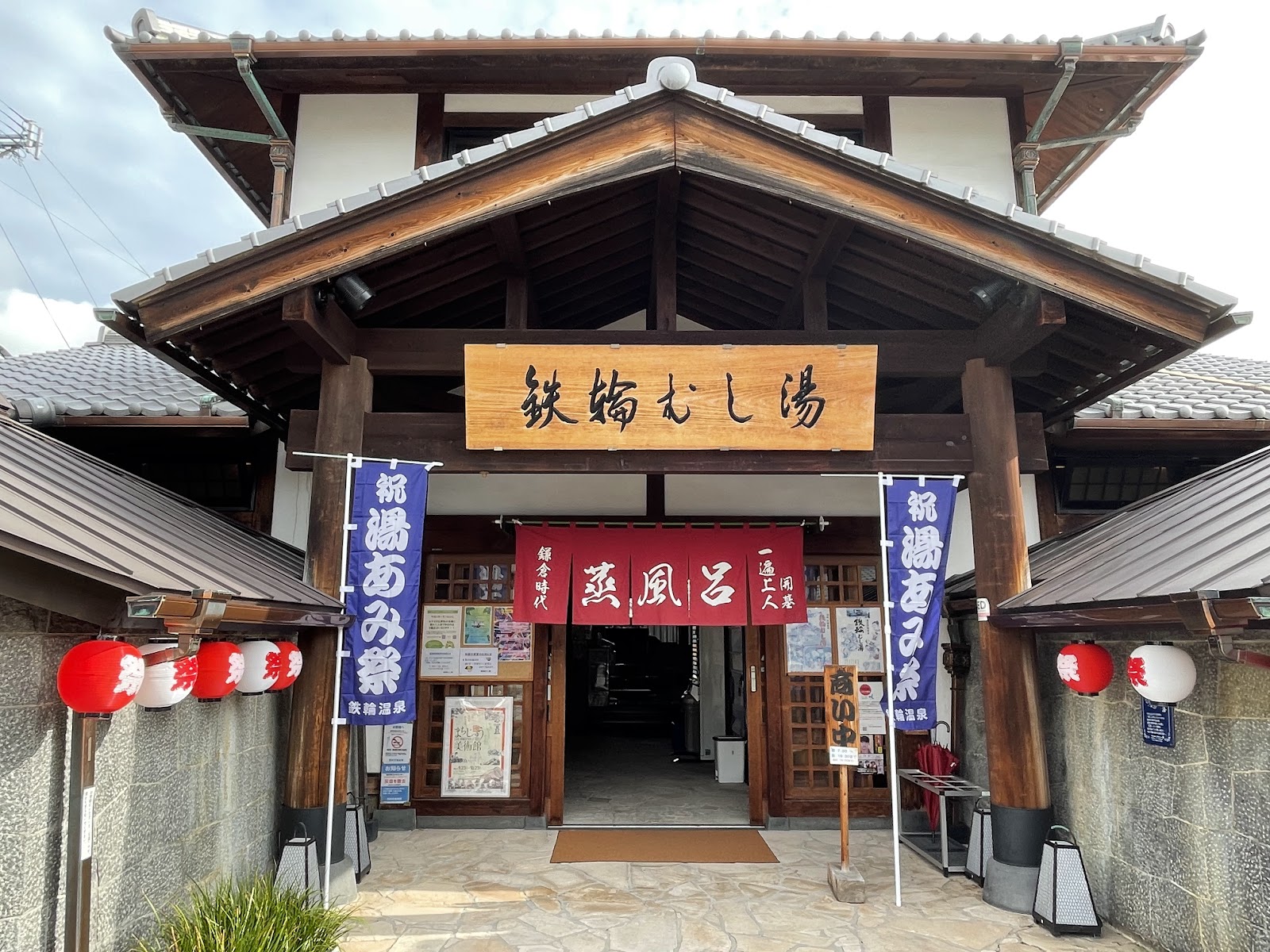
The atmospheric heart of Beppu's onsen culture - a hillside warren of steaming lanes, old bathhouses and steam-cooking kitchens.
Kannawa is the most atmospheric and historically rich of the eight hot-spring districts that make up Beppu Hatto, and for many visitors it is the true heart of the city's onsen culture. Draped across a hillside where geothermal steam escapes from drains, gutters, chimneys and open vents, Kannawa is a place where the ground itself seems to breathe. Walk its narrow back lanes on a cool evening and you move through drifting clouds of white vapour that pour from rooftops and pavements - a townscape unlike anywhere else in Japan.
The district's origins reach back to the Kamakura period in the 13th century, when the monk Ippen is credited with taming the scalding springs and opening them for healing use. That long history survives in Kannawa's traditional bathhouses and in the jigoku-mushi ("hell steaming") tradition, in which food is cooked using nothing but the mineral steam rising from the ground. At the public jigoku-mushi kobo and at many inns, visitors can buy baskets of seafood, eggs, corn and vegetables and steam them in communal vents, producing a naturally seasoned, deeply savoury meal - the district's signature culinary experience.
Kannawa is also the base for Beppu's famous hell tour: five of the seven jigoku, including Umi and Kamado, lie within its bounds, walkable from one another. But beyond the ticketed hells, the district rewards aimless wandering. Steam-heated stone "kamado" ovens sit outside shops selling steamed puddings; yunohana huts on the upper slopes harvest bath mineral crystals from the vapour using centuries-old thatched sheds; and small municipal bathhouses offer cheap, scalding soaks alongside locals.
Mukujuku and other historic ryokan give Kannawa an old-Japan texture, with wooden facades, noren curtains and lantern-lit alleys. The area retains a lived-in, slightly weathered charm rather than a polished tourist gloss, which is precisely its appeal. Footbaths dot the streets, letting you rest and warm up between stops, and the district is compact enough to explore entirely on foot.
The best time to visit is late afternoon into evening, particularly in the cooler months from autumn through winter, when the temperature contrast makes the steam thickest and most photogenic. Early mornings are quiet and equally atmospheric. Summer visits still work but the steam is less visible against warm air.
Kannawa suits a relaxed two hours or more: a jigoku-mushi lunch, a soak in a traditional bath, a wander through the steaming lanes, and perhaps a couple of the neighbouring hells. Its hillside setting means some gentle slopes and steps, so comfortable shoes help.
As the spiritual and practical centre of Beppu Hatto, Kannawa distils everything that makes the city special - a place where geothermal power is not a spectacle behind a fence but a living, everyday presence woven into cooking, bathing and the very air. No visit to Beppu is complete without losing an hour or two in its steaming streets.
A local's tip
Cook your own lunch at a jigoku-mushi kobo, where you steam seafood and vegetables over natural vents. Walk the back lanes at dusk when steam pours from every drain and rooftop.
Best time to visit
Late afternoon into evening, cool months for the steam
Getting there
From JR Beppu Station west exit, take Kamenoi bus 5, 41 or 43 to Kannawa (about 20 minutes).
Good to know
- Footbaths
- Restaurants
- Public baths
- Steam cooking
Plan the whole trip offline
Kannawa Onsen District is one of many places in the Real Japan app — with turn-by-turn directions, nearby spots and full offline maps you can use with no signal.