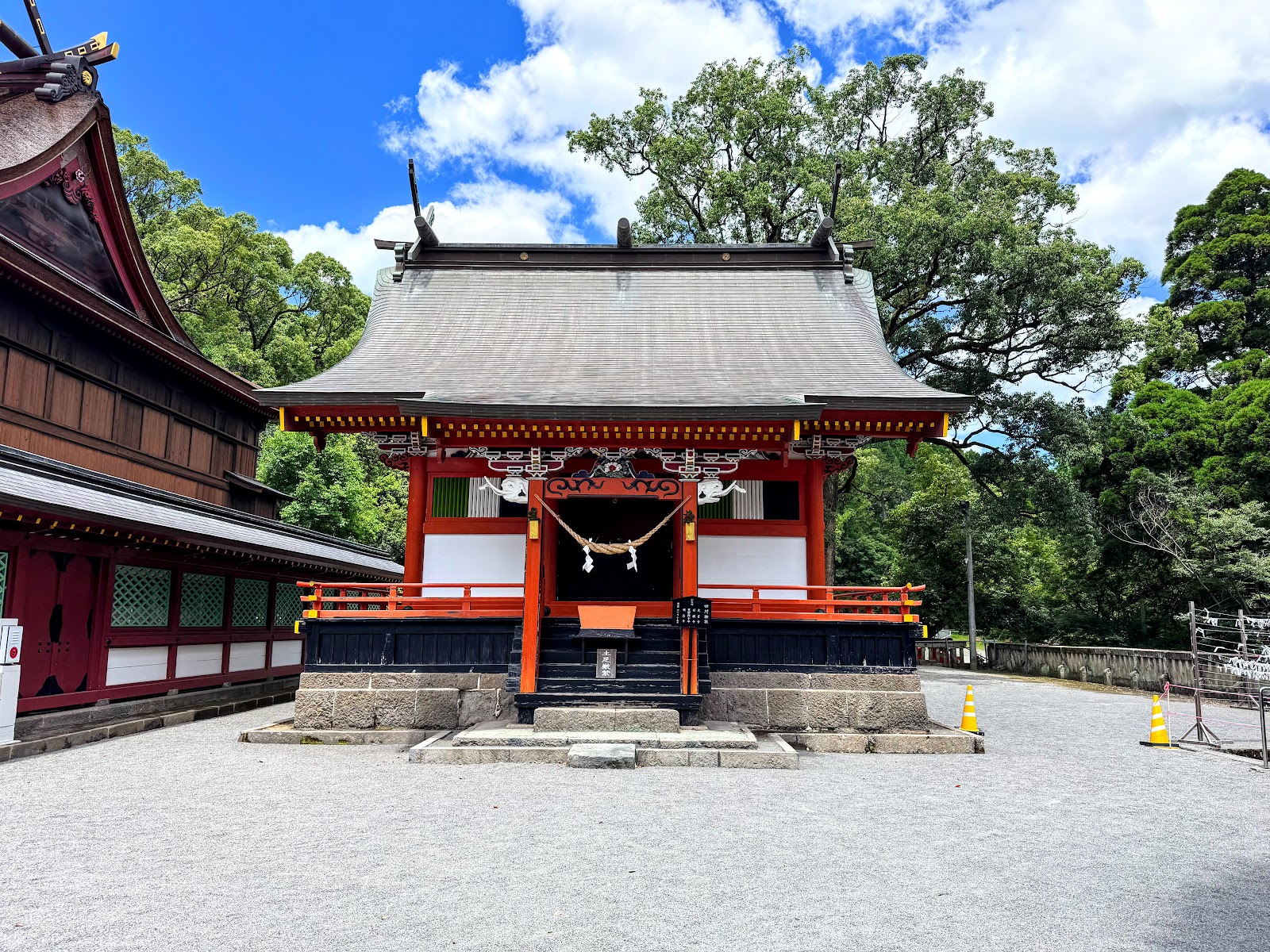
Grand historic shrine in Kirishima, one of Kyushu's most prestigious, with a lively spring horse festival.
Kagoshima Jingu, set amid the wooded countryside of Kirishima north of the city, is one of the most prestigious and historically significant shrines in southern Kyushu. Grand in scale and rich in ritual, it has drawn worshippers for well over a millennium and once held high rank among the region's sanctuaries. For travelers exploring the Kirishima area — famous for its volcanoes, hot springs, and mythic landscapes — the shrine is a rewarding stop that combines architectural splendor with living tradition.
The shrine is dedicated to deities associated with the legendary origins of the imperial line, tied to the myths of the sea-luck and mountain-luck brothers whose stories are rooted in this part of Kyushu. Its main hall, rebuilt in the eighteenth century under the patronage of the powerful Shimazu clan, is an impressive structure with a sweeping roof and richly detailed woodwork, and it is designated an Important Cultural Property. Approached through a broad avenue and a great torii gate, the compound has the stately, well-tended air of a major shrine, with towering old trees, stone lanterns, and subsidiary halls arranged across the grounds.
Kagoshima Jingu is perhaps best known for its lively annual festival, the Suzukake Uma, held in mid-February. During this centuries-old rite, horses are elaborately decorated with bells and ornaments and paraded through the shrine grounds in a colorful procession, accompanied by folk music and dance, as the community prays for a bountiful harvest and good fortune. The spectacle draws crowds from across the region and is one of the most distinctive shrine festivals in Kyushu, offering visitors a vivid window into local tradition.
Beyond the festival, the shrine is a serene place to visit year-round. Cherry blossoms brighten the approach in spring, and the surrounding Kirishima region rewards further exploration, with the Kirishima-Jingu shrine, volcanic peaks, and renowned hot-spring resorts all within easy reach. The shrine also lies close to Kagoshima Airport, making it a convenient first or last stop for travelers flying in or out of the region.
Reaching Kagoshima Jingu is easiest by car or a combination of train and taxi; the JR line serves nearby Kokubu Station, from which a short ride brings you to the grounds. There is no admission fee, and parking, restrooms, and a shrine shop are available. Allow around forty-five minutes to walk the approach, admire the main hall, and explore the sub-shrines and grounds; longer if you visit during a festival. For those with an interest in Japan's ancient shrines, founding myths, and colorful living festivals, Kagoshima Jingu is one of Kyushu's essential sacred sites — a place where history, legend, and community come together beneath the great cedars of Kirishima.
A local's tip
Visit in mid-February for the Suzukake Uma horse-decorating festival, when ornately dressed horses parade through the grounds in a centuries-old rite of prayer for a good harvest.
Best time to visit
New Year and mid-February for the Suzukake horse festival
Getting there
From central Kagoshima take a JR train to Kokubu Station in Kirishima (about 50 minutes), then a taxi or local bus to the shrine. Driving from the airport takes around 20 minutes.
Good to know
- Parking
- Gift Shop
- Restrooms
Plan the whole trip offline
Kagoshima Jingu is one of many places in the Real Japan app — with turn-by-turn directions, nearby spots and full offline maps you can use with no signal.