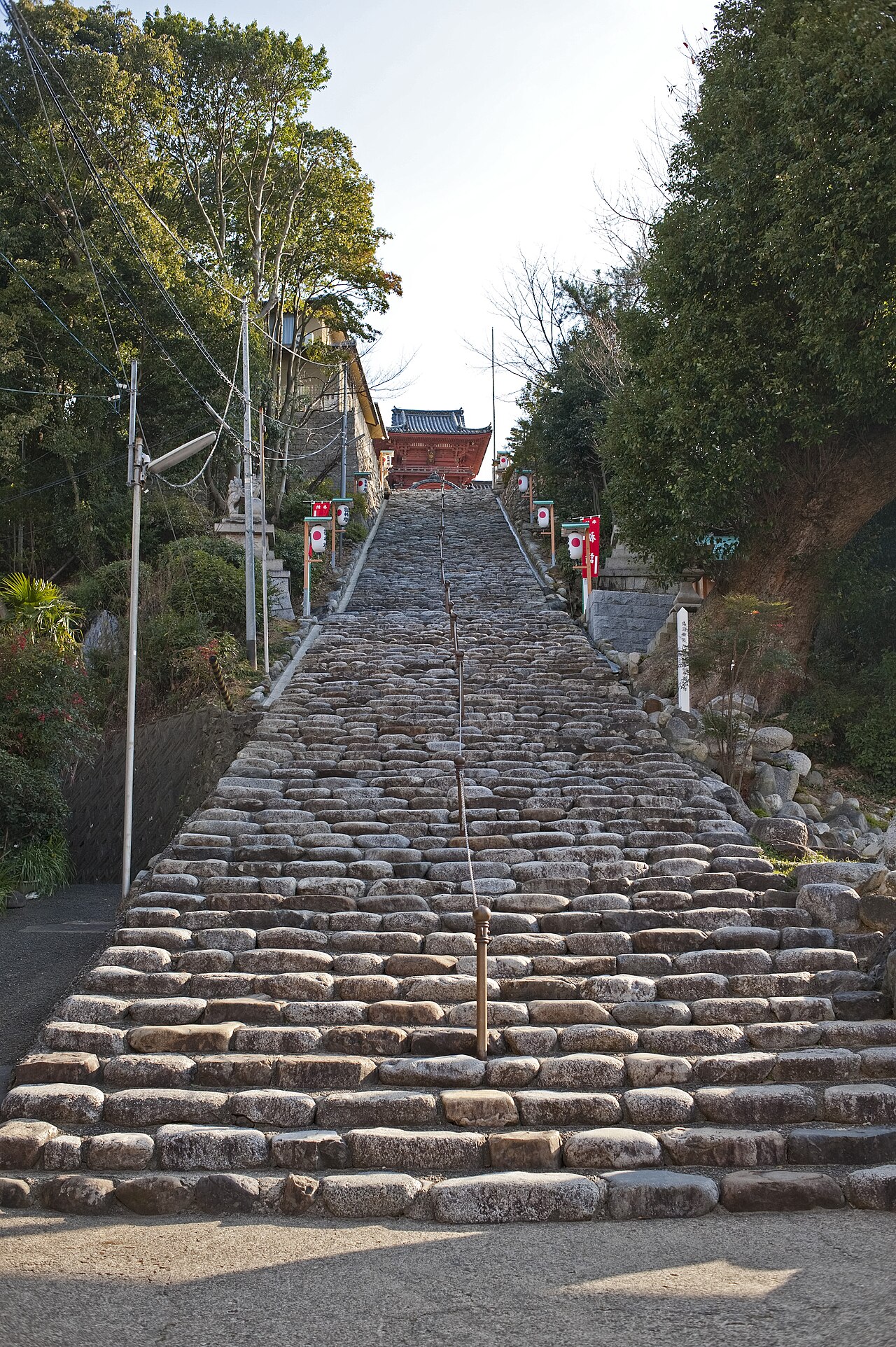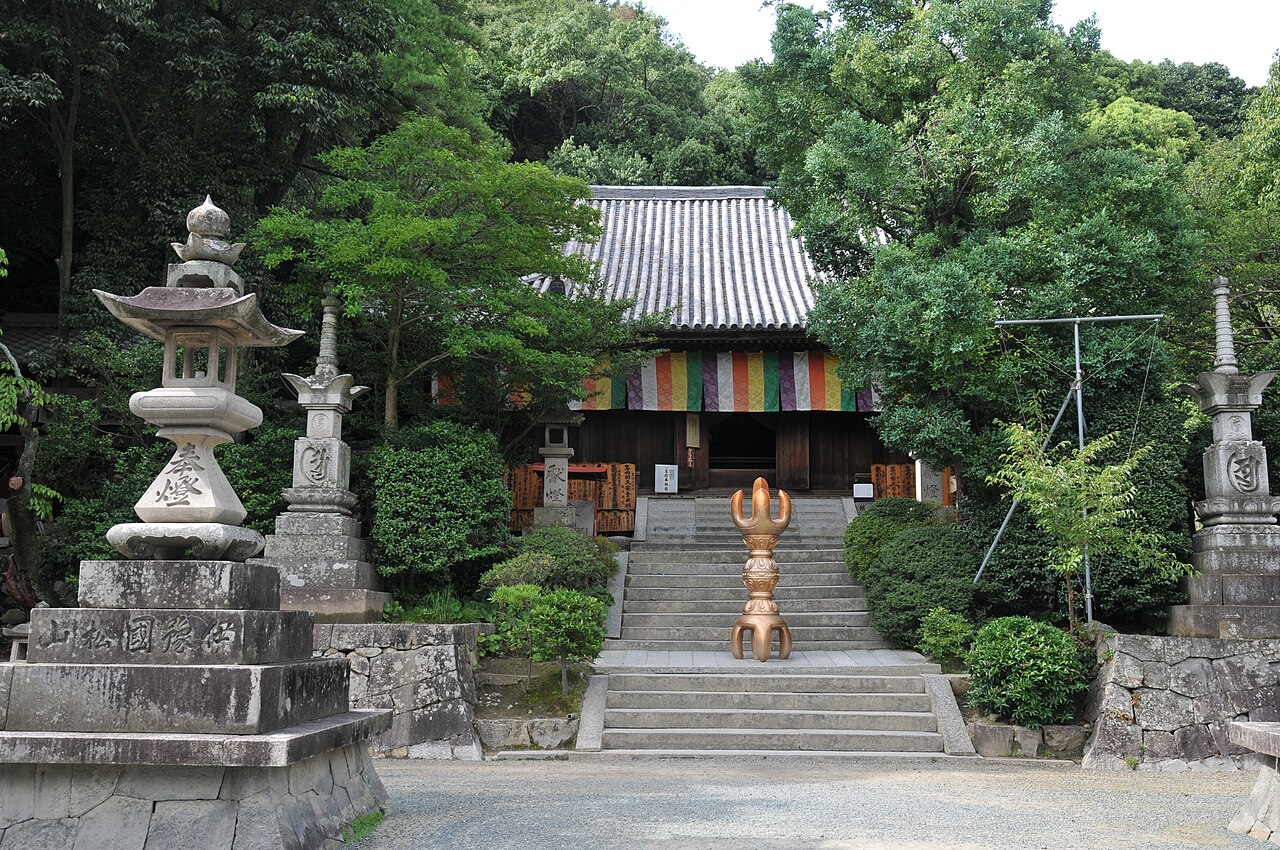
Temple 51 of the Shikoku Pilgrimage, famed for its National Treasure gate and an eerie mantra tunnel of statues.
Ishite-ji is the most celebrated temple in Matsuyama and one of the great landmarks of the Shikoku Pilgrimage, the 1,200-kilometre circuit of 88 temples associated with the monk Kukai, known posthumously as Kobo Daishi. As temple number 51, it draws a constant stream of white-clad henro pilgrims alongside curious sightseers, and its layered history and strange, sprawling grounds reward anyone who lingers.
The temple's name, meaning "stone hand," comes from a beloved local legend. A wealthy but miserly landlord named Emon Saburo repeatedly turned away a begging monk, only to lose his eight children to misfortune; realising the beggar had been Kobo Daishi himself, he set off around Shikoku to seek forgiveness and died from exhaustion. He is said to have been reborn as a child of the local Kono lord, clutching a stone inscribed with his name in his fist, and that stone is enshrined here. The story is essentially the origin myth of the pilgrimage itself.
Architecturally, Ishite-ji is a treasure house. Its two-storey Nio-mon gate, built in 1318 during the Kamakura period and guarded by fierce muscular guardian figures, is designated a National Treasure. The three-storey pagoda, main hall, bell tower, and Kannon hall are all registered Important Cultural Properties, giving the compact grounds a density of heritage rare even in Japan. Straw sandals left by pilgrims hang from the gate as offerings for strong legs on the road ahead.
What truly sets Ishite-ji apart, however, is its uncanny back half. Behind the main hall, a dim 160-metre tunnel called the Mantra Cave burrows through the hillside, its walls lined with Buddhist images and hanging lanterns. Emerging from the darkness, visitors reach a bizarre hilltop precinct filled with weathered statues, a golden dome, and eccentric shrines created in the twentieth century, an atmosphere that feels closer to a dream than a conventional temple. Few first-time visitors expect it, and it is the single most memorable part of a stop here.
The visiting experience blends the sacred and the everyday. The approach passes a short covered market selling pilgrim supplies, amulets, and the local sweet yakimochi. Incense smoke drifts across the courtyard, pilgrims chant sutras, and the atmosphere is devout yet welcoming to outsiders. The grounds are free to enter and largely flat, though the cave and hilltop involve some uneven footing and low ceilings, so watch your head and step. Mornings are quietest and coolest; autumn brings warm colour to the surrounding trees.
Getting there is easy from the Dogo Onsen hot-spring district, to which Ishite-ji is closely linked. From Dogo Onsen Station you can walk roughly 20 minutes eastward along a signposted route, a pleasant stroll that many combine with a bath at Dogo Onsen Honkan. Alternatively, board an Iyotetsu bus for a few stops and alight at Ishiteji-mae, directly opposite the temple. From central Matsuyama, first take the city tram to Dogo Onsen, then continue on foot or by bus. IC cards are accepted on trams and buses, and there is car parking for those driving the pilgrimage route.
A local's tip
Bring a small flashlight and walk the dark 160-metre Mantra Cave tunnel behind the main hall; it emerges at a surreal hilltop cluster of statues most visitors never find.
Best time to visit
Morning for quiet pilgrimage atmosphere
Getting there
From Dogo Onsen Station walk about 20 minutes east, or take an Iyotetsu bus a few stops to Ishiteji-mae; the temple gate is directly across the road.
Good to know
- Parking
- Restrooms
Plan the whole trip offline
Ishite-ji Temple is one of many places in the Real Japan app — with turn-by-turn directions, nearby spots and full offline maps you can use with no signal.