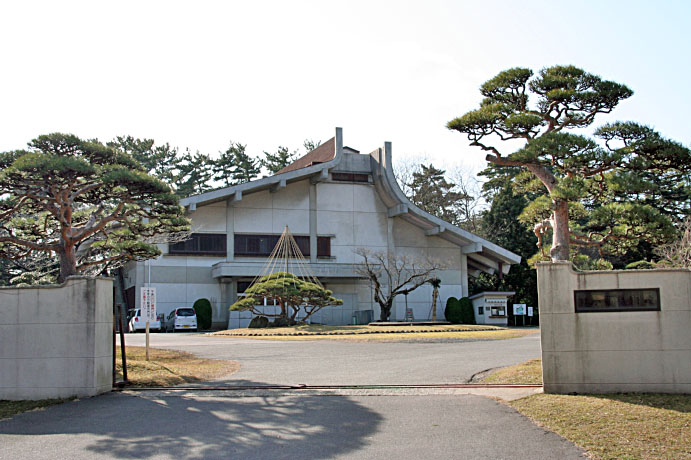
The private art museum of Sakata's great merchant family, pairing classical Japanese art with an exquisite strolling garden and a historic villa.
The Homma Museum of Art in the port city of Sakata is one of the cultural treasures of northern Yamagata Prefecture, a private museum founded on the collection of the Homma family, who were among the wealthiest merchants in all of Japan during the Edo period. Sakata prospered as the western terminus of the Mogami River trade and a key port on the Kitamaebune shipping route around the Sea of Japan, and the Homma family sat at the center of that commerce as landlords, financiers, and rice merchants. The saying that the Homma could never be matched, that ordinary people could only ever hope to be a local lord rather than a Homma, captured their extraordinary standing.
Opened in 1947, the museum was one of the first privately established art museums in postwar Japan. Its collection reflects the refined tastes of a great merchant house and includes classical paintings, calligraphy, ceramics, lacquerware, tea-ceremony utensils, textiles, and other decorative arts, along with items connected to the family's own history. Exhibitions rotate through the year, drawing on the holdings and on special loans, so there is usually something new to see across repeat visits.
What sets the museum apart, however, is its setting. The grounds incorporate the Kakubuen, a strolling garden originally created in the late eighteenth century as a place of rest for the feudal lords passing through, and the Seienkaku, an elegant villa with fine tatami rooms that opens onto the garden. Designed in the classic kaiyu, or circuit, style, the garden arranges a central pond, carefully placed stones, pines, and seasonal plantings so that the scene shifts with every step, borrowing the distant profile of Mount Chokai as part of the composition. Moving between the display galleries and the traditional garden and villa gives the visit a rare sense of place, connecting the art directly to the world that produced it.
The museum is compact and easy to enjoy, with an hour or so enough to take in a current exhibition and stroll the garden at a gentle pace. Paths in the garden are traditional and can be uneven, but the galleries and main routes are manageable for most visitors, and restrooms and a rest area are provided. Spring and autumn are especially rewarding, when cherry, fresh greenery, or turning maples frame the pond, though the garden holds quiet appeal in every season, including under Sakata's winter snow.
Getting there is remarkably convenient. Sakata Station lies on the JR Uetsu Main Line, which is covered by the Japan Rail Pass, and the museum stands only about a five-minute walk south of the station, making it one of the easiest cultural sites in the region to reach on foot. The city itself rewards further exploration, with the photogenic Sankyo rice warehouses and other reminders of its merchant past within easy reach, so the Homma Museum pairs naturally with a wider day discovering Sakata's history as one of the great trading towns of old Japan.
A local's tip
Buy the combined ticket and take time in the Kakubuen strolling garden and the Seienkaku villa behind the galleries, arguably lovelier than the exhibits themselves.
Best time to visit
Any season; garden lovely in autumn
Getting there
From Sakata Station on the JR Uetsu Main Line, walk about 5 minutes to the museum, which sits just south of the station beside its strolling garden.
Good to know
- Wi-Fi
- Garden
- Restrooms
Plan the whole trip offline
Homma Museum of Art is one of many places in the Real Japan app — with turn-by-turn directions, nearby spots and full offline maps you can use with no signal.