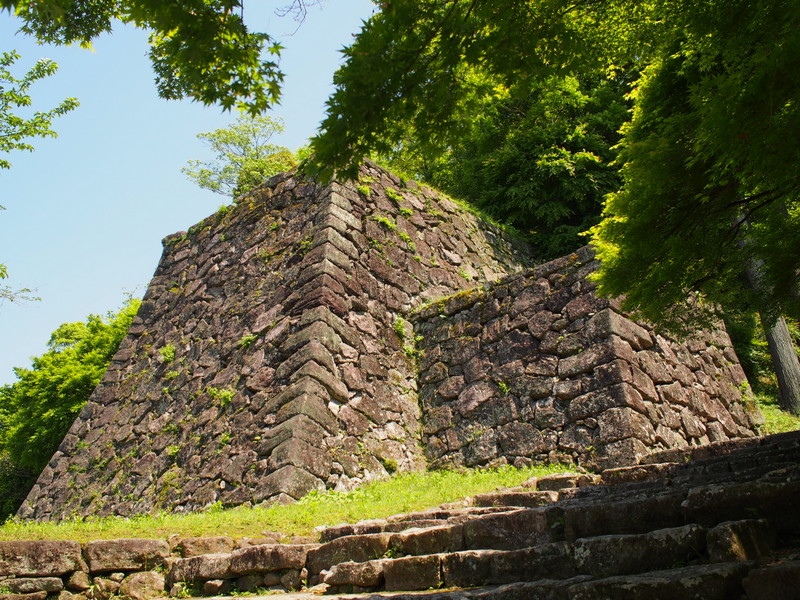
The riverside stone ramparts of the Sagara clan's castle, which ruled this remote valley for seven centuries.
Hitoyoshi Castle stands beside the Kuma River in the far south of Kumamoto Prefecture, in a mountain-ringed valley that has always felt a world apart. Its story is extraordinary for its sheer continuity: the Sagara clan governed Hitoyoshi and the surrounding Kuma region from the late twelfth century until the end of the feudal era, roughly seven hundred years, making it one of the longest unbroken tenures of any samurai family in Japan. That stability is part of why the town retains such a strong sense of its own history.
The castle itself was a 'hira-yama-jiro', a fortress built on a low rise where the plain meets the hills, using the Kuma River and its tributary as natural moats. While the wooden keep and palaces are long gone, the impressive stone walls, gates and terraced foundations remain, climbing in stages up the hillside and following the riverbank below. Walking the ruins, you cross bridges, pass through gate foundations and ascend to the honmaru, the main enclosure at the top, from which there are pleasant views over the town, the river and the mountains that sheltered the Sagara for so long.
One genuinely unusual feature repays a close look. Along part of the riverside wall the masonry is topped with a projecting stone lip, a defensive parapet sometimes compared to European fortress design, added during a rebuilding after a fire in the Edo period. It was intended to make the walls even harder for attackers to scale, and it is rarely seen elsewhere in Japan, giving Hitoyoshi's ruins a distinctive character.
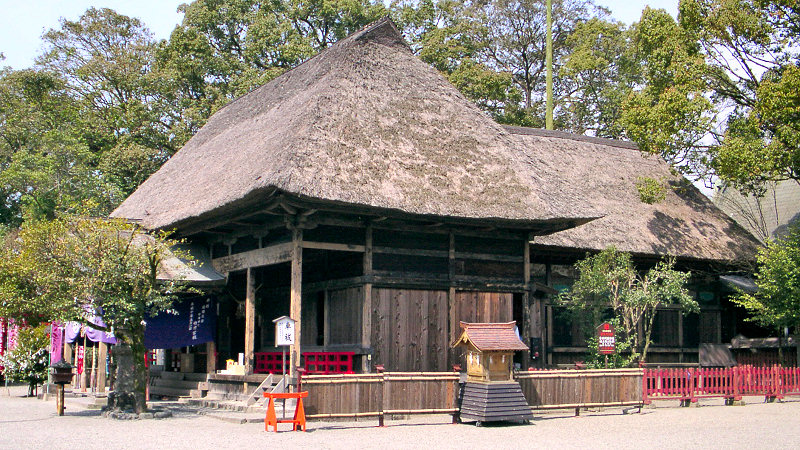
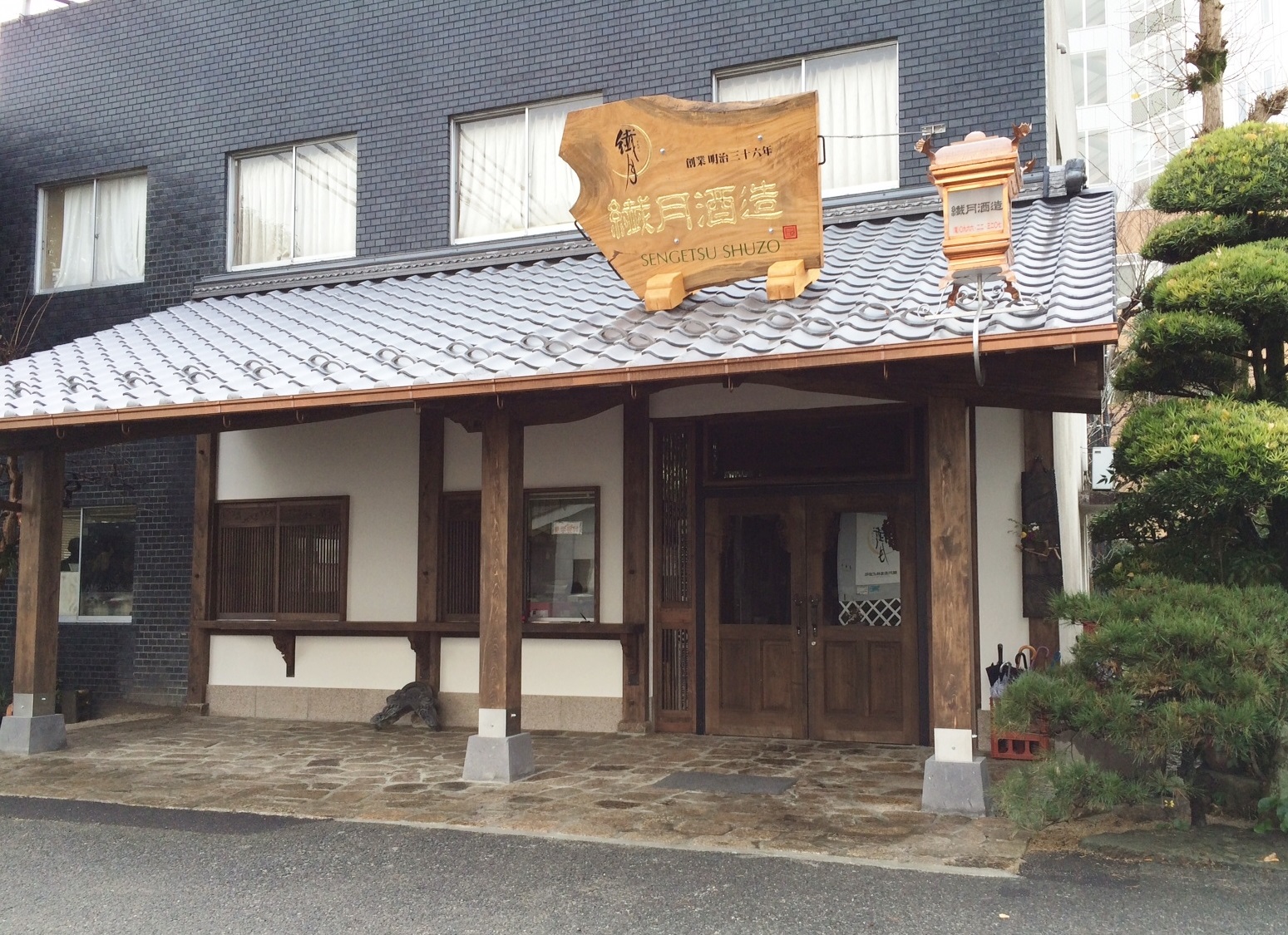
The surrounding town rewards exploration, with old streets, sake and shochu distilleries, and the nearby Aoi Aso Shrine, a National Treasure. The region is also famous for the Kuma River itself, one of Japan's swiftest, once navigated by traditional river boats. Sadly the valley suffered catastrophic flooding in 2020, and parts of Hitoyoshi are still recovering, so a visit today also supports a community rebuilding its tourism.
In spring the castle grounds are softened by cherry blossom growing among the grey stone, a classic and photogenic Japanese scene, while autumn brings colour to the hillsides. The ruins are freely open, quiet and atmospheric, and rarely see foreign visitors, making them feel like a genuine discovery.
Reaching Hitoyoshi from Kumamoto takes up to two hours given its remote southern location, and rail access has been affected by the flooding, so check current routes and consider driving. The ruins lie a 20-minute walk from Hitoyoshi Station along the river. Allow around 50 minutes to explore, and pair the visit with the shrine and a tasting of the local kuma shochu for a full sense of this proud, out-of-the-way valley.
A local's tip
Look for the unusual European-style 'hane-dashi' stone parapet on the riverside walls, a rare defensive feature in Japan added after a fire, designed to stop attackers scaling the ramparts.
Best time to visit
Spring for cherry blossoms along the stone walls
Getting there
From Kumamoto, reach Hitoyoshi in the far south of the prefecture via the JR route toward the Kuma valley (allow up to two hours); the ruins are a 20-minute walk from Hitoyoshi Station along the Kuma River.
Good to know
- Parking
- Restrooms
Plan the whole trip offline
Hitoyoshi Castle Ruins is one of many places in the Real Japan app — with turn-by-turn directions, nearby spots and full offline maps you can use with no signal.