The grassy hilltop ruins where the 1637 Shimabara Rebellion ended in tragedy, now a UNESCO World Heritage site.
Hara Castle Ruins occupy a windswept hilltop overlooking the Ariake Sea at the southern tip of the Shimabara Peninsula, in Minamishimabara City. Built in 1604, the castle is remembered above all as the final, tragic stage of the Shimabara Rebellion of 1637-1638, one of the most consequential uprisings in Japanese history. Tens of thousands of peasants, many of them persecuted Christians, rose against crushing taxation and brutal religious suppression, and made their last stand within these walls. The rebellion's violent suppression by the Tokugawa shogunate helped seal Japan's turn toward more than two centuries of isolation and the near-total driving underground of Christianity, and in 2018 the ruins were inscribed as part of the UNESCO World Heritage listing of Hidden Christian Sites in the Nagasaki Region.
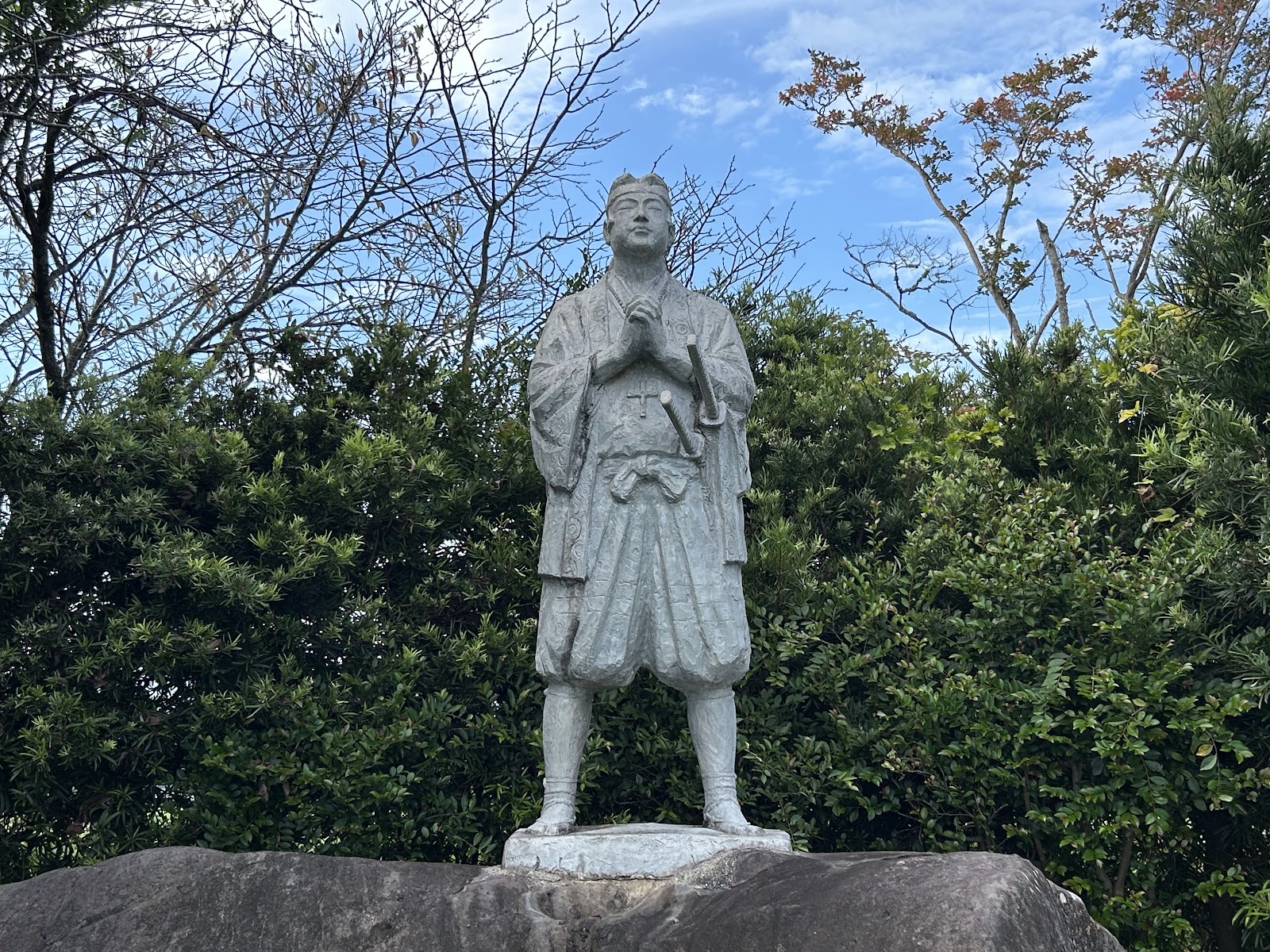
Today little remains above ground of the castle itself, which was deliberately razed after the rebellion to erase its memory, but that emptiness is precisely what makes the site so moving. Grassy earthworks, scattered stone foundations, and a lone statue of Amakusa Shiro, the charismatic teenage leader who became the rebellion's symbol, stand against a vast backdrop of sea and sky. Archaeological excavations have uncovered human remains, crosses, religious medallions, and other artefacts that testify to the faith and desperation of those who died here, and interpretive signage helps visitors grasp the weight of what unfolded on this quiet hill.
What to see includes the layout of the former baileys traced across the grassy ramparts, the commanding views over the Ariake Sea toward the Amakusa islands, and the memorials to the rebellion's dead. The site is less about architecture than atmosphere and history; walking the exposed ground where a besieged community made its doomed stand is a genuinely reflective experience, and the interpretive materials and nearby facilities help place it in the broader story of Japan's hidden Christians.
The visiting experience is contemplative and open-air. The ruins spread across a broad hilltop with little shade, so sturdy shoes, sun protection, and water are advisable, especially in summer. Paths and grassy slopes make up most of the terrain, and while the main areas are accessible, the site rewards those willing to walk its full extent. Restrooms and parking are available, and the quiet, rural setting adds to the sense of stepping back into a fraught chapter of the past.
The best time to visit is a clear day in spring or autumn, when the weather is mild and the sea views are at their finest; cherry trees add colour in spring. Getting there is easiest by car along the Shimabara Peninsula's coast, roughly at the southern end near Minamishimabara; by public transport, reach Shimabara via the private railway, then continue by local bus toward the Hara-jo area. For travellers interested in Japan's Christian history and its dramatic turning points, Hara Castle Ruins is a poignant and historically profound UNESCO site.
A local's tip
Bring water and a hat; the exposed grassy ramparts have almost no shade but reward you with sweeping sea views.
Best time to visit
Clear days for views over the Ariake Sea
Getting there
From Shimabara take a local bus south to Minamishimabara and the Hara-jo stop, then walk to the hilltop ruins; a car is easier along the peninsula's coast.
Good to know
- Parking
- Restrooms
Plan the whole trip offline
Hara Castle Ruins is one of many places in the Real Japan app — with turn-by-turn directions, nearby spots and full offline maps you can use with no signal.