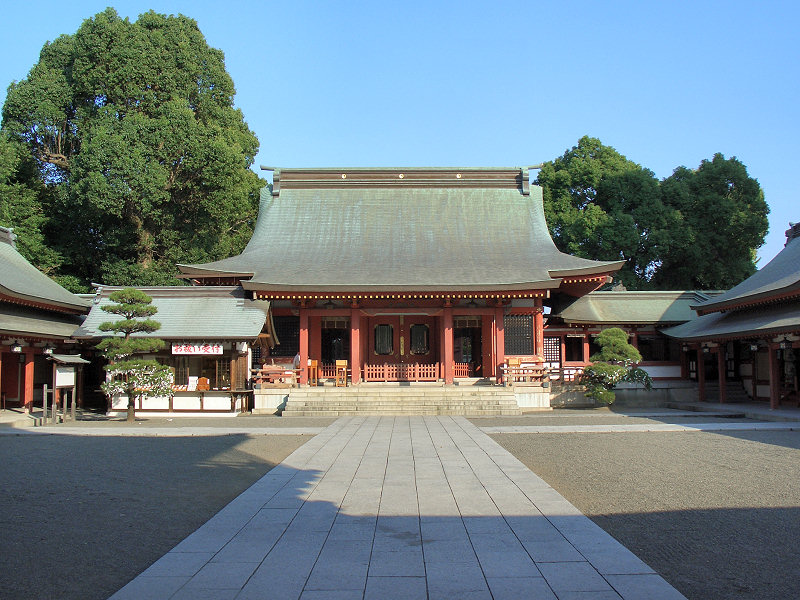
Kumamoto's chief guardian shrine, historically revered by the ruling lords and home to a huge autumn festival.
Fujisaki Hachimangu is one of the most important shrines in Kumamoto, long regarded as a principal guardian shrine of the city and the domain. Dedicated to Hachiman, the deity of war and protection widely worshipped across Japan and closely associated with the samurai class, the shrine traces its origins back over a thousand years to the mid-tenth century, when it was founded to safeguard the province. For centuries it enjoyed the patronage of successive ruling houses, including the Kato and Hosokawa lords who governed from Kumamoto Castle, and it remains a focus of civic and spiritual life today.
The shrine originally stood on the Fujisaki plateau within the castle's defensive scheme, but it was relocated to its present site in central Kumamoto after damage in the turmoil of the Meiji era, in particular the fires of the Satsuma Rebellion. The current grounds, though set in a busy part of the modern city, retain a dignified, tree-shaded calm, with the main hall, worship pavilion, subsidiary shrines and the customary approach lined with stone lanterns and torii gates. As a Hachiman shrine it draws worshippers seeking protection, success and good fortune, and its long association with the ruling elite lends it particular prestige among Kumamoto's shrines.
Fujisaki Hachimangu is best known to locals for its magnificent Autumn Festival, the Reitaisai, held over several days in mid-September and often referred to by the traditional name Boshita Matsuri. This is one of the largest festivals in Kumamoto, a centuries-old event in which elaborately decorated horses, accompanied by teams of energetic participants in matching happi coats, parade through the city in a boisterous, colourful procession, culminating at the shrine. The rhythmic chanting, the caparisoned horses and the huge crowds make it a thrilling spectacle, and for visitors fortunate enough to be in the city at the time it offers a vivid window into living Kumamoto tradition.
Outside festival days the shrine is a peaceful place of worship where you can observe everyday Japanese religious practice, from purification at the water basin to prayers at the main hall, and pick up charms and fortunes. Its central location makes it easy to include in a walking tour of downtown Kumamoto, and it pairs naturally with the castle and the shopping arcades nearby.
The shrine lies in central Kumamoto, roughly a 12-minute walk from the Suidocho or Kumamoto-jo tram stops, and is freely open at all hours, with an office selling charms during the day. Allow around half an hour for a visit, or time your trip for the September festival if you can. As the historic protective shrine of the city and the setting for one of its grandest celebrations, Fujisaki Hachimangu offers both quiet spiritual atmosphere and, in season, unforgettable pageantry.
A local's tip
If you visit in September, catch the shrine's grand autumn festival, when decorated horses and thousands of participants parade through the city in one of Kumamoto's biggest celebrations.
Best time to visit
Mid-September for the spectacular Autumn Festival (Boshita Matsuri)
Getting there
In central Kumamoto, a short distance from the Suidocho or Kumamoto-jo tram stops; about a 12-minute walk from the tram line, or a taxi from Kumamoto Station.
Good to know
- Restrooms
- Charms/omamori
Plan the whole trip offline
Fujisaki Hachimangu is one of many places in the Real Japan app — with turn-by-turn directions, nearby spots and full offline maps you can use with no signal.