An authentic Chinese garden on the shore of Lake Togo, built to celebrate Tottori's sister-province ties with Hebei.
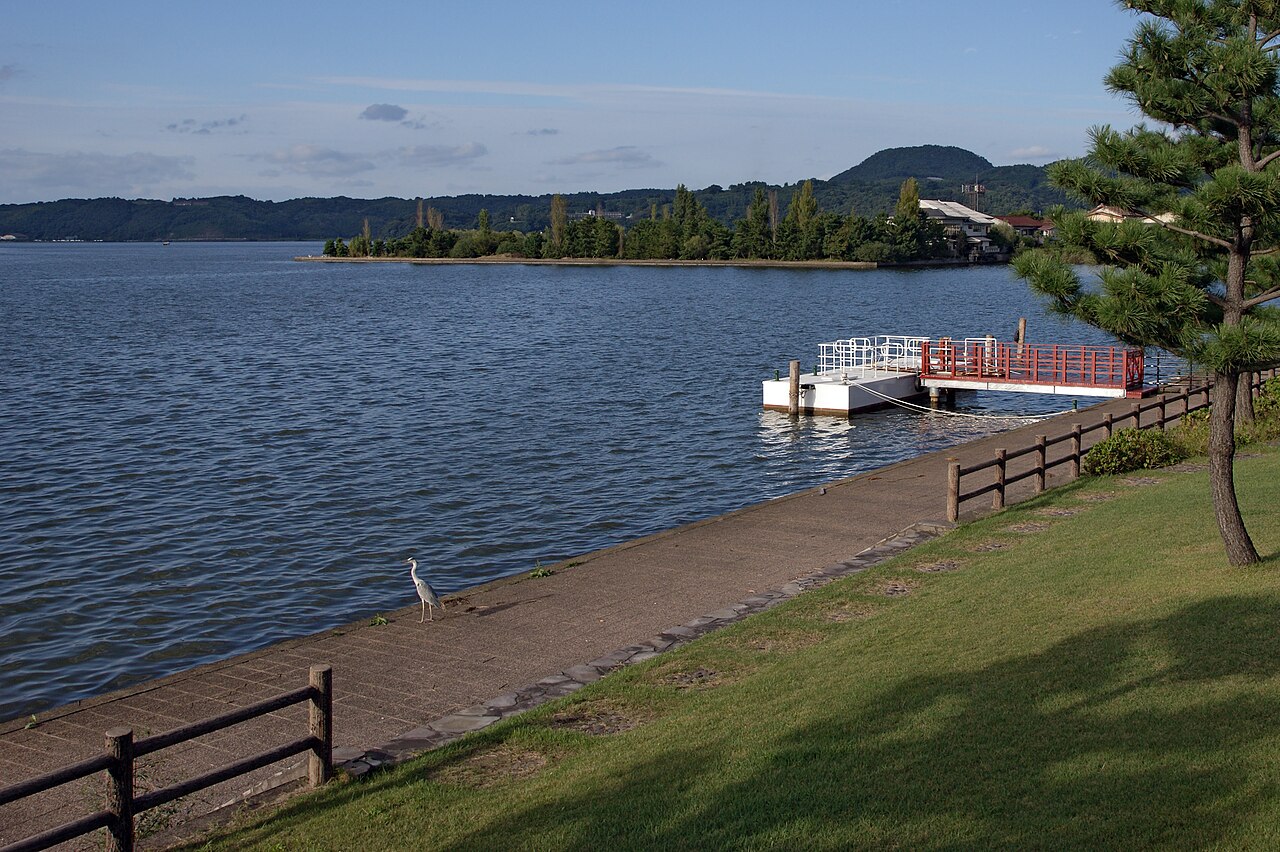
Encho-en is one of the most unexpected sights on the San'in coast: a large, authentic Chinese garden standing serenely on the shore of Lake Togo in the town of Yurihama, roughly midway between Tottori city and Yonago. Opened in the 1990s to commemorate the sister-province relationship between Tottori Prefecture and Hebei Province in China, it was designed and built with Chinese expertise and materials to be a genuine example of classical Chinese garden art rather than a mere theme-park imitation, and the result is a strikingly different experience from the Japanese gardens travellers usually seek out.
The name Encho-en refers poetically to the ancient states of Yan and Zhao, and the garden faithfully follows the principles of Chinese landscape design. Where Japanese gardens tend toward restraint, asymmetry and muted tones, Encho-en is bold and theatrical: brightly painted pavilions with sweeping tiled roofs, vermilion pillars and ornate carvings; covered corridors that frame carefully composed views; rockeries, ponds and arched bridges arranged to reveal the landscape gradually as you walk. Winding paths lead you past waterside halls and up to elevated pavilions that look out over the garden and the broad, brackish waters of Lake Togo beyond.
The garden is designed to be experienced in motion, with each turn opening a new framed scene in the classic Chinese manner of borrowed views and staged surprise. Seasonal plantings add colour through the year, from spring blossom to autumn foliage, and the reflections of the painted architecture in the still ponds are a photographer's delight. To lean into the theme, the site offers rental of traditional Chinese costumes, and visitors love wandering the pavilions dressed in flowing robes for memorable photographs, while cultural performances and events tied to the China connection appear on the calendar at intervals.
Its lakeside location makes Encho-en an easy and rewarding stop. Lake Togo is ringed by hot-spring resorts, most famously Hawai Onsen and Togo Onsen, whose waters bubble up right at the shore and even, in places, within the lake itself. A visit to the garden combines naturally with a hot-spring soak, a lakeside walk, or a stop in nearby Kurayoshi with its white-walled old town and museums, making this stretch of coast a pleasant half-day of contrasts.
Practically, the garden is compact enough to enjoy in around an hour, with a cafe and shop for refreshment and souvenirs, and generous parking for drivers; those relying on trains can walk or taxi from Matsuzaki Station on the San'in Line. Admission is modest. Because it is authentically Chinese rather than Japanese, it offers something genuinely rare in the region and a refreshing change of aesthetic pace.
For travellers curious about the cultural ties that bind Japan and China, or simply looking for a colourful, photogenic and slightly offbeat garden away from the crowds, Encho-en delivers. Set beside a tranquil lake in the heart of Tottori, it is a small, vivid piece of China transplanted to the Sea of Japan coast, and a delightful surprise on any San'in itinerary.
A local's tip
Rent a Chinese-style costume on site for photos among the pavilions, and pair the visit with a soak at the lakeside Hawai Onsen.
Best time to visit
Spring and autumn; check for Chinese cultural events
Getting there
On the shore of Lake Togo near Matsuzaki Station in Yurihama; roughly a 20-minute walk or short taxi from the station, or reachable by car with ample parking.
Good to know
- Cafe
- Shop
- Parking
- Restrooms
Plan the whole trip offline
Encho-en Chinese Garden is one of many places in the Real Japan app — with turn-by-turn directions, nearby spots and full offline maps you can use with no signal.