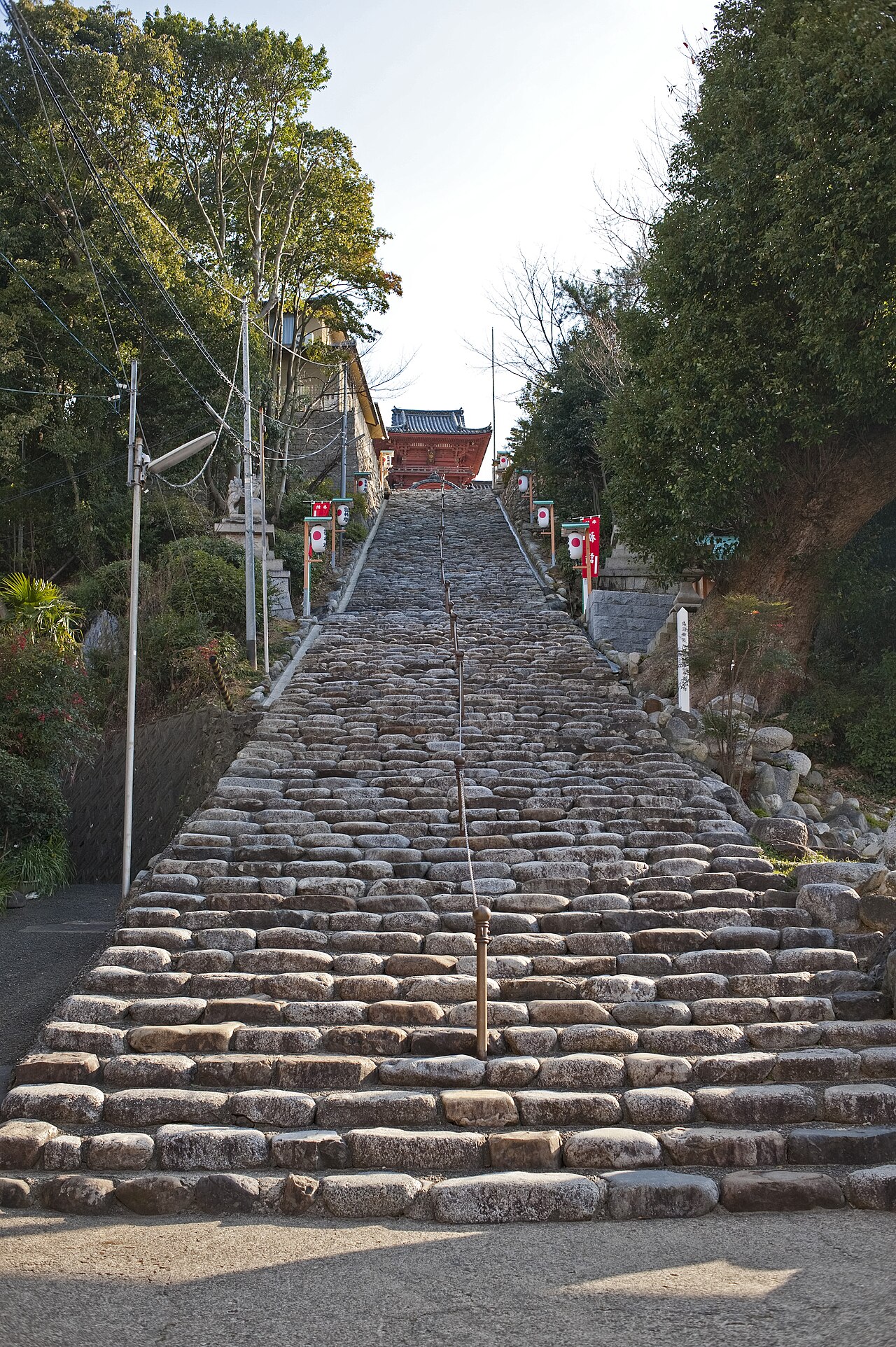
A moated hilltop park on the ruins of medieval Yuzuki Castle, one of Matsuyama's finest cherry-blossom spots.
Dogo Park is a spacious, leafy public park a short stroll from Dogo Onsen Honkan, built on the ruins of Yuzuki Castle, and it offers an easy dose of history and greenery between soaks in the famous hot springs. Encircled by remnants of moats and earthen ramparts, the park centres on a low forested hill that was, for roughly 250 years, the seat of power for the Kono clan who ruled this part of Iyo Province.
Yuzuki Castle was first built in the early fourteenth century and served as a hilltop and later flatland fortress until the latter half of the sixteenth century, when the Kono were displaced during Japan's era of warring states and power shifted to what would become Matsuyama Castle in the city centre. Excavations in 1988 uncovered the layout of samurai residences, storehouses, and defensive works, and the site was recognised as nationally significant. In 2006 Yuzuki Castle was named one of Japan's Top 100 Castles by the Japan Castle Foundation, a notable honour for a site with no surviving keep.
Today the park interprets that history in an accessible, family-friendly way. At the foot of the hill, a cluster of reconstructed samurai and merchant houses, built using traditional methods, lets visitors picture daily life in the medieval settlement, while excavated foundations and explanatory signs trace the fortress footprint. A gentle path climbs the central mound to the former keep site, where a modest observation point gives a calm, unobstructed view over the surrounding Dogo district and the mountains beyond, a rewarding vantage that costs nothing.
Dogo Park is best known, however, for its seasons. It is one of Matsuyama's premier cherry-blossom destinations, and in early April hundreds of trees erupt into pink bloom, drawing hanami picnickers who spread mats beneath the branches, sometimes accompanied by evening illuminations. Autumn brings warm foliage colour, and the park's ponds, lawns, and shaded walks make it a pleasant retreat in any season. Within the grounds, in a quiet corner near a cemetery, stands the Shiki Memorial Museum devoted to Matsuyama's great haiku poet, so the two attractions pair naturally.
The visiting experience is relaxed and unhurried. The park is open at all hours and free to enter, the paths are mostly gentle, and benches, restrooms, and open lawns make it comfortable for families and older travellers, though the climb to the keep involves a modest slope. It is an ideal place to decompress after the crowds of the bathhouse, whether you spend a full hour exploring the ruins and reconstructions or simply pass through on your way elsewhere.
Getting there could hardly be simpler. Ride the Iyotetsu city tram to its terminus at Dogo Onsen Station, then walk about five minutes to the park's moated edge; it lies just southwest of the station and adjacent to the hot-spring quarter, so it slots effortlessly into a Dogo day. Trams from central Matsuyama and JR Matsuyama Station take around 20 to 25 minutes and accept IC cards. Parking is available for drivers, and the flat approach from the station makes the park one of the more accessible historical sites in the area.
A local's tip
Climb the central hill to the free observation deck on the old castle keep site for a quiet panorama over Matsuyama, then visit the reconstructed samurai residences at the base.
Best time to visit
Cherry blossom season in early April
Getting there
From Dogo Onsen Station walk about 5 minutes southwest; the park's moated entrance sits just across from the tram terminus area.
Good to know
- Wi-Fi
- Parking
- Restrooms
Plan the whole trip offline
Dogo Park (Yuzuki Castle Ruins) is one of many places in the Real Japan app — with turn-by-turn directions, nearby spots and full offline maps you can use with no signal.