Where Sacred Deer Roam Free
There is a moment that happens to almost every visitor in Nara, usually within the first ten minutes of arrival: a deer walks up to you with the quiet confidence of someone who knows they own this city. They are not zoo animals. They are not performing. They are wild sika deer that have wandered these hills and parklands for over 1,300 years, considered divine messengers of the Shinto gods and protected by law since the Nara period. They bow — genuinely bow — when they want a rice cracker, and they will absolutely headbutt your bag if they think you are slow about producing one.
Nara sits just 45 minutes south of Kyoto and about 40 minutes east of Osaka, yet it draws a fraction of the crowds and offers something those cities cannot quite match: the feeling that history has been left largely undisturbed. This was Japan's first permanent capital, established in 710 AD, and the scale of what was built here still staggers the imagination. A single day in Nara is enough for a memorable visit, but if you slow down and go deeper, you will discover forest shrines, craft workshops, and quiet neighbourhoods that reward the curious traveller enormously.
A City That Shaped Japanese Civilisation
The Nara period (710–794 AD) was transformative for Japan. The imperial court, heavily influenced by Tang Dynasty China, built grand Buddhist temples and Shinto shrines as demonstrations of state power and spiritual authority. Emperor Shomu, who oversaw much of this construction, believed that Buddhism could stabilise and protect the nation. The result was Todai-ji — a temple complex so ambitious in scale that it strained the empire's resources and workforce for decades.
Beyond the temples, Nara was where Japan developed its first permanent bureaucratic government, its earliest written histories (Kojiki and Nihon Shoki), and a flourishing of poetry, art, and continental culture. When the capital moved to Kyoto in 794, Nara did not vanish — it simply became a place of pilgrimage and preservation. That relative stillness is precisely what makes it so compelling today. The city never had to reinvent itself for commerce or modernity in the way Osaka or Tokyo did. It remained, quietly and faithfully, a place of gods and deer.
What to See and Do in Nara
The heart of any Nara visit is Nara Park, a vast green expanse of about 660 hectares that contains most of the major temples, shrines, and approximately 1,200 freely roaming deer. It is entirely walkable, and navigation is straightforward — though the Real Japan app (free on iOS and Android) is worth downloading before you arrive, as its offline maps and curated nearby-spot suggestions make it easy to hop between sights without second-guessing distances or opening hours.
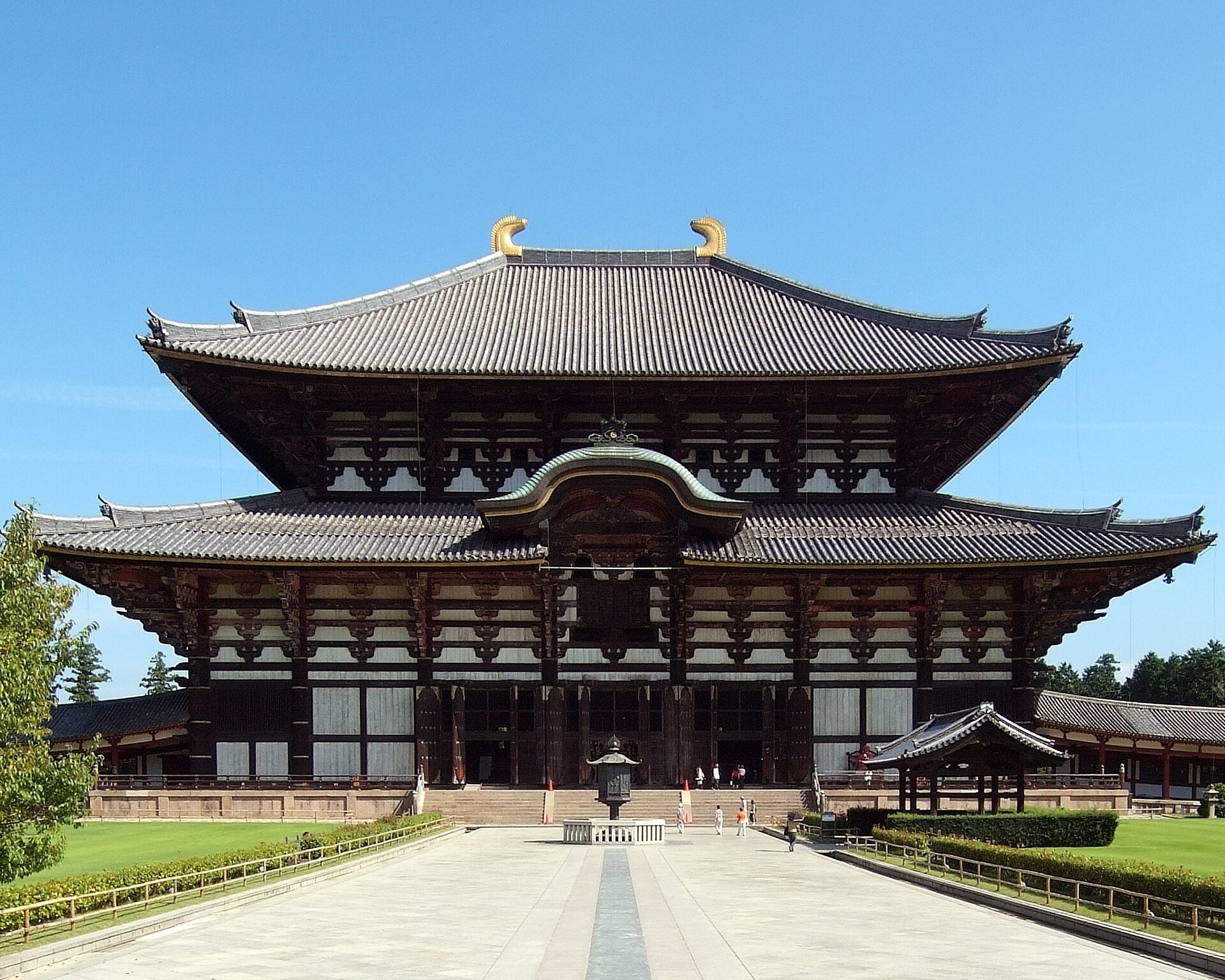
- Todai-ji Temple: The Great Buddha Hall (Daibutsuden) is the world's largest wooden building — and it was actually rebuilt at two-thirds its original Nara-period size after fires. Inside sits the Rushana Buddha, a 15-metre bronze colossus cast in 752 AD. It is genuinely awe-inspiring in person in a way photographs never quite prepare you for. Look for the wooden pillar with a small hole bored through its base — it is the same width as one of the Buddha's nostrils, and local tradition holds that those who squeeze through it will receive enlightenment. Children do it constantly and gleefully.
- Kasuga Taisha Shrine: A 20-minute walk through deer-dotted forest from Todai-ji, Kasuga Taisha is one of Japan's most important Shinto shrines, founded in 768 AD. The approach along a moss-covered stone lantern-lined path is among the most atmospheric walks in Japan. The shrine itself is painted in vivid vermilion, and its interior galleries are hung with over 2,000 bronze lanterns, lit ceremonially twice a year during the Mantoro festivals in February and August.
- Nigatsu-do and Sangatsu-do: Climb the hillside steps behind Todai-ji to reach these smaller but deeply rewarding sub-temples. Nigatsu-do's veranda offers sweeping views over the city, and its fire festival (Omizutori) in March is one of Japan's oldest and most dramatic rituals, held continuously for over 1,250 years.
- Isuien Garden: For a breath of tranquillity, this Meiji-era stroll garden cleverly borrows the forested hills of Todai-ji as its backdrop — a technique called shakkei, or borrowed scenery. It is genuinely one of Japan's finest small gardens and is consistently overlooked by visitors rushing between the big temples.
- Naramachi: The old merchant district south of the park is a grid of preserved machiya townhouses converted into cafés, sake shops, craft galleries, and small museums. It is the best place in Nara to eat lunch and browse without crowds. Try the local speciality kakinoha-zushi — vinegared fish pressed onto rice and wrapped in persimmon leaves — at any number of small restaurants along the main lanes.
Practical Tips for Visiting Nara
Nara is extremely manageable as a day trip from Kyoto or Osaka, but if you want to experience the park at dawn — when the deer are moving quietly through morning mist and the tour groups haven't arrived — it is worth booking a night in or near the city. A handful of ryokan and guesthouses are located within walking distance of the park, and waking up to the sound of deer and temple bells is not an experience you forget quickly.
Buy shika senbei (deer crackers) from the vendors near the park entrances — they cost about ¥200 for a bundle. Hold them at your side rather than above your head, and be prepared to be nudged, surrounded, or lightly chewed. It is chaotic and wonderful. Do not tease the deer or try to pet them unless they approach you; during rutting season in autumn, the males can be genuinely pushy.
Most of Nara Park is free to enter, but the major sights charge admission: Todai-ji costs ¥600 for adults, Kasuga Taisha's inner precincts are ¥500, and Isuien Garden is ¥1,500 (which includes a second garden, Yoshikien, next door). Budget around ¥2,500–¥3,000 for entrance fees across a full day. The Real Japan app lists current opening hours and prices for all of these spots, which is genuinely useful since some have seasonal changes and shorter winter hours.
Comfortable shoes are non-negotiable — the park involves a lot of gravel paths, stone steps, and gentle uphill climbs, especially around the Kasuga and Nigatsu-do areas. Most of the major sights are accessible for those with limited mobility via paved routes, though the hillside shrines require stair climbing.
Best Time to Visit
Nara is worth visiting in any season, but each time of year offers something distinct. Spring (late March to mid-April) brings cherry blossoms to the park in spectacular fashion — picnicking under sakura while deer wander among the fallen petals is one of Japan's great seasonal pleasures. Autumn (mid-October to late November) is arguably even more beautiful: the maples around Kasuga Taisha turn vivid red and gold, and the deer are in their rut, their antlers full and their behaviour entertainingly bold.
Summer is hot and humid but the forest paths around Kasuga provide shade, and the Mantoro lantern festival in August is magical. Winter brings occasional snow, which turns the park into something otherworldly — the lanterns along the shrine paths, the deer huddled under cedars, and the silence of a cold morning make for photographs that look almost too beautiful to be real. Crowds are thinnest in January and February, which suits slow travellers perfectly.
Getting to Nara
Nara is one of the easiest day-trip destinations in the Kansai region. From Kyoto, the JR Nara Line runs direct to Nara Station in about 45 minutes on the Miyakoji Rapid (covered by the Japan Rail Pass); the Kintetsu Kyoto Line from Kintetsu Kyoto Station takes a similar time and drops you at Kintetsu Nara Station, which is slightly closer to the park. From Osaka, the Kintetsu Osaka Line from Namba runs to Kintetsu Nara Station in about 40 minutes.
Once you arrive, almost everything in this guide is within a 30-minute walk of Kintetsu Nara Station. The city also has a loop bus (¥210 per ride) for those who prefer not to walk the full distance to Kasuga Taisha. Before you set off, download the Real Japan app — it works offline, so even without a Japanese SIM you will have reliable directions, nearby recommendations, and all the practical details you need to move confidently through the park and beyond. Nara rewards the unhurried visitor, and with the right preparation, even a single day here can feel like a genuine encounter with the soul of ancient Japan.