A Sacred Mountain Above the Clouds
High in the forested mountains of Wakayama Prefecture, Koyasan feels less like an ordinary town than a living religious world. Cedar trunks rise beside mossy stone lanterns, temple roofs appear between the trees, and the air seems noticeably quieter than in the cities below. At its heart is a major centre of Shingon Buddhism, founded more than 1,200 years ago by Kobo Daishi, the monk better known as Kukai.
Visitors come for many reasons. Some want to walk through Okunoin’s vast cemetery at dawn, others are curious about staying in a Buddhist temple, while many simply seek a slower, more atmospheric side of Japan. Koyasan is especially rewarding as an overnight destination. After day-trippers leave, the mountain settles into a hush, lanterns glow along temple lanes, and dinner and morning prayers offer a glimpse of a living tradition rather than a staged attraction.
The settlement is compact enough to explore on foot, but its sights are spread along several kilometres of road. Allow at least one full day and, ideally, a night in a shukubo, or temple lodging. Weather can change quickly at this altitude, so bring comfortable shoes, a light waterproof layer, and something warmer than you might expect for the season.
History, Buddhism, and the Layout of Koyasan
Kobo Daishi established Koyasan in the early ninth century as a secluded training ground for Shingon Buddhism, an esoteric school that uses ritual, mantra, meditation, and symbolic art. The mountain’s eight peaks were traditionally understood to form a natural lotus, making the basin an auspicious setting for a monastic complex. Over the centuries, temples, schools, pilgrimage routes, and memorials grew around the original foundation.
Modern Koyasan is not one single temple. It is a broad religious district containing more than one hundred temples, many of them connected to the Shingon tradition. The central area includes the Danjo Garan complex, Kongobuji Temple, and a network of quiet streets lined with lodging temples, vegetarian restaurants, souvenir shops, and small museums. At the eastern end lies Okunoin, the mountain’s most atmospheric and sacred area.
Okunoin is believed to be the resting place of Kobo Daishi, although followers understand him to be in eternal meditation rather than deceased in the ordinary sense. This belief explains the reverence surrounding the area and the continuing offerings made at the mausoleum. Koyasan is also an important pilgrimage destination connected with the Kumano region and the wider network of sacred routes across the Kii Peninsula.
What to See and Do
Okunoin Cemetery: Begin with the approach through Ichinohashi, the First Bridge, and follow the path beneath towering cedars. The cemetery stretches for roughly two kilometres and contains hundreds of thousands of gravestones and memorial monuments. Some are centuries old; others commemorate companies, soldiers, artists, or entire families. Look closely and you will see unusual modern memorials alongside traditional stone structures. Cross the bridges respectfully, avoid eating on the approach, and remember that this remains an active religious site.
At the far end, visit Torodo, the Lantern Hall, where countless lamps burn in a dim, golden interior. Beyond it is Kobo Daishi’s mausoleum, known as the Gobyo. Photography is restricted in the innermost sacred area, so follow posted instructions and observe the quiet atmosphere. A morning visit offers soft light and fewer people, while an evening walk can be unforgettable when guided by the small lanterns along the path. Night tours led by temple priests are available through some lodgings and provide context about the cemetery’s symbols and stories.
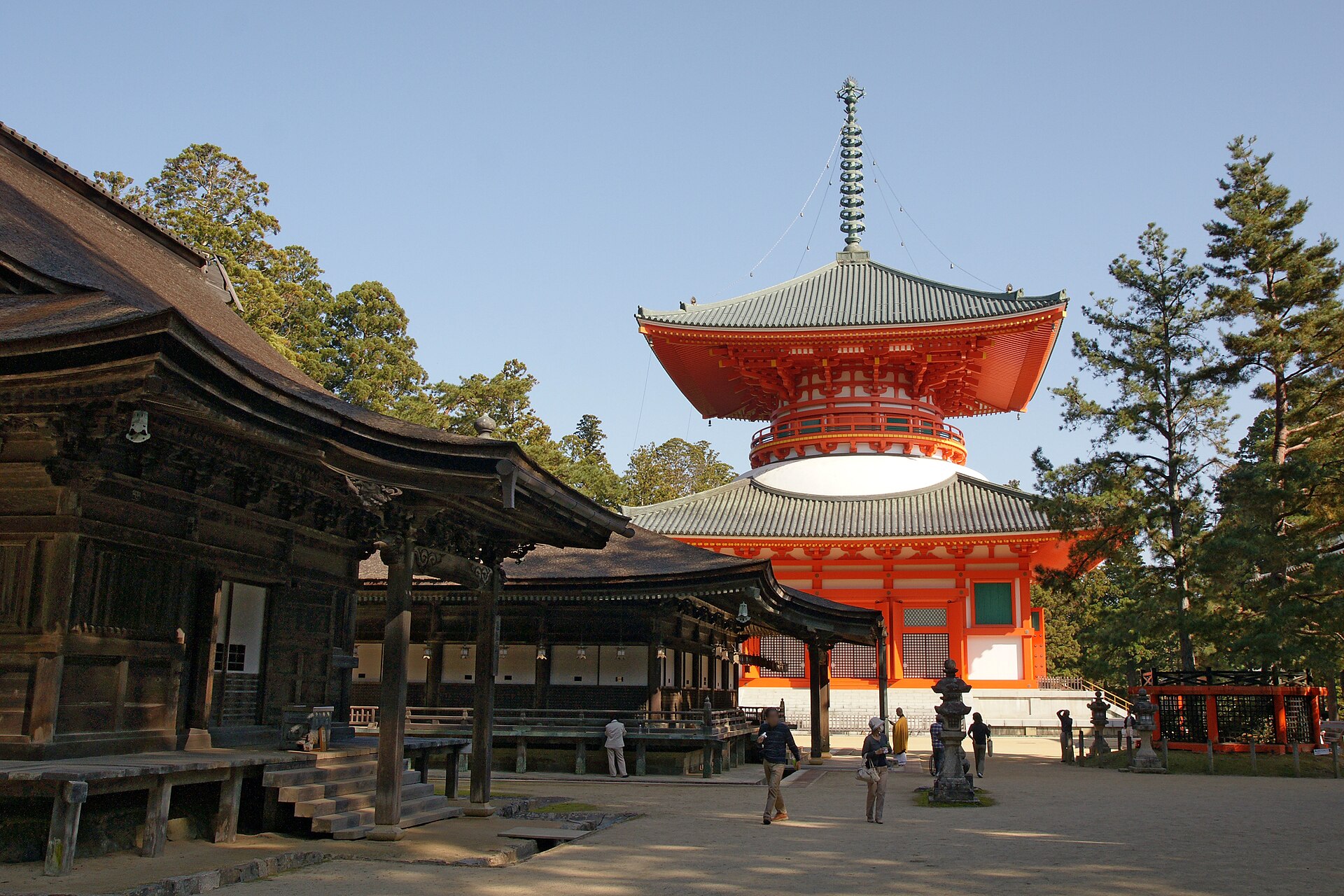
Danjo Garan: This is the spiritual and architectural centre of Koyasan. The vermilion Konpon Daito pagoda stands prominently among the surrounding trees, while the nearby Koya Daishi Kyokai and other halls demonstrate the scale of the complex. The vivid colours and geometric forms contrast with the forest, particularly in autumn. Give yourself time to look beyond the most photographed buildings: smaller halls, gates, and gardens reward a slower circuit.
Kongobuji Temple: As the head temple of Shingon Buddhism, Kongobuji is one of Koyasan’s essential visits. Inside, painted sliding doors depict landscapes and historical scenes, and polished rooms open onto carefully composed gardens. Banryutei, a dry landscape garden made with large granite stones, is one of Japan’s largest. Remove your shoes where requested and allow enough time to appreciate the interior rather than rushing directly to the garden.
Reihokan Museum: For a deeper understanding of Koyasan’s art, visit this museum near Danjo Garan. Its collection includes Buddhist statues, mandalas, scrolls, ritual objects, and other treasures from the mountain’s temples. Exhibitions change, and English information can vary, but even a short visit helps explain the symbolism behind what you see in the temple halls.
Beyond sightseeing, try a vegetarian shojin ryori meal, often served at a temple lodging or a specialist restaurant. Dishes may include tofu, mountain vegetables, sesame preparations, pickles, and seasonal ingredients arranged with remarkable care. Some temple stays also offer morning prayer, meditation, or copying Buddhist sutras. Participation is generally optional, but these experiences are among the strongest reasons to stay overnight.
Staying in a Temple and Eating Well
A shukubo stay is both accommodation and cultural experience. Guest rooms are usually simple Japanese-style spaces with tatami flooring, futons, low tables, and shared or private bathrooms depending on the property. Dinner and breakfast are commonly included, and meals are served at set times. In many temples, guests are expected to arrive before dinner and to keep noise low, especially in the evening.
Standards vary considerably. Some lodgings are historic and basic, while others offer renovated rooms, private bathing facilities, multilingual staff, or Wi-Fi. Read recent reviews and check whether heating, air conditioning, luggage storage, and private toilets matter to you before booking. Temple rooms can sell out during autumn weekends, religious holidays, and major pilgrimage periods, so reserve well ahead.
There are also ordinary guesthouses and small hotels in central Koyasan if you prefer greater flexibility. Restaurants are limited compared with a city, and many close early. If you are not eating at your lodging, check opening times in advance and avoid assuming that dinner will be available after an evening walk. The Real Japan app is useful here: its offline maps and nearby-spot suggestions can help you locate restaurants, temples, toilets, and bus stops even when mountain reception is unreliable. The app is free on iOS and Android.
Practical Tips, Etiquette, and Best Times
Koyasan is beautiful in every season, but each has a distinct character. Spring brings fresh greenery and occasional late cold spells. Summer is cooler than the cities, although rain and mist are common. Autumn is the most visually dramatic period, with coloured maple leaves around the cemetery and temple grounds; it is also the busiest, so book lodging and transport connections early. Winter can bring snow and icy paths, creating a magical atmosphere but also reducing bus frequency and making walking more demanding.
Wear shoes that can handle uneven paving, roots, and damp forest paths. A compact umbrella or rain jacket is sensible year-round. Keep voices low in temple grounds, do not touch religious objects, and ask before photographing people, ceremonies, or interiors. At shukubo, remove shoes at the entrance, follow meal and bathing instructions, and remember that futon bedding may be prepared while you are out.
Plan more generously than a map suggests. Okunoin’s main approach alone takes time, and stopping to read memorials or enjoy the forest can turn a quick visit into a two-hour walk. If you arrive with luggage, use delivery services or ask your lodging about storage before heading to the cemetery. The Real Japan app can also save selected locations for offline use, making it easier to follow a walking plan between Danjo Garan, Kongobuji, and Okunoin without repeatedly checking a signal.
For a quieter experience, visit major sites early in the morning, then return after lunch when many tour groups have departed. The cemetery is particularly atmospheric at first light or after sunset, but stay on the marked route and avoid entering secluded areas alone. If you take a night tour, dress warmly and listen carefully to the guide’s instructions.
How to Get to Koyasan
The usual route is from Namba Station in Osaka on the Nankai Railway. Limited Express trains reach Gokurakubashi in roughly 80 to 90 minutes, while regular connections take longer and may require a transfer. From Gokurakubashi, the Nankai Koyasan Cable climbs to Koyasan Station in about five minutes. The station is outside the central temple district, so continue by the local bus network. There is no conventional railway running directly through the town.
From Kyoto, allow around three hours, usually travelling via Osaka or Namba. From Wakayama, connections can also be made through the Nankai network. Highway buses and seasonal services may operate from other locations, but schedules change, particularly in winter. Check the latest railway, cable car, and bus timetables before departure, and leave extra time if you have a temple check-in deadline.
Once in Koyasan, buses are the practical way to connect the station, central temples, and Okunoin. Walking is rewarding when the weather is good, but distances are longer than the compact town centre initially suggests. Transport passes covering the Nankai journey and local buses may offer value depending on your itinerary. Confirm the pass conditions and use the Real Japan app for directions, opening-hour checks, and nearby recommendations while you are on the mountain.
Koyasan is not a place to rush through with a checklist. Its appeal lies in the transition from busy city to wooded pilgrimage landscape, in the details of temple meals and worn stone, and in the quiet that arrives after dark. Stay for one night if possible, walk slowly, and allow the mountain’s rhythm to shape your visit.