A place to pause, remember, and understand
In central Hiroshima, the Motoyasu and Honkawa rivers meet around a broad green island of trees, paths, and memorials. Today, Hiroshima Peace Memorial Park is one of Japan’s most important places of remembrance. It is also a living urban space where school groups, local residents, international visitors, and survivors’ families come to reflect on the consequences of war and the continuing hope for peace.
The park occupies what was once the busy commercial and political centre of Hiroshima. On 6 August 1945, an atomic bomb exploded above the city. The blast destroyed the surrounding district and killed or injured tens of thousands of people immediately; many more died later from burns, radiation sickness, and related causes. The park’s monuments do not present the event as distant history. Names, photographs, personal belongings, testimony, and ruined architecture make the human cost tangible.
Allow at least half a day, and longer if you want to visit both buildings of the Hiroshima Peace Memorial Museum without rushing. The most meaningful experience usually comes from moving slowly: begin with the museum, walk through the central memorial area, and then spend time beside the A-bomb Dome or river. Real Japan’s free app for iOS and Android can help on the ground with offline maps, walking directions, and nearby-spot suggestions when you want to continue exploring central Hiroshima.
How the park became a symbol of peace
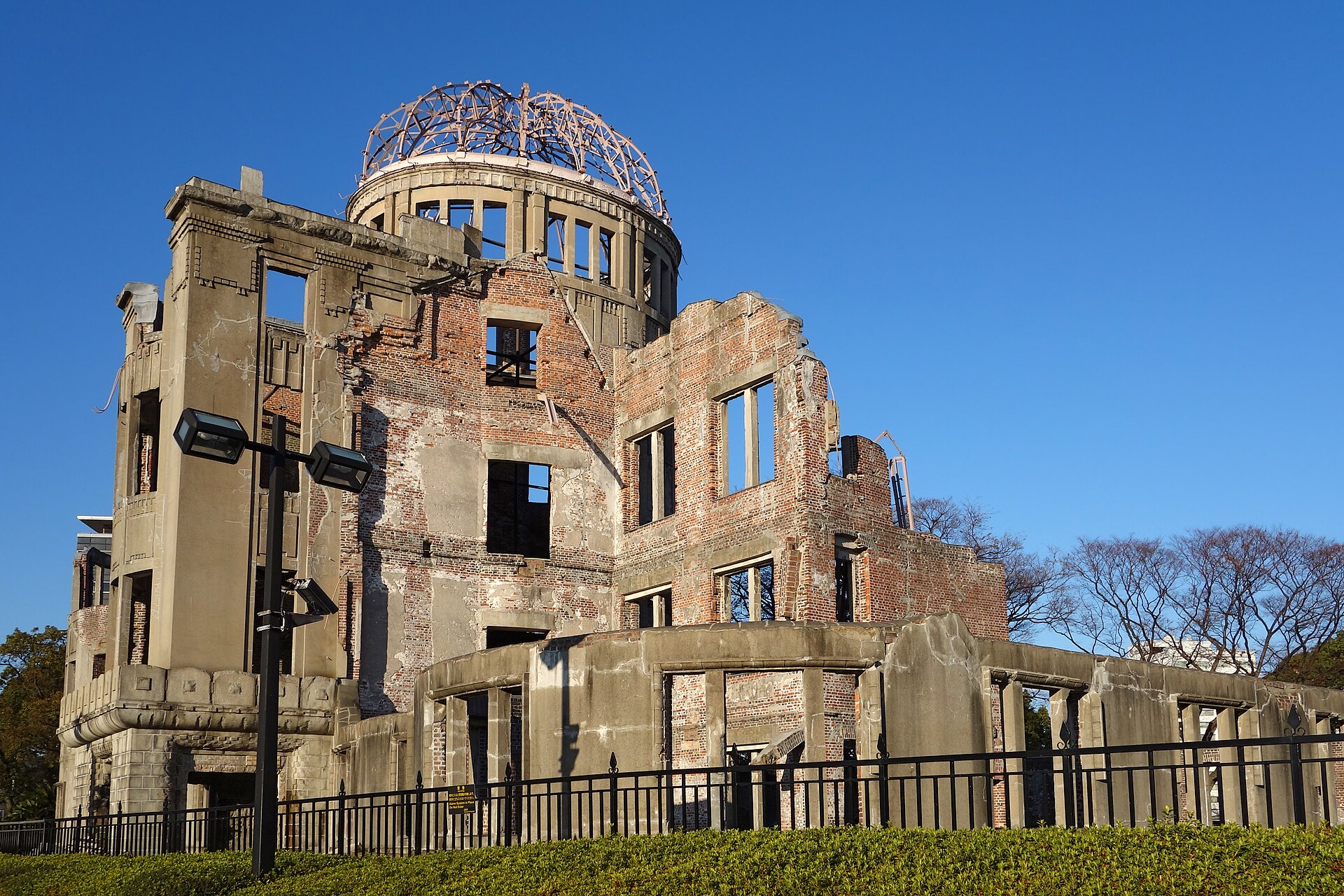
Before 1945, this area was called Nakajima and was one of Hiroshima’s liveliest neighbourhoods, with shops, homes, government offices, and places of entertainment. The atomic bomb exploded approximately 600 metres above the ground, close to the district. Almost every building nearby was destroyed, though the former Hiroshima Prefectural Industrial Promotion Hall survived in skeletal form. It is now known as the A-bomb Dome and is a UNESCO World Heritage Site.
After the war, Hiroshima chose not simply to rebuild the district as it had been but to create a dedicated Peace Memorial Park. The park and its principal memorial buildings were designed by architect Kenzo Tange, whose plan opened the area visually toward the A-bomb Dome. The axis from the Cenotaph for the A-bomb Victims through the Peace Flame to the museum creates a powerful composition: the past is held in view while the city continues beyond it.
It is important to approach Hiroshima as more than a sightseeing stop. The city’s message centres on the abolition of nuclear weapons and the protection of human life, while the museum encourages visitors to confront individual experiences rather than reduce the bombing to military statistics. Reading survivor accounts and learning about the city before the blast gives the park greater depth.
What to see in Hiroshima Peace Memorial Park
- Hiroshima Peace Memorial Museum: The East Building introduces the history of Hiroshima and the development of nuclear weapons, while the Main Building focuses more directly on the bombing and its aftermath. Exhibits include photographs, clothing, watches, fragments, and personal stories. Some displays are emotionally intense, so plan a quiet break afterwards.
- Cenotaph for the A-bomb Victims: This saddle-shaped monument holds the names of those who died as a result of the bombing. Its inscription expresses the hope that the victims will rest in peace and that the tragedy will not be repeated. From here, the Peace Flame and A-bomb Dome align across the park.
- Peace Flame: The flame has burned since 1964 and is intended to remain alight until the world is free of nuclear weapons. It stands near the centre of the park and is especially striking in the early morning or at dusk.
- Children’s Peace Monument: Inspired by the story of Sadako Sasaki, a child who developed leukemia after the bombing, this colourful monument is surrounded by thousands of paper cranes. Visitors often leave folded cranes, and the nearby cases show the care taken by children and communities around the world.
- National Peace Memorial Hall for the Atomic Bomb Victims: Located underground near the Cenotaph, this quiet facility records victims’ names and preserves survivor testimonies. Its circular water feature and subdued lighting create a very different atmosphere from the museum.
- A-bomb Dome: Across the river at the park’s northern edge, the ruined building is one of Hiroshima’s most recognisable landmarks. You cannot enter the fenced site, but viewing it from the riverbank or Motoyasu Bridge makes clear how extraordinary its survival was.
Do not miss the smaller memorials. There are monuments dedicated to Korean victims, students, teachers, mobilised workers, and other groups affected by the bombing. Together, they show that Hiroshima’s victims came from many backgrounds and that the city’s wartime story is complex.
Planning a respectful and rewarding visit
Start at the Hiroshima Peace Memorial Museum if possible. Its exhibitions provide context for the monuments outside, and arriving early can reduce the likelihood of a long queue. The museum is generally open daily except around the New Year period, with seasonal opening times; check the official website before travelling because hours can change. Entry is paid, and the final admission is usually before closing. The museum can become crowded, particularly during school holidays and the spring and summer travel seasons.
A practical route is to enter from the Peace Boulevard side, visit the museum, then walk toward the Cenotaph, Peace Flame, Children’s Peace Monument, and A-bomb Dome. The park is mostly flat and easy to navigate, with benches and open paths. The museum and major facilities provide accessibility information, but visitors with mobility needs should allow extra time around the riverside approaches and check current arrangements in advance.
Dress for the season and bring water in summer. Hiroshima can be hot and humid, while winter mornings may feel cold beside the river. Comfortable shoes are useful because a thoughtful visit involves more walking than the map first suggests. Photography is generally acceptable outdoors, but use discretion around mourners and avoid treating personal artefacts or memorial ceremonies as casual photo opportunities.
Silence is not required everywhere in the park, but a lower voice is appropriate around the Cenotaph, museum exhibits, and memorial services. Do not climb barriers, touch monuments without permission, or leave objects except in designated places. Paper cranes can be offered at the Children’s Peace Monument; food, loud group conversations, and posed novelty photographs are better kept outside the memorial area.
The Real Japan app is useful here because the park contains many memorials that are easy to pass without noticing. Its offline map and directions let you identify a monument, find the nearest entrance or restroom, and return to the tram stop without relying on a constant data connection.
When to go and what to combine with it
Morning is usually the calmest time, especially if you want to concentrate in the museum. Late afternoon brings softer light to the riverside and A-bomb Dome, while evening illuminations and the city’s reflections can create a contemplative atmosphere. The anniversary of 6 August is deeply significant but also exceptionally busy, with ceremonies, security restrictions, and large crowds. Visit then only if you have a specific reason and are prepared to follow official guidance.
Spring brings pleasant walking weather and occasional cherry blossoms, though the park is busier. Summer is powerful but demanding: the anniversary period is hot, humid, and emotionally intense. Autumn is comfortable and often less crowded, while winter offers clearer air and quieter paths. Rain does not make the museum less worthwhile, but bring an umbrella because parts of the route between the museum, memorials, and A-bomb Dome are outdoors.
For a full day, combine the park with the Hiroshima National Peace Memorial Hall, the Hiroshima Museum of Art, or the lively Hondori shopping arcade. Hiroshima Castle and Shukkeien Garden are also reachable by tram or a moderate walk, though they tell very different stories. If you have another half or full day, Miyajima is the classic addition, with Itsukushima Shrine, wooded Mount Misen, and waterfront walks. Leave enough time to absorb Hiroshima itself rather than treating the city as only a connection for the island.
Getting there from Hiroshima Station
From Hiroshima Station, take the Hiroshima Electric Railway tram on Line 2 or Line 6 toward Eba and get off at Genbaku Dome-mae. The journey usually takes around 15 to 20 minutes, depending on traffic and waiting time. The stop places you close to the A-bomb Dome and the northern end of the park. Hondori, the central shopping street, is also within walking distance of the museum.
Several buses run from Hiroshima Station toward the Peace Memorial Park area, and taxis are practical for visitors carrying luggage or travelling in a group. Hiroshima is compact enough that walking from the station can be enjoyable, but it takes roughly 30 to 40 minutes and crosses busy city streets. Use the official transit information for current fares, routes, and disruption notices.
Before setting out, download the Real Japan app free on iOS and Android. Its offline directions, opening-hour information, and suggestions for nearby cafés and attractions make it easier to plan around museum queues and find somewhere quiet for lunch afterwards. Most importantly, give the park time. Hiroshima Peace Memorial Park is not a checklist of monuments; it is a place where careful attention turns a visit into understanding.