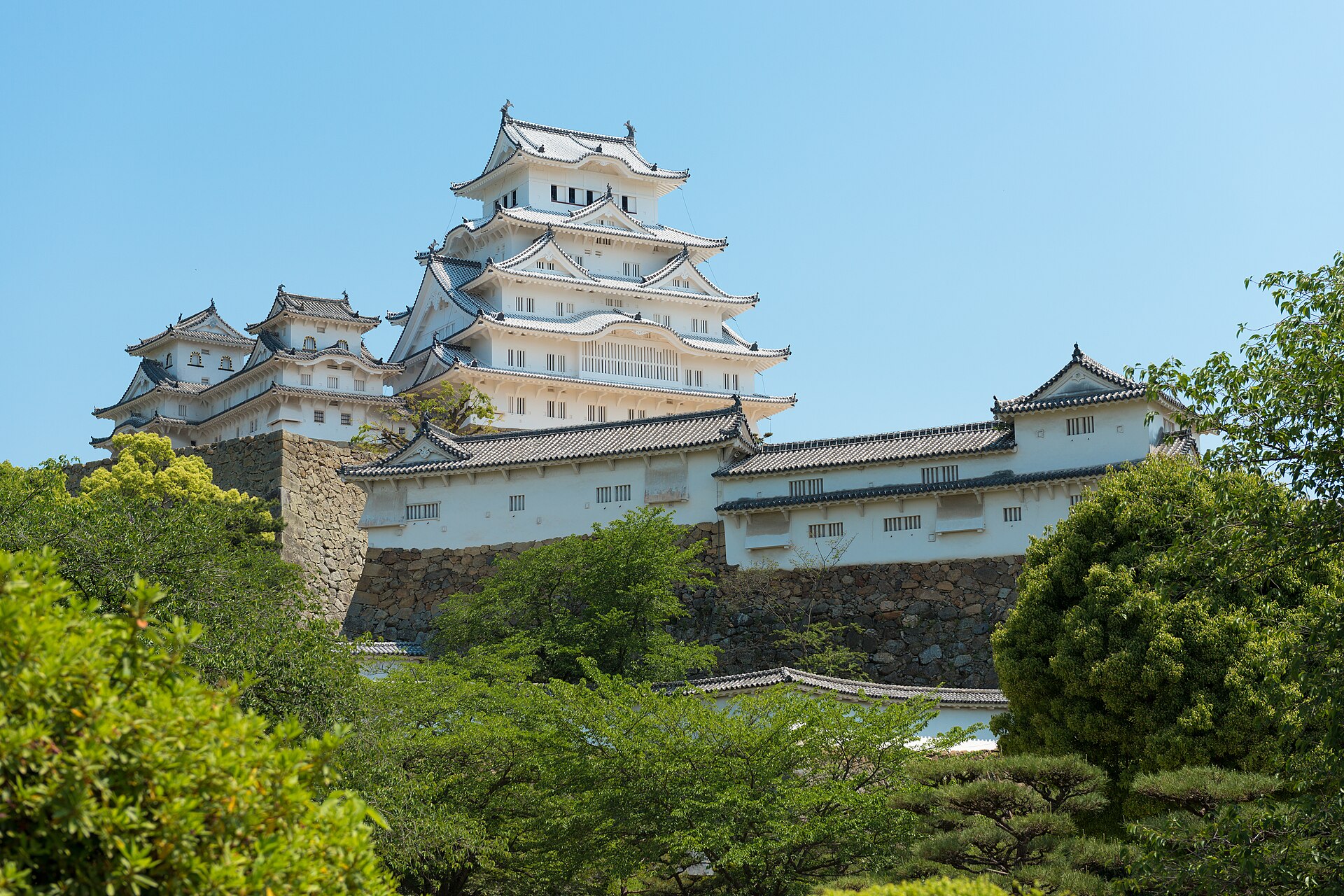
A White Fortress Above Himeji
Rising above the city on a low hill, Himeji Castle looks almost too elegant to be a battlefield. Its white plaster walls, layered roofs, and sweeping defensive lines have earned it the nickname Shirasagi-jo, or White Heron Castle, because the complex appears to take flight against the sky. Yet beneath the beauty is a highly practical fortress, designed to confuse, delay, and defeat an approaching army.
Himeji is widely considered Japan’s finest surviving feudal castle. Unlike many famous castles that were destroyed and rebuilt in concrete during the modern era, Himeji retains its original wooden keep and a remarkable network of gates, baileys, walls, and defensive features. It also escaped serious damage during the Second World War and major earthquakes, leaving visitors with an unusually authentic sense of how a powerful castle town once functioned.
For travellers based in Osaka, Kyoto, or Okayama, Himeji makes an easy and rewarding day trip. Allow at least three hours for the castle itself, or most of a day if you want to explore Koko-en Garden, the surrounding streets, and Himeji’s local food. The route through the castle involves stairs, uneven surfaces, and plenty of walking, but the views and architectural details make the effort worthwhile.
From Military Stronghold to National Treasure
The first fortification on Himeyama Hill dates back to the fourteenth century, although the castle seen today largely took shape under Ikeda Terumasa in the early seventeenth century. After receiving Himeji from Tokugawa Ieyasu following the Battle of Sekigahara, Ikeda expanded the site into a formidable stronghold. The main keep, completed around 1609, was part of a larger network of walls and structures intended to protect the western approach to the newly established Tokugawa order.
Himeji Castle’s design reflects the uneasy peace of the early Edo period. It was a residence for a feudal lord, a symbol of authority, and a military installation at the same time. The castle’s tall central keep is connected to smaller keeps, while the paths below twist through layers of gates and courtyards. Attackers could be forced to turn repeatedly, lose sight of their destination, and expose themselves to defenders stationed above.
The castle changed hands among several prominent families before the feudal system ended in the nineteenth century. It was later used by the Japanese military and suffered periods of neglect, but major preservation campaigns protected its wooden core. The long restoration completed in 2015 cleaned and repaired the exterior plaster, bringing back the brilliant appearance that attracts visitors today. Himeji Castle is now a UNESCO World Heritage Site and one of Japan’s designated national treasures.
What to See Inside the Castle Grounds
Begin at Otemon Gate, the principal entrance near the broad square in front of the castle. From here, the white keep seems close, but the route deliberately winds through several gates before reaching it. Notice the changing angles: each turn reveals a new view of the walls, roof ornaments, and stone foundations. The apparent openness of the approach is deceptive, as the layout was built to make an invading force vulnerable.
Once inside the paid area, follow the path toward the main keep through a series of courtyards. Look for narrow openings in the walls used by defenders to drop stones or fire weapons, as well as small windows and loopholes designed for surveillance. Some gates are deliberately low or sharply angled, making it difficult for a large group to move quickly. The white plaster is not merely decorative; it helped protect the timber structure from fire.
The main keep is a six-storey wooden structure when viewed from inside, although its exterior presents a different visual rhythm of roofs and levels. Prepare for steep staircases and low ceilings. The interior is comparatively spare, with exposed beams, storage spaces, narrow passages, and displays explaining the castle’s construction and defensive systems. Take your time as you climb, because the building itself is the main exhibit.
At the top floor, look through the windows toward Himeji city and the surrounding plain. On clear days, the elevated viewpoint helps explain the castle’s strategic importance. The castle’s famous white appearance is especially striking from the open spaces around the keep, but do not rush through the lower paths; some of the best photographic angles are found beside the walls and smaller gates rather than directly beneath the main tower.
After visiting the keep, explore the West Bailey if time and energy allow. This area is associated with Princess Sen, a member of the Tokugawa family whose story is connected with the castle. The long corridor and rooms provide a different perspective from the military keep, showing how women of the ruling household lived within a fortified residence.
Koko-en Garden and the Castle Town
Immediately beside Himeji Castle, Koko-en is a group of landscaped gardens created in 1992 on the former site of samurai residences. It is not an original Edo-period garden, but its design draws on historical plans and traditional techniques. Nine separate garden areas include a pond garden, a tea garden, a bamboo grove, and spaces arranged around reconstructed walls and gates.
Koko-en offers a welcome contrast after the castle’s steep staircases. Paths are quieter, views of the white keep appear through trees and across ponds, and seasonal planting gives the grounds a changing character. If you plan to visit both attractions, a combined ticket is generally available and offers better value than buying separate admission, though prices and arrangements can change.
Beyond the castle grounds, the streets around Himeji Station are practical rather than heavily preserved, but they provide a chance to eat like a local visitor. Try Himeji oden, in which ingredients are served with a ginger-soy dipping sauce, or look for conger eel, a regional speciality often served grilled or over rice. Ekisoba, noodles sold in and around the station, is another inexpensive Himeji tradition and a convenient meal before a train.
For navigation between the station, castle, garden, and less obvious viewpoints, the free Real Japan app is useful on the ground. Its offline maps and directions can help when mobile reception is inconvenient, while nearby-spot suggestions make it easier to find a café or food stop without repeatedly returning to the main avenue. It is available on iOS and Android.
Planning Your Visit: Timing, Tickets, and Comfort
The castle is usually open from morning until late afternoon, with entry ending before closing time. Seasonal hours can vary, and the grounds may close on specific days around the New Year period, so check the official schedule before travelling. Your admission covers the castle grounds and the route through the main keep, while Koko-en may be visited separately or with a combined ticket.
- Arrive early: The main keep can become crowded, especially on weekends, public holidays, cherry-blossom days, and during spring and autumn travel seasons. An early start gives you more space on the narrow staircases.
- Wear practical shoes: The castle contains polished wooden floors, steep steps, and uneven stone paths. Shoes may need to be removed in parts of the interior, so easy-to-remove footwear is helpful.
- Bring water: The approach includes uphill walking, and summer heat can be intense on exposed stone surfaces. Vending machines and facilities are available in the broader tourist area, but not every section of the castle is close to refreshments.
- Allow extra time for queues: On busy days, entry to the main keep may be managed to prevent overcrowding. A castle visit that looks short on a map can take several hours.
- Check accessibility: Historic architecture means that many upper levels are reached only by stairs. Visitors with mobility concerns should ask staff about accessible routes and the areas that can be viewed without climbing the keep.
Photography is welcome in many outdoor areas, but tripods, flash, and large equipment may be restricted in the interior. The castle is beautiful in every season: plum and cherry blossoms frame it in spring, fresh greenery softens the walls in early summer, autumn brings warmer colour to the surrounding trees, and winter can produce especially clear views. For live opening information and nearby alternatives if the castle is crowded, the Real Japan app’s opening-hours information and local suggestions can make a flexible itinerary easier.
Getting to Himeji Castle
The nearest major station is JR Himeji Station, served by the Sanyo Shinkansen and regular JR services. From the station’s north exit, the castle is visible at the end of the main avenue. It takes roughly fifteen to twenty minutes to walk, depending on your pace and stops for photographs. Local buses also run from the station toward the castle, making them useful in hot weather or when travelling with luggage.
If you are coming from Osaka, the Shinkansen is the fastest option, while rapid JR services are slower but usually more economical. From Kyoto, a direct Shinkansen journey is convenient, and from Okayama the castle is a particularly straightforward excursion. If Himeji is part of a wider rail itinerary, confirm whether your pass covers the chosen service before boarding.
Once you leave the station, the route is simple, but the complex itself is easier to understand if you arrive with a little orientation. The Real Japan app can keep an offline map available for the walk from JR Himeji Station and help you locate Koko-en, restaurants, and other nearby points without relying on constant data service. With an early arrival, comfortable shoes, and enough time to look beyond the famous white silhouette, Himeji Castle becomes more than a photo stop: it is a vivid lesson in how Japan’s castles combined ceremony, residence, engineering, and war.