Kyoto's historic weaving quarter, a maze of machiya and workshops that has produced luxurious Nishijin-ori silk brocade for over a thousand years.
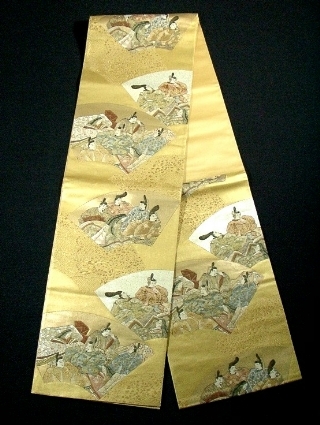
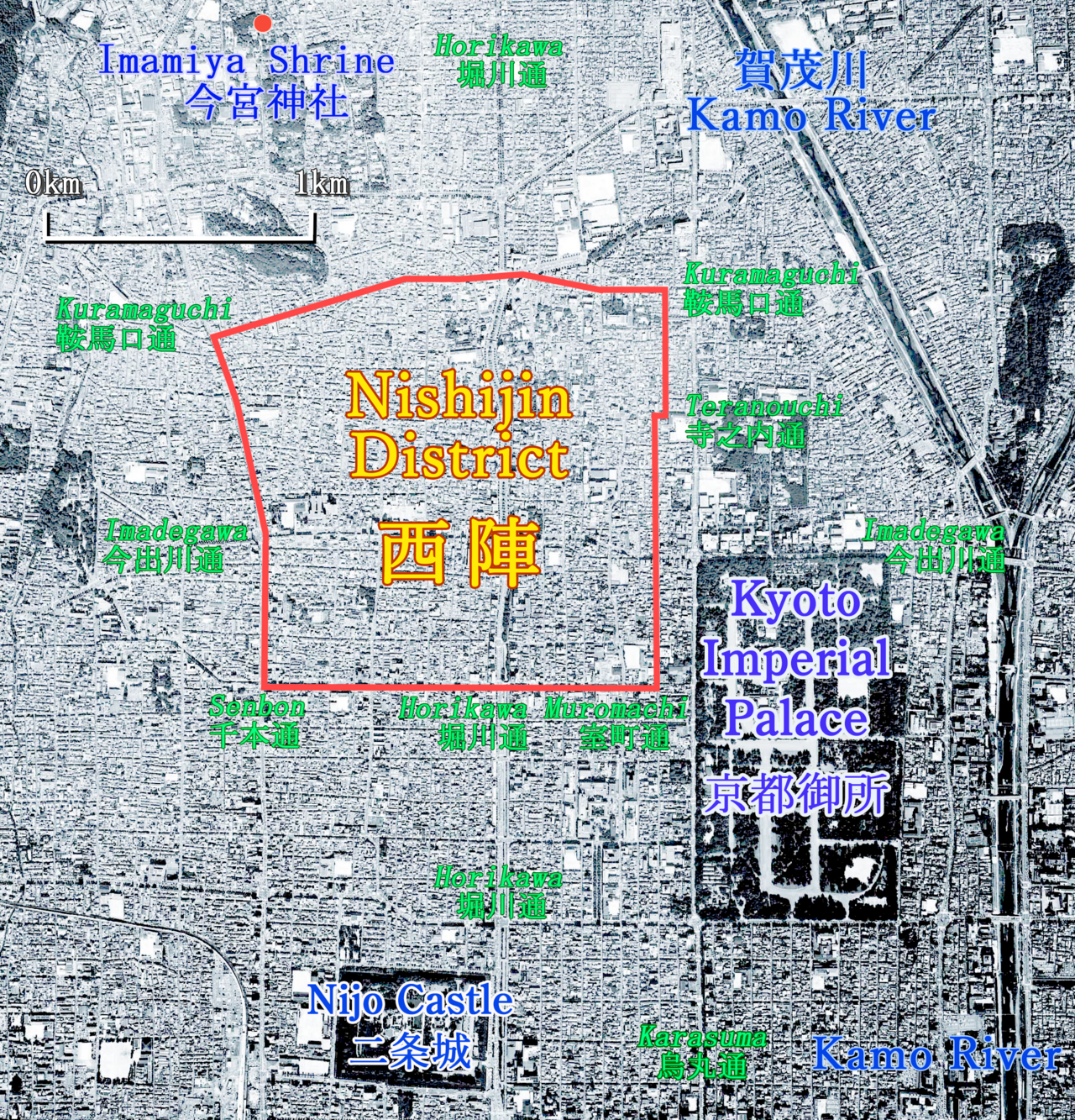
The Nishijin District, in northwest-central Kyoto, is the historic heart of Japanese textile weaving and the birthplace of Nishijin-ori, the sumptuous silk brocade used in the finest kimono, obi sashes, and ceremonial fabrics. More a neighborhood than a single street, it is a quiet grid of narrow lanes, wooden machiya townhouses, and small family workshops where the craft has been practiced for over a thousand years and where, in the back streets, the rhythmic clatter of looms can still be heard.
The district takes its name from the Onin War of the 15th century, when the western camp (nishijin, the western encampment) of the warring armies was stationed here. When peace returned, weavers who had scattered during the fighting regathered on the site and rebuilt the industry, and the name of the old encampment stuck to the craft they revived. Nishijin-ori became renowned for its intricate, multi-colored patterns woven from pre-dyed threads, a labor-intensive technique capable of extraordinary richness and detail. At its height the district hummed with thousands of workshops supplying the imperial court, the temples, and the nation's kimono trade.
Though the kimono industry has contracted in the modern era, Nishijin remains a working craft district rather than a preserved relic. Weaving families and studios still operate here, and the neighborhood offers travellers several ways to engage with the tradition. The Nishijin Textile Center, at the district's eastern edge, is the main visitor hub, with free daily kimono fashion shows, weaving and hand-loom demonstrations, displays of finished brocade, and hands-on experiences such as trying a loom or dyeing. Scattered through the lanes are smaller ateliers, some of which welcome visitors to watch weavers at work or to shop for obi, accessories, and off-cuts of the famously beautiful cloth.
Beyond textiles, Nishijin rewards the aimless wanderer. It is one of the best-preserved machiya neighborhoods in Kyoto, and its atmospheric streets are increasingly dotted with stylish cafes, galleries, and guesthouses housed in restored merchant homes — part of a quiet revival that has made the district fashionable with design-minded travellers. There is no admission and no fixed itinerary; the pleasure is in strolling, listening for the looms, peering into workshop doorways, and stopping for coffee in a century-old townhouse.
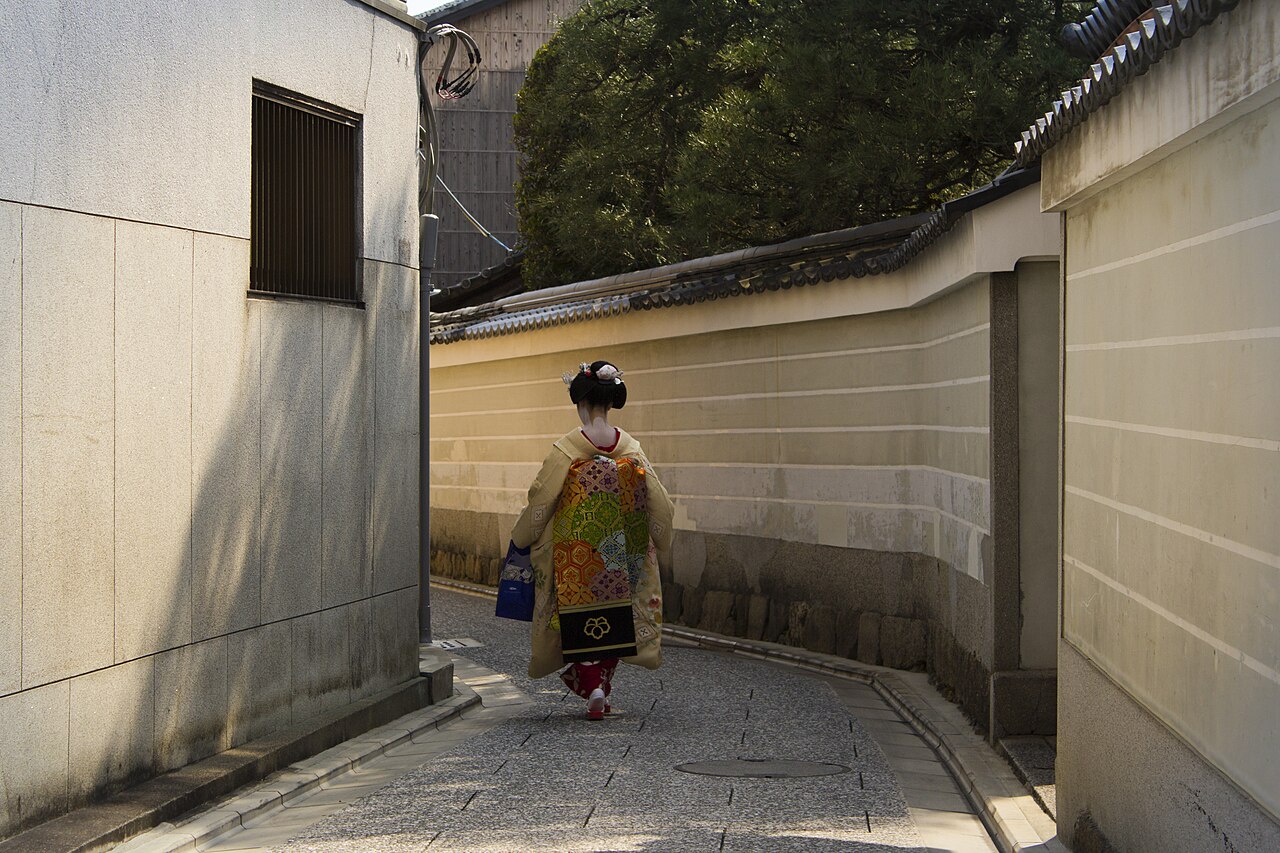
The district also sits within easy reach of major sights, making it a natural addition to a northwest Kyoto day. The golden Kinkaku-ji, the plum shrine Kitano Tenmangu and its neighboring Kamishichiken geisha quarter, and the imperial palace grounds are all nearby, so a morning of temples can be rounded off with an afternoon among the weavers.
Getting there takes a short walk or bus ride from the center. From Imadegawa Station on the Karasuma subway line it is about 12 minutes on foot west; Kyoto City Buses 9, 12, and 59 stop at Horikawa-Imadegawa beside the Textile Center. Come during working hours to catch the demonstrations and the sound of the looms, and give yourself time to lose the map and wander the lanes of one of Kyoto's most quietly authentic districts.
A local's tip
Wander the back lanes off the main streets to hear the clatter of working looms still coming from small weaving workshops — Nishijin is a real production district, not a museum, and the sound is part of the experience.
Best time to visit
Daytime
Getting there
In northwest-central Kyoto, roughly bounded by Horikawa, Imadegawa, and Kitaoji streets. From Imadegawa subway station walk west about 12 minutes, or take Kyoto City Bus 9 or 12 to Horikawa-Imadegawa.
Good to know
- Cafes
- Restrooms
- Workshops
Plan the whole trip offline
Nishijin District is one of many places in the Real Japan app — with turn-by-turn directions, nearby spots and full offline maps you can use with no signal.