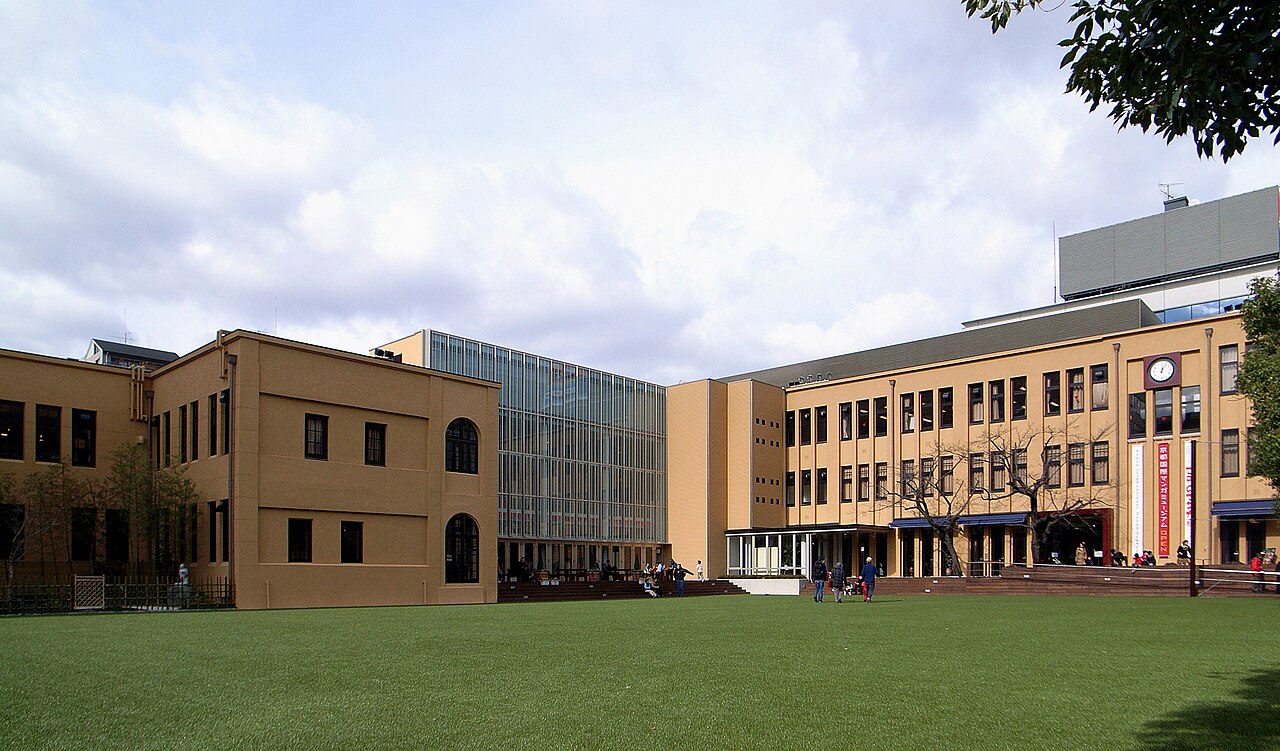
A former school turned shrine to manga, with 300,000 items and a 200-metre wall of comics you can pull down and read.
Housed in a handsome former elementary school, the Kyoto International Manga Museum treats Japan's most exportable art form with the seriousness it has long deserved. Opened in 2006 as a joint project between Kyoto City and Kyoto Seika University, the country's first university to offer a manga degree, it occupies the retro-modern buildings of the Tatsuike Elementary School, which closed in 1995. The polished wooden corridors, old staircases and high-ceilinged classrooms have been lovingly preserved, so the museum feels less like a gallery than a place where you might browse forever after class has let out.
At its heart is the 'Wall of Manga', roughly 200 metres of open shelving lining the corridors on three floors and holding some 50,000 volumes that visitors are free to pull down and read. The collection as a whole numbers around 300,000 items, including rare Meiji-era magazines, postwar rental-library comics and a growing library of works translated into dozens of languages. Unlike most museums, the point here is not to look but to sit and read: benches, window seats and, in fine weather, the broad front lawn fill with people of every age absorbed in a book, an atmosphere that captures manga's role as everyday Japanese culture rather than rarefied art.
Beyond the reading walls, permanent exhibits trace the history and global spread of manga, explain how a comic is drawn and serialised, and display plaster hand-prints of famous artists. Special exhibitions rotate through the main gallery, a former school auditorium, while the Manga Studio hosts live drawing demonstrations and the portrait corner lets you sit for a caricature by a working illustrator. Families gravitate to the kamishibai storytelling stage, where a performer narrates picture-card tales in the pre-television tradition that helped shape manga itself, and to the children's library stocked with picture books.
The museum works on several levels at once. Casual visitors can simply grab a favourite series and lose an afternoon; students of pop culture can dig into how manga evolved from woodblock caricature to a global storytelling language; and design-minded travellers can appreciate the sensitive reuse of a century-old school. A café in a former classroom, whose walls are covered in autographs and sketches left by visiting artists, makes a fitting place to pause, and the gift shop is a treasure of Kyoto-only merchandise.
Practically, it is one of the easiest cultural stops in the city, sitting right at the Karasuma-Oike crossroads two minutes from a subway station that links to both major lines. Note that it closes on Tuesdays and, unlike JR sights, is not covered by a rail pass, though IC cards handle the subway ride there with a tap. Allow at least two hours, more if you intend to read, and choose a weekday if you can, when the corridors are quiet and the lawn is yours. For anyone curious about how comics became Japan's storytelling lingua franca, no place in the country explains it more enjoyably.
A local's tip
Take a volume off the 200-metre 'Wall of Manga' and read it out on the front lawn; a small English-language section sits near the main hall.
Best time to visit
Weekday afternoons; lawns are pleasant in spring and autumn
Getting there
Two minutes from Karasuma Oike subway station (exit 2), at the corner of Karasuma and Oike streets in central Kyoto.
Good to know
- Cafe
- Wi-Fi
- Gift Shop
- Restrooms
- Reading Areas
Plan the whole trip offline
Kyoto International Manga Museum is one of many places in the Real Japan app — with turn-by-turn directions, nearby spots and full offline maps you can use with no signal.