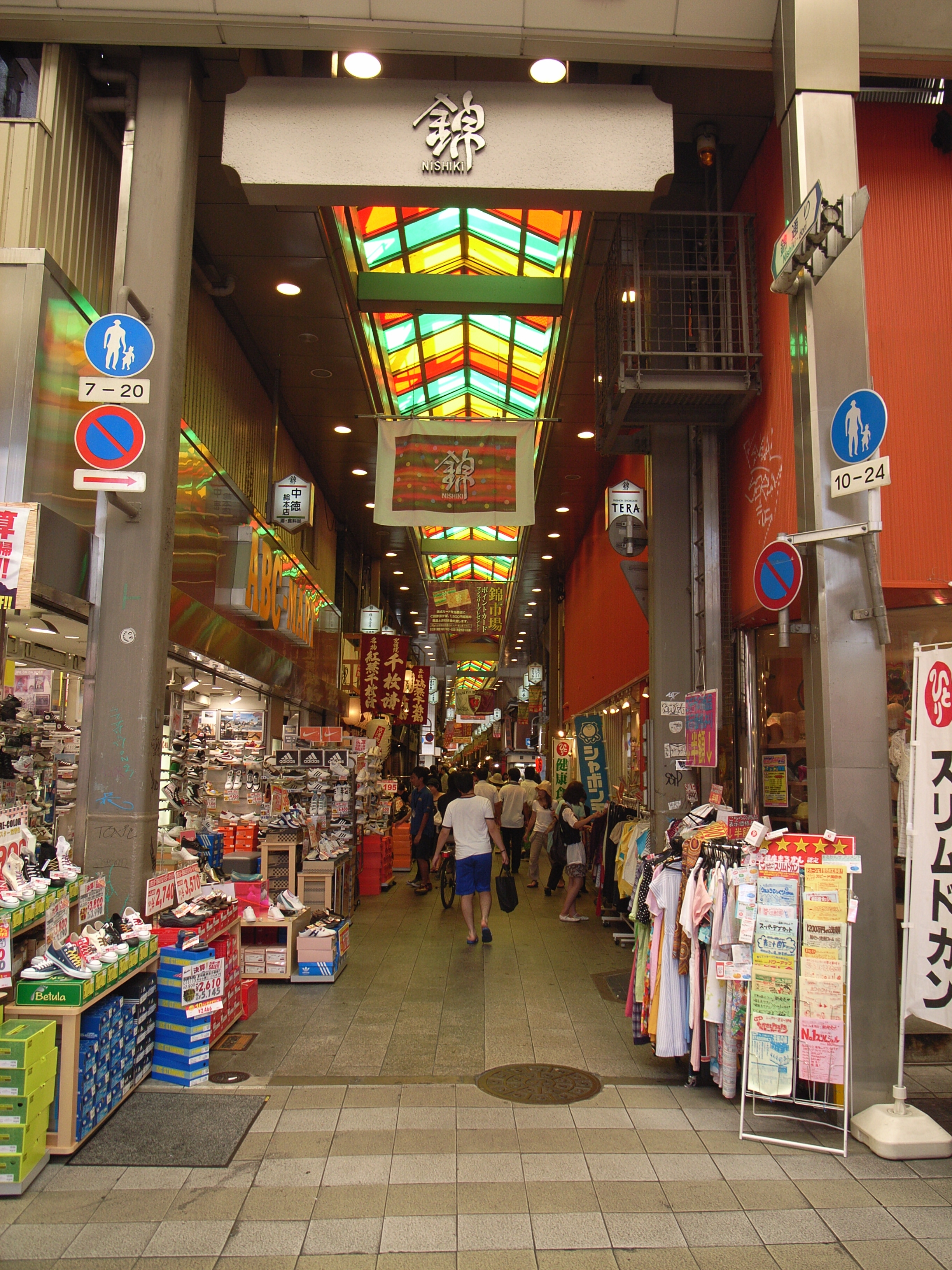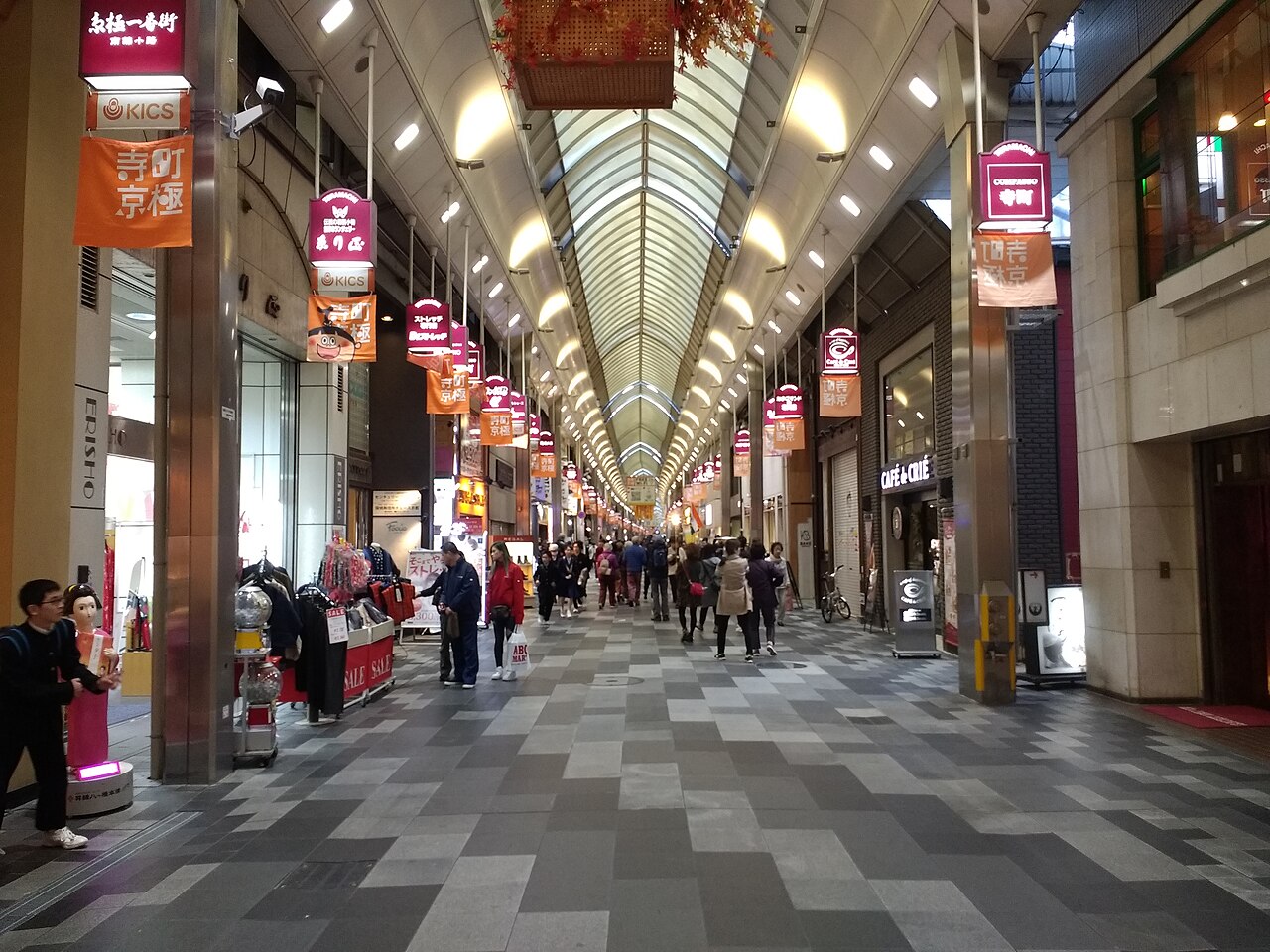
A covered downtown arcade on a former temple street, mixing centuries-old stationers and tea shops with modern boutiques.
Teramachi Kyogoku is one of downtown Kyoto's principal covered shopping arcades, running north from bustling Shijo-dori through the commercial heart of the city. Its name, Teramachi, means Temple Town, and it recalls the street's origin: in the late 16th century the warlord Toyotomi Hideyoshi relocated dozens of the city's temples to a single north-south avenue as part of his reorganization of Kyoto. Several of those temples still stand tucked between the shops, giving the arcade an unexpected layering of the sacred and the commercial.
Over the centuries the temple street became a merchant street, and by the modern era it had been roofed over into a weatherproof shopping arcade. Today Teramachi is prized for the way it blends eras. Alongside contemporary fashion boutiques, cafes, bookshops, and drugstores you will find long-established specialist merchants: venerable stationers and calligraphy-brush makers, incense houses whose recipes date back generations, tea sellers, traditional sweet shops, antique dealers, and purveyors of Buddhist altar goods serving the surviving temples. Kyukyodo, a famous incense and stationery house with roots stretching back centuries, anchors the street's traditional character.
The arcade is a comfortable, all-weather place to browse, its roof keeping off Kyoto's summer heat, winter chill, and sudden rain. It connects at its lower end with the parallel Shinkyogoku arcade one block east, and the two are stitched together by short cross-passages, so shoppers commonly weave between them. Where Teramachi leans older and more refined, Shinkyogoku is brasher and more youthful, packed with souvenir stalls, novelty shops, cinemas, and game arcades that have drawn crowds of students and pilgrims since the Meiji era. Walking both gives a full picture of how Kyotoites have shopped and strolled for well over a century.
Beyond retail, the arcade rewards the curious. Temples such as Seishin-in and the atmospheric Nishiki Tenmangu — squeezed dramatically between storefronts at the junction with Nishiki Market — offer sudden pockets of incense and calm. Nishiki Tenmangu's bright vermilion lanterns and its ushi (ox) statue, polished smooth by generations of hands, make a popular photo stop and mark the point where Teramachi meets the famous Nishiki food market to the west.
Teramachi's location makes it the natural spine of a downtown day. Shijo-dori and its department stores lie at the southern end; the Kamo River, Pontocho alley, and Gion are a short walk east; and Nishiki Market runs off to the west, making it easy to combine shopping with sightseeing and street food. Most shops open around 10am and trade into the evening, so it works equally well for an afternoon browse or an after-dinner stroll.
Getting there is simple. Kyoto-Kawaramachi Station on the Hankyu Line surfaces a few minutes away, and Kyoto City buses converge on the Shijo-Kawaramachi and Shijo-Takakura stops nearby. With its covered roof, central position, and mix of the ancient and the everyday, Teramachi is the most convenient place in Kyoto to feel the pulse of the modern city while brushing up against its long merchant history.
A local's tip
Teramachi runs parallel to the livelier Shinkyogoku arcade one block east — cut between them through the connecting passages to compare old temple-side stationers and incense shops with the youthful souvenir and game arcades.
Best time to visit
Afternoon and evening
Getting there
In the heart of downtown Kyoto, running north from Shijo-dori. From Kyoto-Kawaramachi Station (Hankyu) it is a 4-minute walk; the covered arcade is one block west of the Kamo River.
Good to know
- Shops
- Wi-Fi
- Covered
- Restrooms
Plan the whole trip offline
Teramachi Kyogoku Shopping Street is one of many places in the Real Japan app — with turn-by-turn directions, nearby spots and full offline maps you can use with no signal.