A central street lined with rare Meiji-era Western brick and stone architecture, once Kyoto's main road to the east.
Sanjo-dori is one of Kyoto's oldest and most historically important east-west streets, and its central stretch preserves the finest concentration of Meiji- and Taisho-era Western-style architecture in the city. For travellers used to Kyoto's wooden temples and machiya, this handsome parade of red brick, carved stone, and arched windows is a surprising and rewarding change of register.
The street's importance is old. In the Edo period, Sanjo-dori formed the Kyoto terminus of the Tokaido, the great highway linking the imperial capital with the shogun's city of Edo. The Sanjo Ohashi bridge over the Kamo River, at the street's eastern end, was the road's official endpoint and remains marked by monuments today. Because Sanjo was the city's main artery to the east, it became the natural place for the new institutions of the Meiji era — banks, post offices, trading companies, and pharmacies — to build their headquarters when Japan opened to the West in the late 19th century.
Many of those buildings survive, giving the block between Karasuma and the river the feel of an open-air architecture museum. The standout is the former Bank of Japan Kyoto Branch, a stately 1906 brick-and-stone edifice by the celebrated architect Tatsuno Kingo, now preserved as an annex of the Museum of Kyoto and open to visitors. Nearby stand the red-brick Nakagyo Post Office, whose 1902 Romanesque facade was carefully retained when the building was modernized behind it; the SACRA building, a former bank; and the 1928 Bldg, a striking former newspaper headquarters now full of galleries and cafes. Interspersed are older Japanese merchant houses and long-established shops, so the street reads as a timeline of Kyoto's modernization.
Exploring Sanjo-dori is a self-guided architectural stroll. There is no admission and no set route — simply walk the central blocks looking up at the facades, ducking into the museum, galleries, cafes, and boutiques that now occupy many of the old commercial buildings. Information plaques on several structures explain their history. The street is lively and thoroughly modern at ground level, mixing specialty coffee, design shops, and restaurants with the grand old frontages above, which makes it a pleasant place to pause between sightseeing.
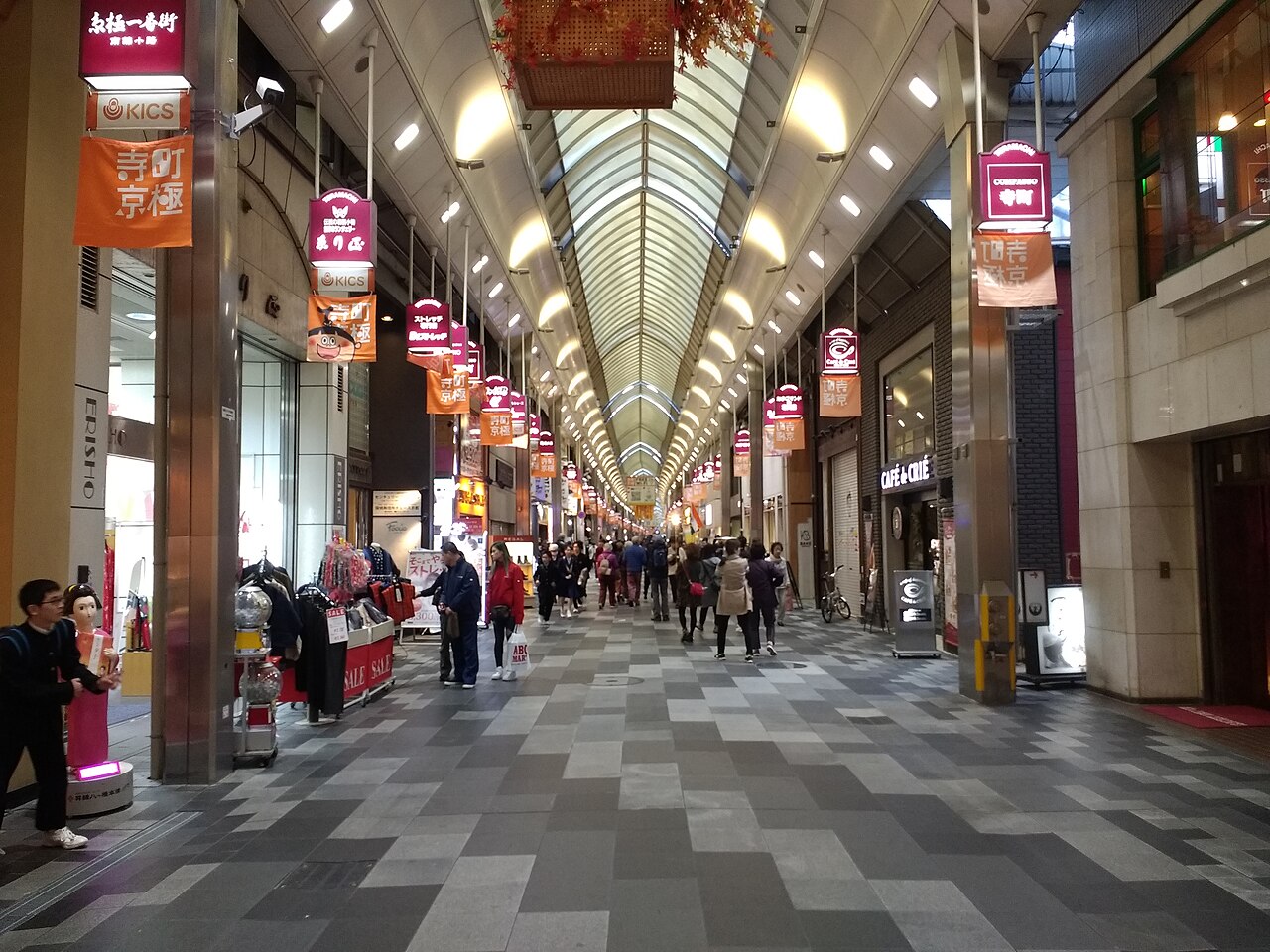
Sanjo-dori sits at the center of downtown and links easily to other attractions. To the east, Sanjo Ohashi crosses the Kamo River to the northern end of Pontocho and the approach to Gion; to the west, the covered Teramachi and Shinkyogoku arcades cross Sanjo; and the Nishiki Market and Shijo shopping district lie a few blocks south. It is an ideal spine for a downtown walk that mixes shopping, riverside, and history.
Getting there is effortless. Karasuma-Oike Station, where the Karasuma and Tozai subway lines meet, is a five-minute walk north, and Sanjo Station on the Keihan and Tozai lines sits at the eastern, riverside end. Come in daylight to appreciate the brickwork and stone carving, camera ready, and let Sanjo-dori show you the confident, outward-looking Kyoto of a century ago.
A local's tip
Look up: the finest surviving facades are the former Bank of Japan Kyoto branch (now the Museum of Kyoto annex) and the red-brick Nakagyo Post Office, whose 1902 frontage was preserved while the building behind was rebuilt.
Best time to visit
Daytime for architecture
Getting there
Sanjo-dori runs east-west through central Kyoto. The historic red-brick stretch lies between Karasuma and the Kamo River; from Karasuma-Oike subway station walk south one block to Sanjo, then east.
Good to know
- Cafes
- Shops
- Restrooms
Plan the whole trip offline
Sanjo-dori Historic Street is one of many places in the Real Japan app — with turn-by-turn directions, nearby spots and full offline maps you can use with no signal.