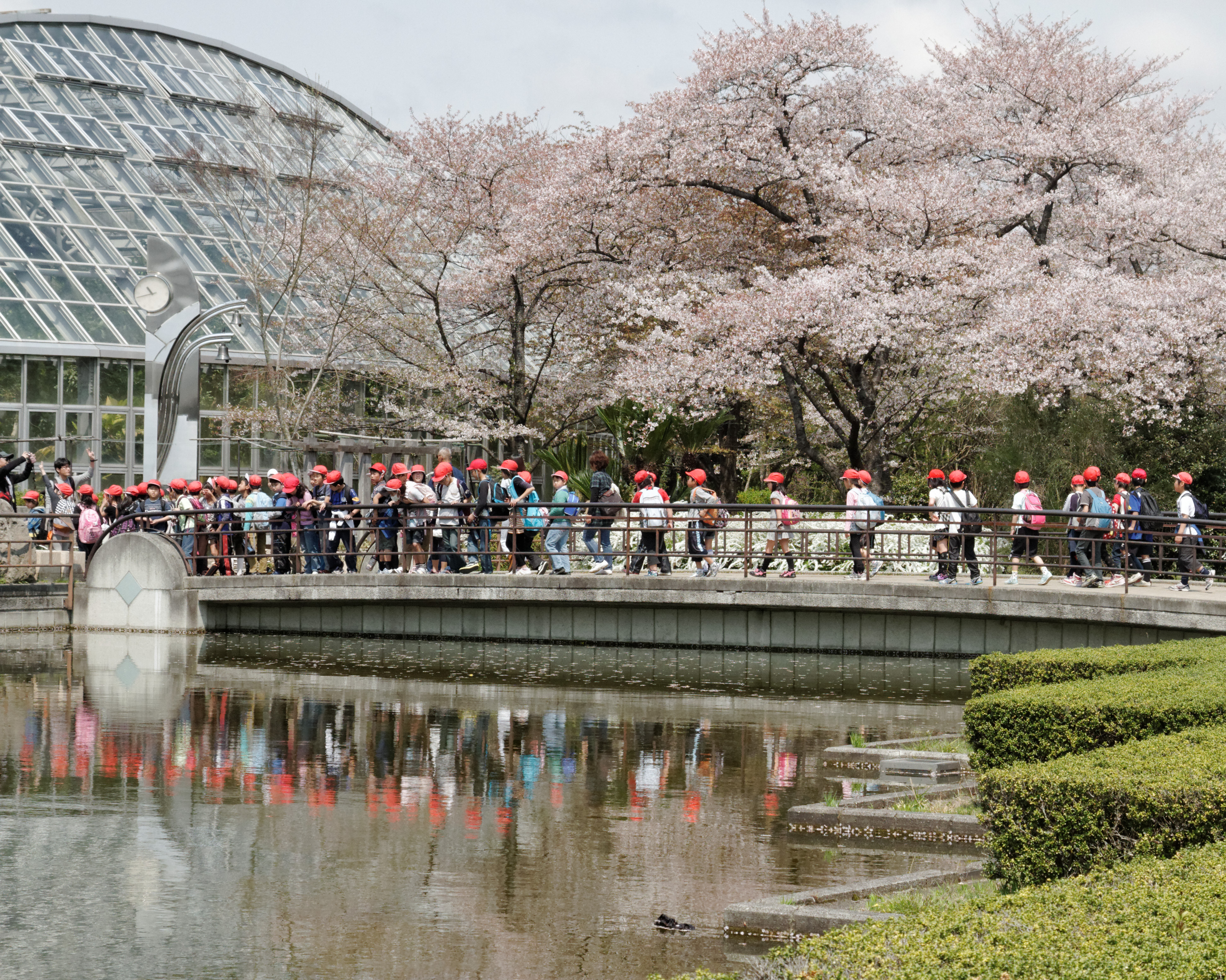
Japan's oldest public botanical garden, with a huge conservatory and seasonal flower displays by the Kamo River.
Opened in 1924, the Kyoto Botanical Garden is the oldest public botanical garden in Japan and remains one of the most rewarding green spaces in the city. Spread across roughly 24 hectares in the northern Sakyo ward, beside the Kamo River and beneath the Kitayama hills, it holds something in flower in almost every season, making it a favourite among Kyoto residents as much as visitors.
The garden is home to around 12,000 plant species and varieties, arranged into a series of distinct areas that reward a slow wander. There is a formal European-style garden with symmetrical beds and a fountain, a Japanese garden with a pond and stands of native trees, a bamboo grove, a sunken garden, a rose garden and a cherry tree grove that puts on a spectacular show each spring. Seasonal set pieces are a highlight: tulips and flowering cherries in April, hydrangeas and lotus in summer, and a blaze of maples and ginkgo in November, when the trees are sometimes illuminated after dark.
At the heart of the grounds stands the conservatory, among the largest greenhouses in the country. Inside, climate-controlled zones move you from steamy tropical rainforest to arid desert, taking in orchids, carnivorous plants, giant water lilies and a jungle canopy. It is an ideal refuge on a hot, cold or wet day and a genuine attraction in its own right, though it carries a modest additional charge on top of general admission.
What makes the garden especially appealing is its combination of quality and value. General admission is just a couple of hundred yen, children enter free or at a token price, and the paths are wide, flat and largely wheelchair accessible. It rarely feels crowded compared with Kyoto's famous temples, so it offers a genuinely relaxed few hours. Benches, lawns and a cafe make it a comfortable spot for a picnic or a rest, and families appreciate the open space where children can safely roam.
The garden's location adds to its charm. It sits right on the Kamo River, so a visit pairs naturally with a riverside walk, and the fashionable Kitayama district just outside the gates has bakeries and cafes for afterwards. Access could hardly be easier: Kitayama Station on the Karasuma subway line lets out almost at the north entrance, a straightforward twenty-minute ride from Kyoto Station without changing trains.
Plan on around two hours to see the main areas at a comfortable pace, or longer in peak bloom when you will want to linger. Arrive after opening at nine, work your way from the seasonal displays near the entrance toward the conservatory and Japanese garden, and check the garden's calendar in advance, as the tulip, rose, lotus and autumn-leaf seasons each draw their own devoted crowds. Last admission is an hour before the five o'clock closing.
A local's tip
The conservatory is one of Japan's largest and is worth the small extra fee on a rainy or cold day; time your visit for the tulip display in April or the illuminated autumn maples in late November.
Best time to visit
Spring for tulips and cherries; autumn for maples
Getting there
Take the Karasuma subway line to Kitayama Station and use exit 3, which opens almost directly onto the garden's north gate. From Kyoto Station the ride is around 20 minutes with no transfers.
Good to know
- Cafe
- Restrooms
- Conservatory
- Wheelchair access
Plan the whole trip offline
Kyoto Botanical Garden is one of many places in the Real Japan app — with turn-by-turn directions, nearby spots and full offline maps you can use with no signal.