A beloved neighborhood market arcade north of downtown, full of old-school food stalls and Kyoto's most famous bean-mochi shop.
Demachi Masugata Shotengai is a compact, covered neighborhood market arcade in the Demachiyanagi district, north of central Kyoto and just west of the point where the Takano and Kamo rivers meet in the leafy Kamogawa Delta. Far from the tourist arcades downtown, it is a genuine local shopping street where Kyoto families have bought their groceries and daily necessities for generations, and it offers travellers a warm, unvarnished taste of everyday city life.
The arcade's name, Masugata, refers to the old square-shaped street layout of the area. Under its roof runs a tight row of some fifty small, independent shops: greengrocers with seasonal Kyoto vegetables stacked in baskets, fishmongers, butchers, pickle merchants, tofu makers, tea sellers, bakeries, dry-goods stores, and cheap-and-cheerful eateries. The atmosphere is friendly and unpolished — shopkeepers call out greetings, regulars stop to chat, and prices are aimed at residents rather than tourists. It is exactly the kind of living market that is disappearing from many Japanese cities, which makes its survival a genuine pleasure.
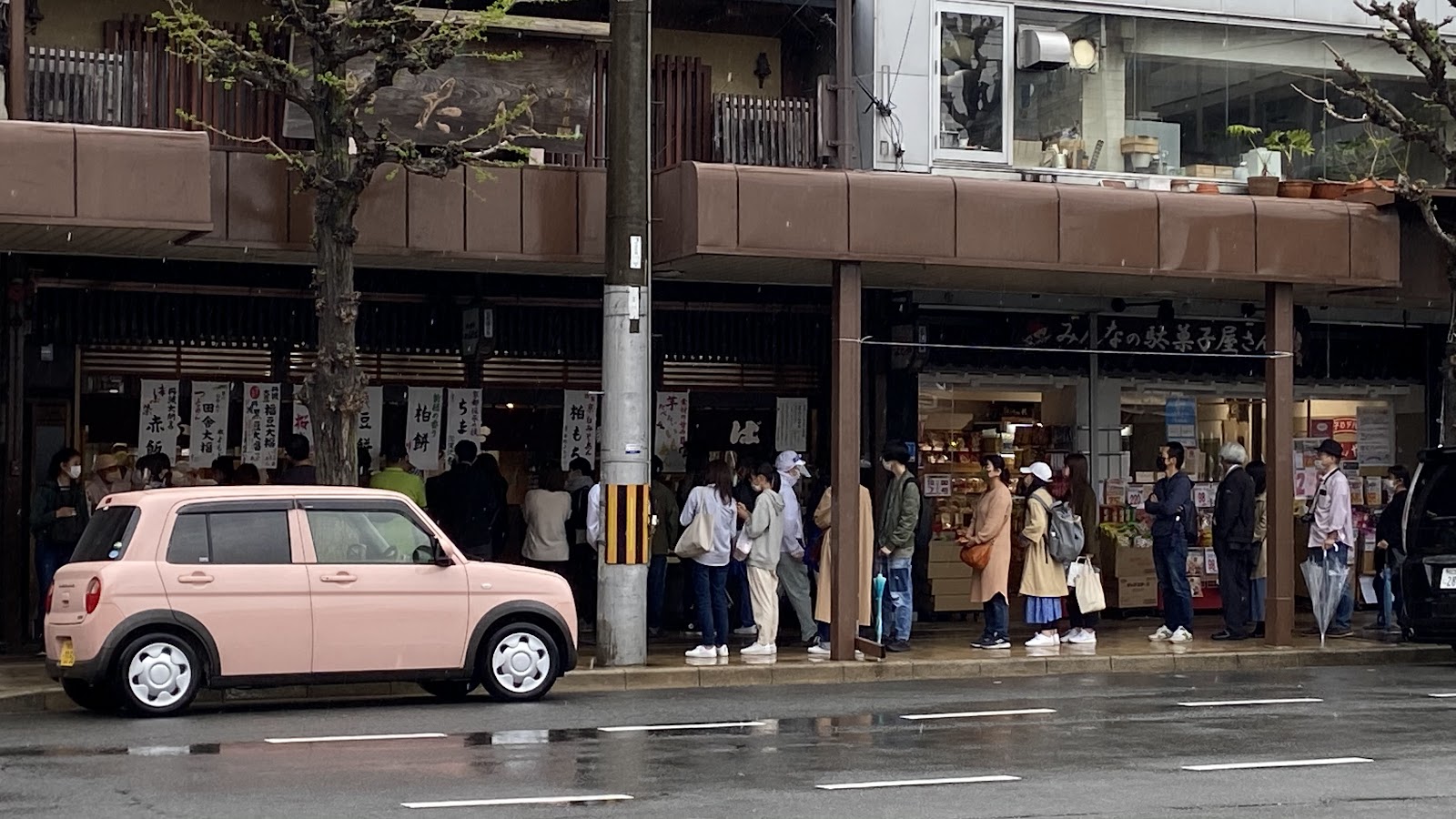
The arcade's most famous resident sits right at its western entrance: Demachi Futaba, a wagashi (traditional sweet) shop founded in 1899 and celebrated across Japan for its mame-mochi — soft, freshly pounded rice cakes studded with salty red peas and filled with smooth sweet bean paste. The daily queue of locals is a landmark in itself, and the shop often sells out by mid-afternoon, so it pays to come early. Elsewhere in the arcade you can graze on croquettes, taiyaki, freshly made tofu, roasted tea, and other inexpensive local treats, making it a fine spot for a casual, wandering lunch.
What makes Demachi Masugata special is context. It anchors a quietly charming corner of Kyoto that most visitors miss. A few minutes east, the Kamogawa Delta is one of the city's best-loved riverside spots, where families picnic and children hop across the famous turtle- and bird-shaped stepping stones that lead over the water. The revered Shimogamo Shrine and its ancient Tadasu-no-Mori forest lie a short walk north. Combining the market with the river delta and the shrine makes an easy, atmospheric half-day away from the crowds.
The district is also a transport gateway to Kyoto's northern mountains. Demachiyanagi Station is the terminus of both the Keihan Main Line and the scenic Eizan Electric Railway, the little train that climbs to Kurama, Kibune, and the maple tunnels of the northern hills — so the arcade makes a natural provisioning stop before or after a trip into the countryside.
Getting there is quick: from Demachiyanagi Station it is about a five-minute walk west to the arcade, and several city buses stop nearby. Come in the morning while the food shops are fresh and Demachi Futaba still has mochi, buy a few things to eat, and carry them the short distance to the riverbank to enjoy one of Kyoto's most relaxed and local experiences.
A local's tip
Queue at Demachi Futaba for their famous mame-mochi (bean-studded rice cakes) — locals line up daily and it sells out; eat one by the Kamo River delta stepping-stones a few minutes east.
Best time to visit
Morning to early afternoon
Getting there
In the Demachiyanagi neighborhood north of downtown, just west of the Kamo River delta. From Demachiyanagi Station (Keihan / Eizan lines) walk west about 5 minutes.
Good to know
- Shops
- Covered
- Restrooms
Plan the whole trip offline
Demachi Masugata Shotengai is one of many places in the Real Japan app — with turn-by-turn directions, nearby spots and full offline maps you can use with no signal.