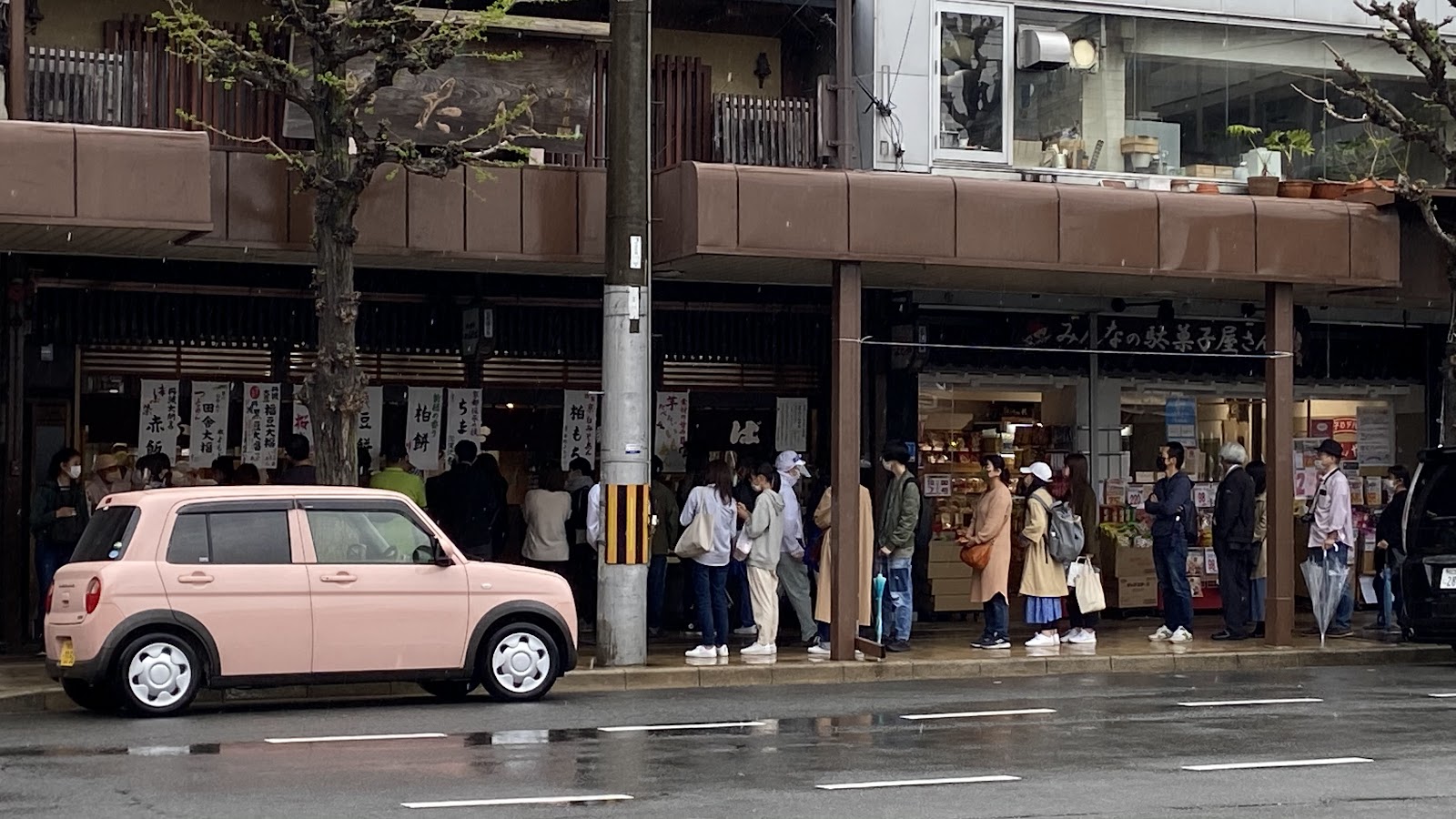
A century-old wagashi shop famous for mame-mochi, the soft pea-and-red-bean rice cakes Kyotoites queue for.
Demachi Futaba is a small, unassuming confectionery shop near the Kamo River delta in northern Kyoto that has achieved near-legendary status among locals and sweets lovers for a single item: its mame-mochi. Founded in 1899, it is a working piece of Kyoto's living food culture — the kind of humble, family-run wagashi maker that Kyotoites treasure far more than any flashy dessert boutique.
Wagashi are Japan's traditional confections, refined over centuries alongside the tea ceremony, and Kyoto is their spiritual home. Demachi Futaba specialises in daifuku-style mochi, and its signature mame-daifuku (often called mame-mochi) is deceptively simple: a pillow of soft, freshly pounded glutinous rice enclosing smooth sweet red-bean paste, studded throughout with whole red peas that add a gentle savoury bite and a pleasing chew. The contrast of tender mochi, dark sweet anko and salty-firm beans is what has kept people coming back for over a century. The shop also makes seasonal sweets that track the Kyoto calendar — sakura mochi and kashiwa mochi in spring, chilled warabi-mochi and mizu-manju in summer, chestnut and sweet-potato confections in autumn — so there is always something tied to the moment.
Because everything is made fresh each morning with no preservatives, the mochi is meant to be eaten the same day, and the most sought-after items regularly sell out well before closing. This freshness is precisely the point, and it explains the queue: on weekends and holidays the line can stretch down the street, though it usually moves steadily. The experience is quick and delightfully old-fashioned — you point, pay in cash, and carry off a neat paper package of still-soft rice cakes to enjoy on a nearby bench by the river.
The shop sits at the western edge of the Demachi Masugata shopping arcade, a genuinely local covered market of grocers, tofu makers, tea sellers and small eateries that sees far fewer tourists than downtown Nishiki. This is a neighbourhood where everyday Kyoto life carries on, which makes a stop here feel authentic rather than staged. It is flat, central and easy to reach, though the shop itself is tiny with little room to linger inside — takeaway is the norm.
There is no season to a visit; the sweets simply change with it. But mornings are best, both to beat the queue and to be sure the mame-mochi hasn't sold out. Bring cash, as this is a traditional cash-first business, and plan to eat your purchase the same day rather than saving it.
Getting there is straightforward: take the Keihan Main Line or Eizan line to Demachiyanagi, or the Karasuma subway to Imadegawa, and walk a few minutes to the arcade near the confluence of the Kamo and Takano rivers. Combine a visit with a stroll along the Kamo River delta — a favourite local picnic and people-watching spot — or with the nearby Kyoto Imperial Palace grounds and Shimogamo Shrine, both within easy reach to the north and south.
A local's tip
Buy the mame-mochi early — the famous soft red-bean-and-pea rice cakes often sell out by afternoon — and eat them the same day, as they contain no preservatives.
Best time to visit
Morning, before the signature mochi sells out
Getting there
From Kyoto Station take the Karasuma subway to Imadegawa and walk east, or the Keihan line to Demachiyanagi; the shop sits at the edge of the Demachi Masugata shopping arcade near the Kamo River delta.
Good to know
- Cash
- Takeaway
- Restrooms
Plan the whole trip offline
Demachi Futaba is one of many places in the Real Japan app — with turn-by-turn directions, nearby spots and full offline maps you can use with no signal.