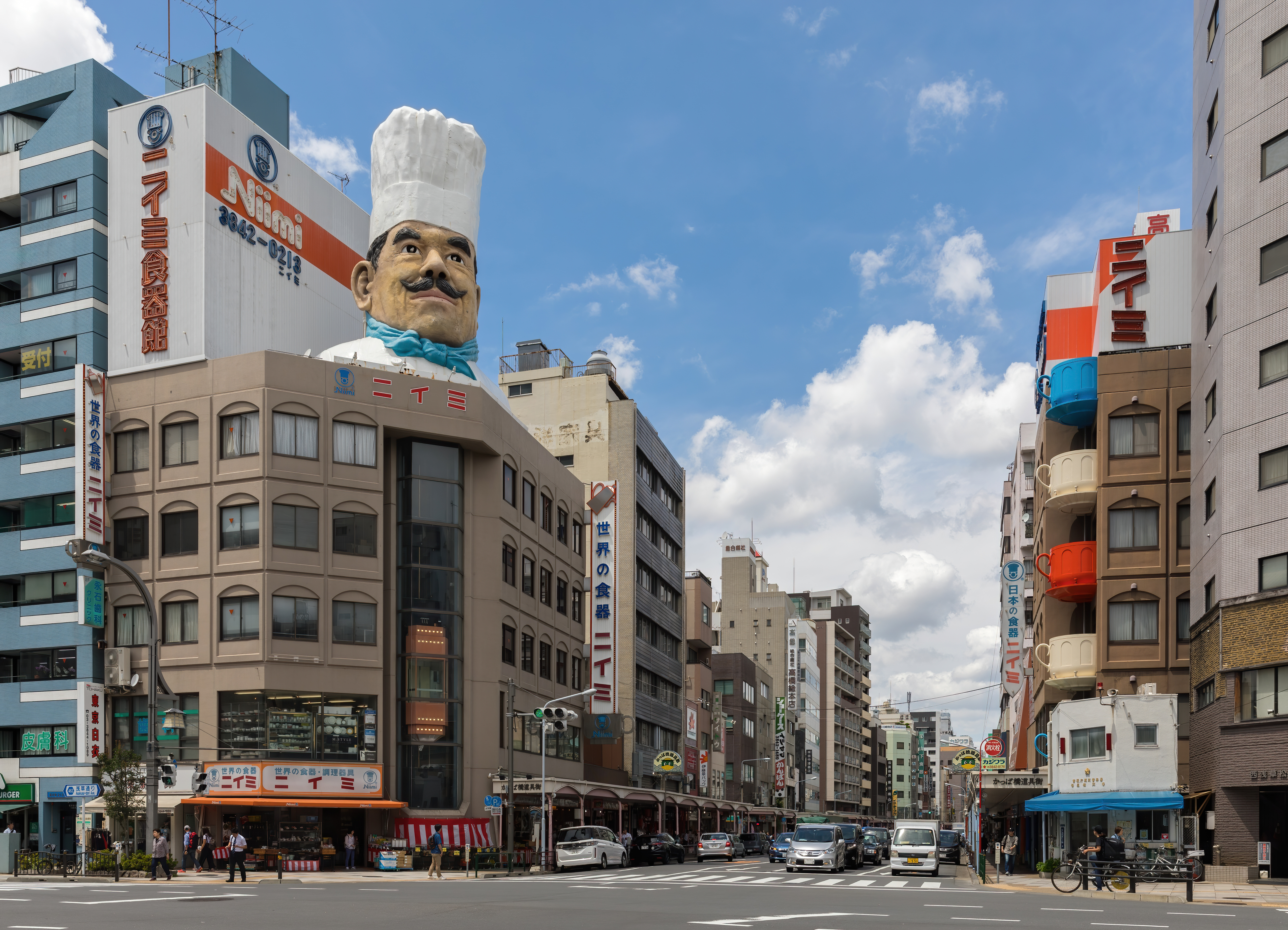
Tokyo's 'Kitchen Town', an 800-metre street of shops selling everything for the restaurant trade, from hand-forged knives to plastic display food.
Kappabashi-dori, known in English as Kitchen Town or Kappabashi Kitchen Street, is an 800-metre stretch of specialist shops running between the Ueno and Asakusa districts that is devoted almost entirely to supplying Japan's restaurant trade. For anyone who loves food, cooking or the craft behind a great meal, it is one of Tokyo's most rewarding and quirky places to browse, a working wholesale street that has become a beloved offbeat tourist destination in its own right.
The shops here sell everything a restaurant could conceivably need. Whole storefronts are given over to knives, ceramics and lacquerware, bamboo steamers, cast-iron teapots, noren curtains, lanterns, ovens, refrigerated display cases and restaurant furniture. Wandering the street is a crash course in the tools of Japanese cuisine, and unlike a department store the goods are laid out in the utilitarian abundance of a trade supplier, stacked high and sold at professional prices.
Kappabashi's most famous export is sampuru, the astonishingly realistic plastic display food that sits in the windows of restaurants across Japan. Several shops specialise in these handmade replicas, from glistening bowls of ramen and dripping ice-cream sundaes to individual pieces of sushi, and they have become one of Tokyo's most popular and portable souvenirs. Some shops even run workshops where visitors can make their own plastic tempura or lettuce.
The street is, however, best known internationally as the place to buy a serious Japanese kitchen knife. Specialist cutlers stock hand-forged blades in a huge range of steels, shapes and price points, from affordable everyday gyuto to museum-grade single-bevel sushi knives costing many hundreds of dollars. Staff are knowledgeable and used to advising visitors, and many shops will engrave the buyer's name into the blade in kanji, free of charge, turning a knife into a personal keepsake.
The street's playful name comes from local folklore. One theory links it to the kappa, the mischievous water spirits of Japanese legend, and a nearby temple, Kappa-dera, where locals still offer cucumbers, the kappa's favourite food, for good fortune. A giant chef's head sculpture and a golden kappa statue mark the street and make good orientation points and photo stops.
Unlike Tokyo's busier attractions, Kappabashi has a relaxed, browsing pace and rarely feels overwhelmed by crowds. Most shops are small, family-run and open standard daytime hours on weekdays, with many closing on Sundays, so a weekday visit is essential to see the street at its best. Because these are genuine trade suppliers rather than tourist boutiques, it is polite to ask before photographing displays and to handle goods with care.
Kappabashi is free to explore and easily combined with the temples of nearby Asakusa or the museums and park of Ueno, both within walking distance. The closest station is Tawaramachi on the Ginza Line, a five-minute stroll away, though many visitors simply walk over from Senso-ji Temple in Asakusa. Allow an hour or two to browse, bring cash and space in your luggage for a knife or a bowl of plastic ramen, and enjoy one of Tokyo's most genuinely useful and characterful shopping streets.
A local's tip
This is the best place in Japan to buy a professional-grade Japanese kitchen knife, and many shops will engrave your name in kanji for free while you wait. Note most shops close on Sundays, so plan a weekday visit, and remember these are trade suppliers so ask before photographing displays.
Best time to visit
Weekday daytime, roughly 10:00-16:00, when most specialist shops are open
Getting there
A five-minute walk from Tawaramachi Station on the Ginza Line, midway between Ueno and Asakusa. From Asakusa it is about a 10-minute walk west; from Ueno around 15 minutes. Look for the giant chef's-head landmark at the southern end.
Good to know
- Wi-Fi
- Restrooms
Plan the whole trip offline
Kappabashi Kitchen Street is one of many places in the Real Japan app — with turn-by-turn directions, nearby spots and full offline maps you can use with no signal.