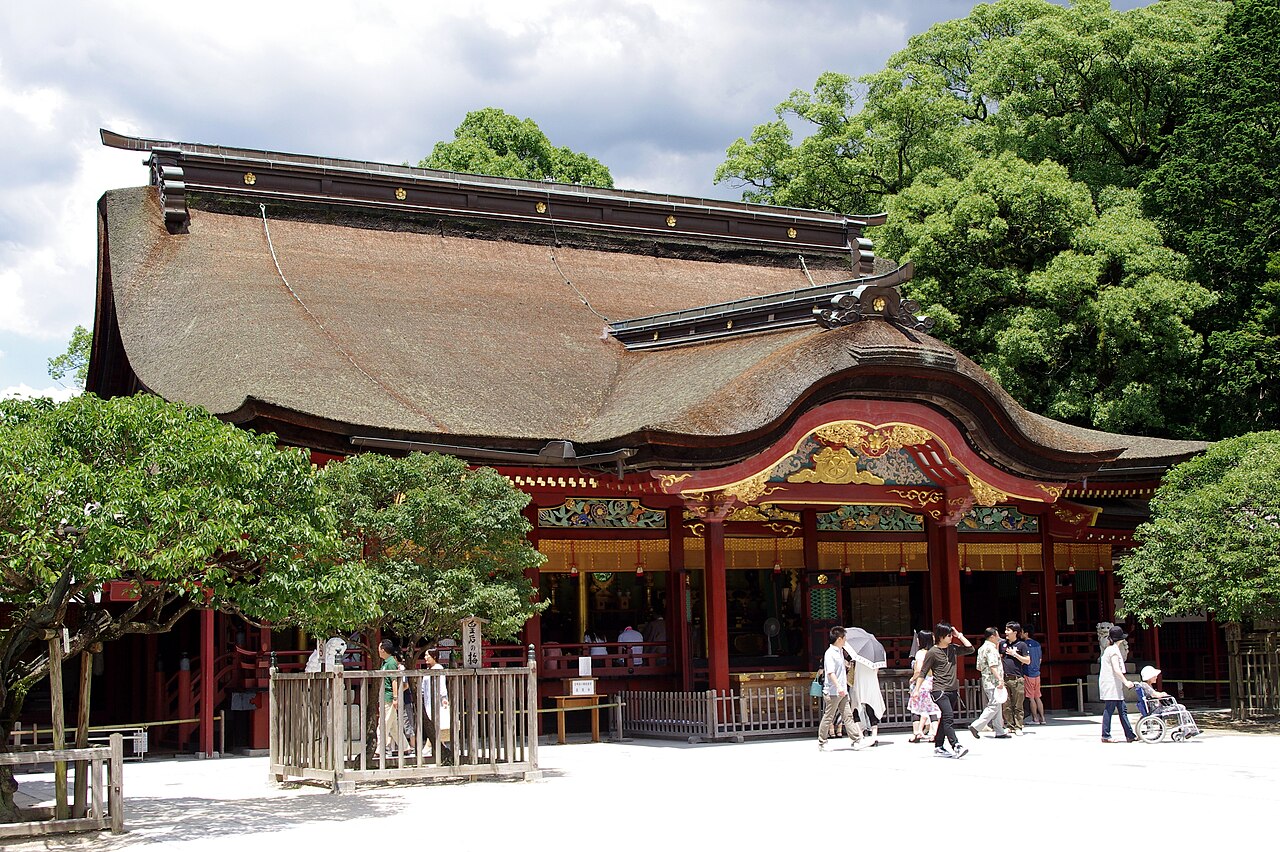
Kyushu's most-visited shrine, dedicated to the deified scholar Sugawara no Michizane and framed by 6,000 plum trees.
Dazaifu Tenmangu is the spiritual heart of the old western capital and one of the roughly 12,000 Tenmangu shrines across Japan dedicated to Tenjin, the deified spirit of the Heian-era scholar and statesman Sugawara no Michizane. Michizane rose to become one of the most powerful officials at the imperial court in Kyoto, only to be slandered by rivals and exiled to Dazaifu in 901, where he died two years later a broken man. Legend holds that the ox drawing his funeral cart stopped and refused to move, so he was buried on that spot; the shrine was raised over his grave in 905. When a series of plagues, storms and lightning strikes then battered the capital, the court concluded Michizane's angry spirit was to blame and enshrined him as a god. Because he had been a brilliant scholar, Tenjin became the patron deity of learning, and today students from all over Japan flock here to pray for success in their entrance exams.
The approach captures the mood before you even reach the gate. A pedestrian street lined with tea houses and souvenir shops leads to a series of vermilion arched bridges crossing a pond shaped like the character for heart, meant to be walked in order to symbolise passage through past, present and future. Beyond them stands the ornate main hall, a designated Important Cultural Property rebuilt in 1591 in the flamboyant Momoyama style, its cypress-bark roof and gilded details glowing against the greenery. To its right grows the famous Tobiume, or flying plum tree, said to have loved Michizane so dearly that it uprooted itself and flew from Kyoto to be near him; it is traditionally the first of the shrine's 6,000 plum trees to bloom each year.
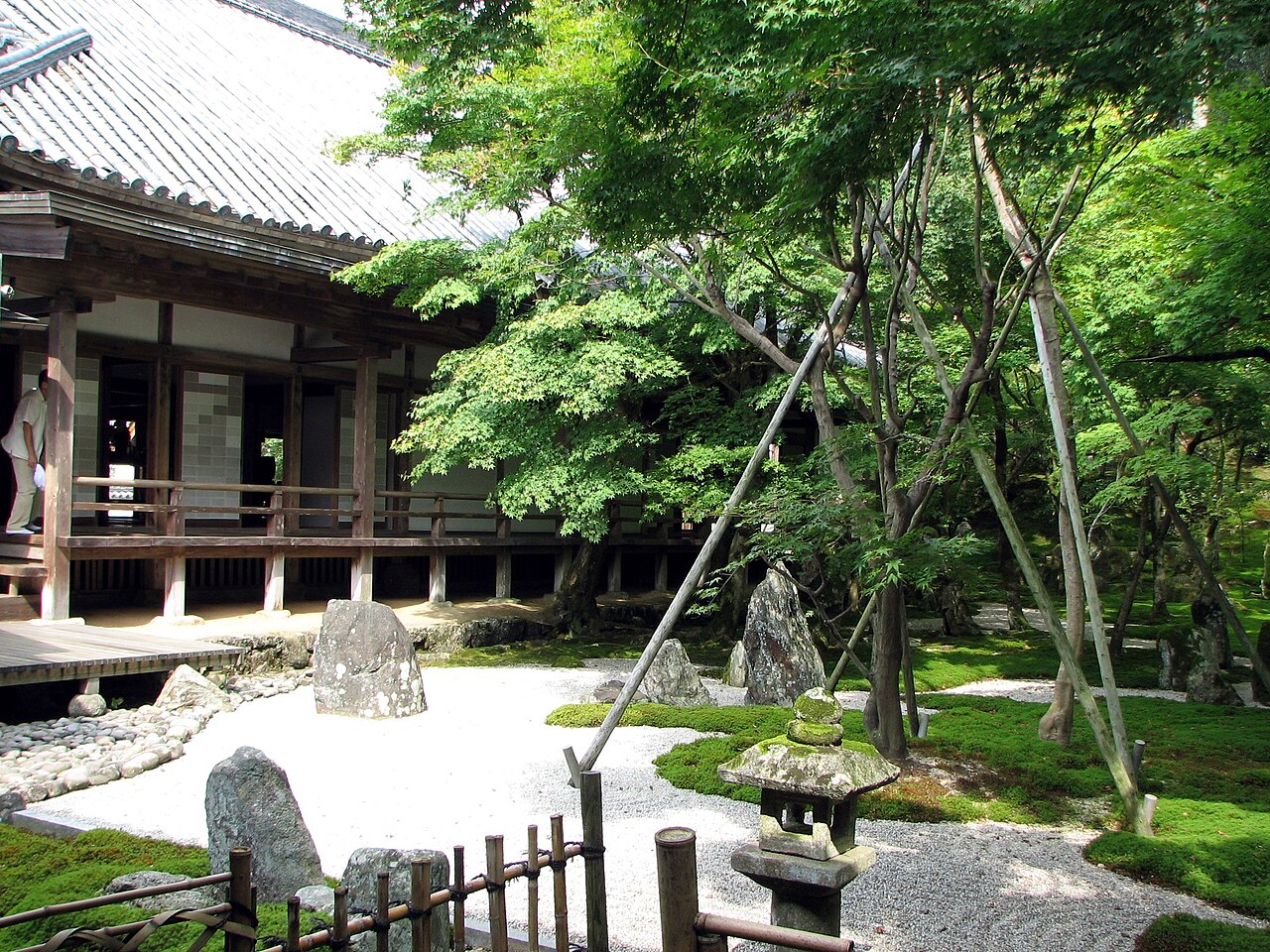
Those plum trees, in 167 varieties, are the reason late February and early March are the classic time to visit, when the grounds fill with pale pink and white blossom and the scent of plum drifts over the crowds. Autumn brings maple colour to the wooded slopes behind the shrine, and any season rewards a walk up to the quieter Tenkai Inari sub-shrine or into the adjoining Komyozenji temple garden nearby. The precinct also holds a small treasure house and, in recent years, a striking temporary hall wrapped in living plants designed by architect Sou Fujimoto while the main hall undergoes once-in-a-century repairs.
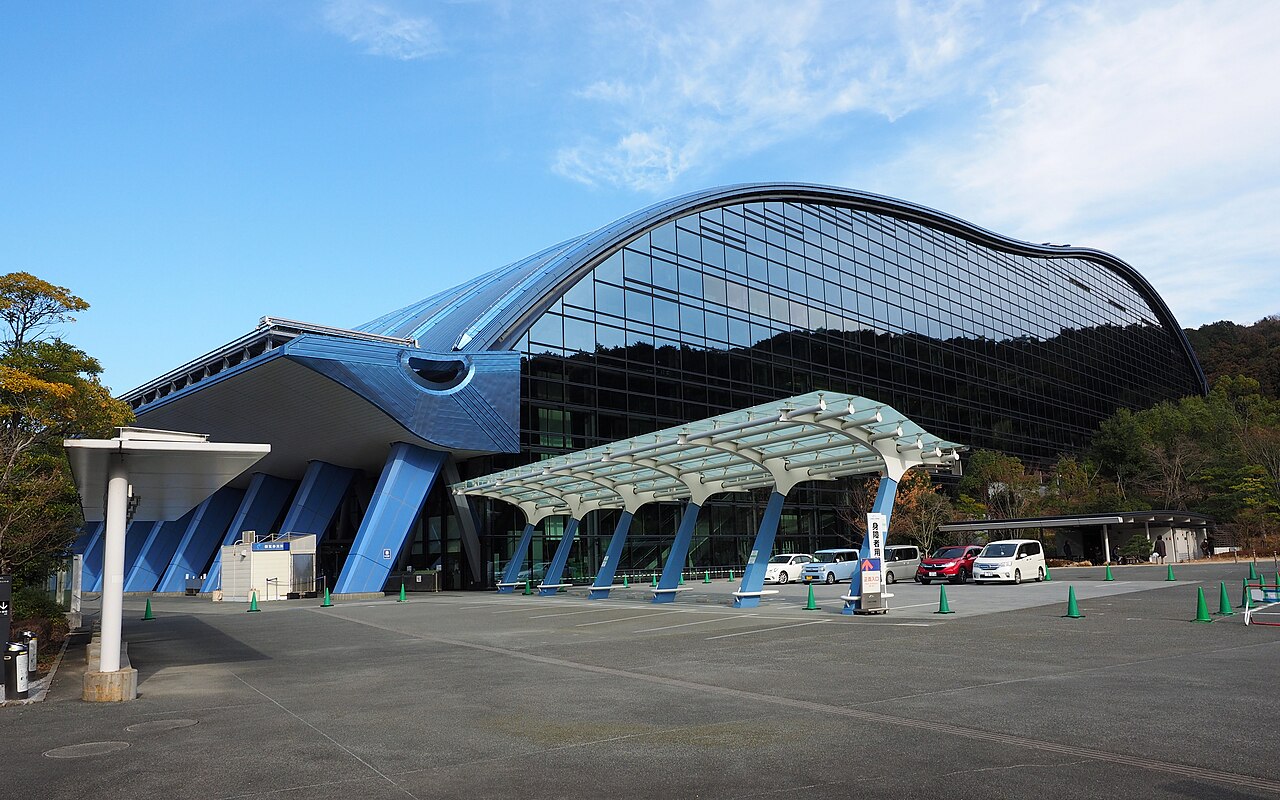
Set aside at least ninety minutes to combine the shrine with its approach street and the neighbouring Kyushu National Museum, reached by a moving walkway through a tunnel behind the grounds. Come early in the day if you can: by mid-morning the approach fills with school groups and coach tours. Touch the bronze ox statues on the way in, since rubbing the head is believed to bring wisdom and good health, and pick up an omamori charm for studies, the shrine's most sought-after souvenir.
A local's tip
Buy a warm umegae-mochi (grilled plum-stamped rice cake) from a stall on the approach and eat it by the arched Taiko-bashi bridges before the tour buses arrive.
Best time to visit
Early morning; late February for plum blossoms
Getting there
From central Fukuoka take the Nishitetsu train from Tenjin to Nishitetsu-Futsukaichi, then change to the two-stop Dazaifu Line. The shrine is a flat five-minute walk from Dazaifu Station along a lively approach street.
Good to know
- Wi-Fi
- Gift Shop
- Restrooms
Plan the whole trip offline
Dazaifu Tenmangu is one of many places in the Real Japan app — with turn-by-turn directions, nearby spots and full offline maps you can use with no signal.