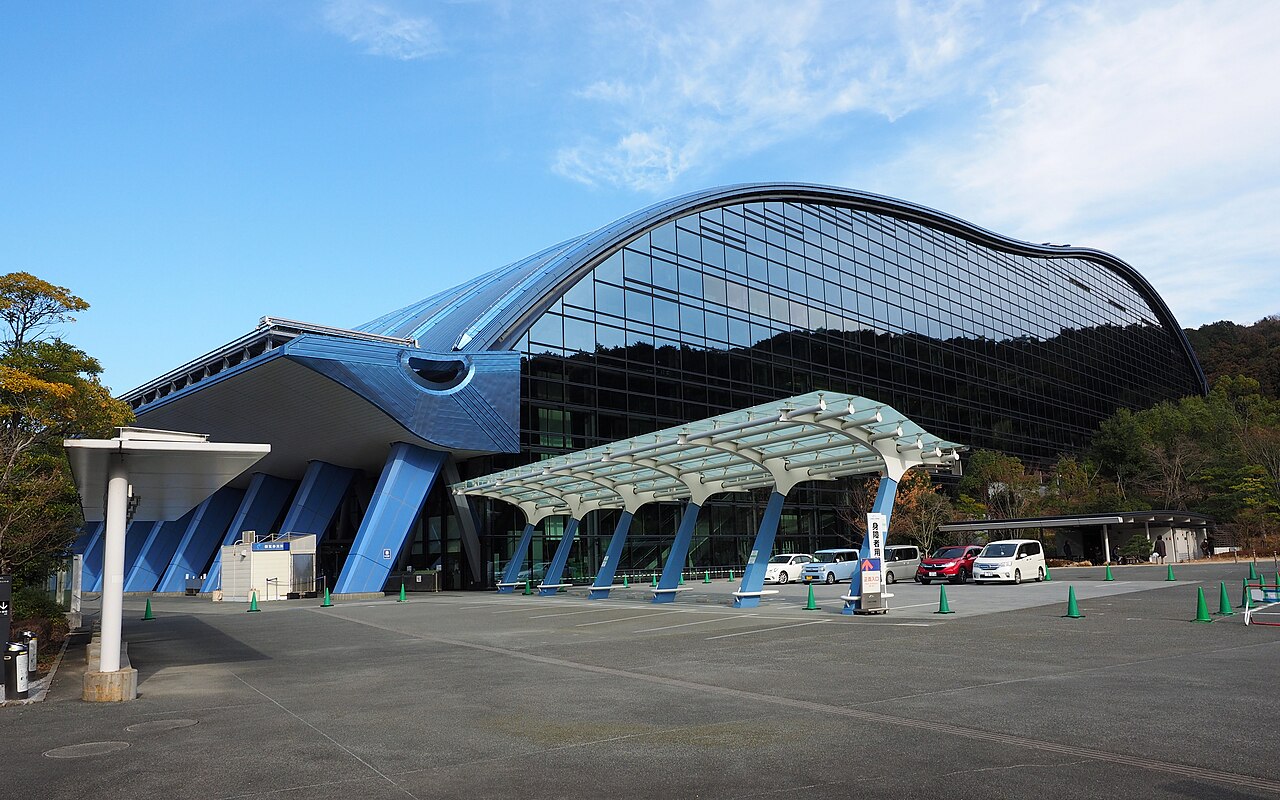
Japan's fourth national museum, a wave-roofed giant behind Dazaifu Tenmangu telling the story of Kyushu as Asia's gateway.
The Kyushu National Museum opened in 2005 as only the fourth national museum in Japan, joining Tokyo, Kyoto and Nara after more than a century without a new one. Unlike its art-focused siblings, it was conceived as a history museum, built to explain how the Japanese archipelago formed its culture through exchange with the rest of Asia. That mission makes perfect sense in Dazaifu, which for centuries was the seat of the Dazaifu government office that handled diplomacy and defence for all of western Japan.
The building itself is a landmark. Designed by architect Kiyonori Kikutake, it is a vast structure more than 160 metres long with a gently undulating roof clad in shimmering blue-grey titanium, set into a wooded hillside so that it seems to float above the trees. Approaching from Dazaifu Tenmangu, most visitors ride a series of escalators and a curved moving walkway through a tunnel washed in colour-changing light before emerging into the soaring glass-walled entrance hall.
The permanent exhibition, called the Cultural Exchange Exhibition, fills an enormous fourth-floor hall and traces Japanese history from the Paleolithic era through the age of the samurai in five chronological zones. Highlights include Yayoi-period bronze bells, Buddhist statuary, richly decorated trade ceramics, and objects that arrived along the sea routes linking Kyushu with Korea, China and beyond. Because Dazaifu was the diplomatic front door of ancient Japan, the collection leans heavily on the traffic of ideas, religion and goods that passed through the island.
On the first floor, the free Ajippa hands-on area lets children and adults try on costumes and handle instruments and toys from across Asia, a thoughtful counterpoint to the scholarly galleries above. The museum also hosts major special exhibitions, often blockbuster loans of national treasures, which carry a separate ticket.
The visiting experience is comfortable and modern: wide ramps, English labelling, a cafe with valley views, and lifts throughout make it fully accessible. Allow around two hours for the permanent galleries, more if a special exhibition is on. Photography rules vary by gallery, so check signs.
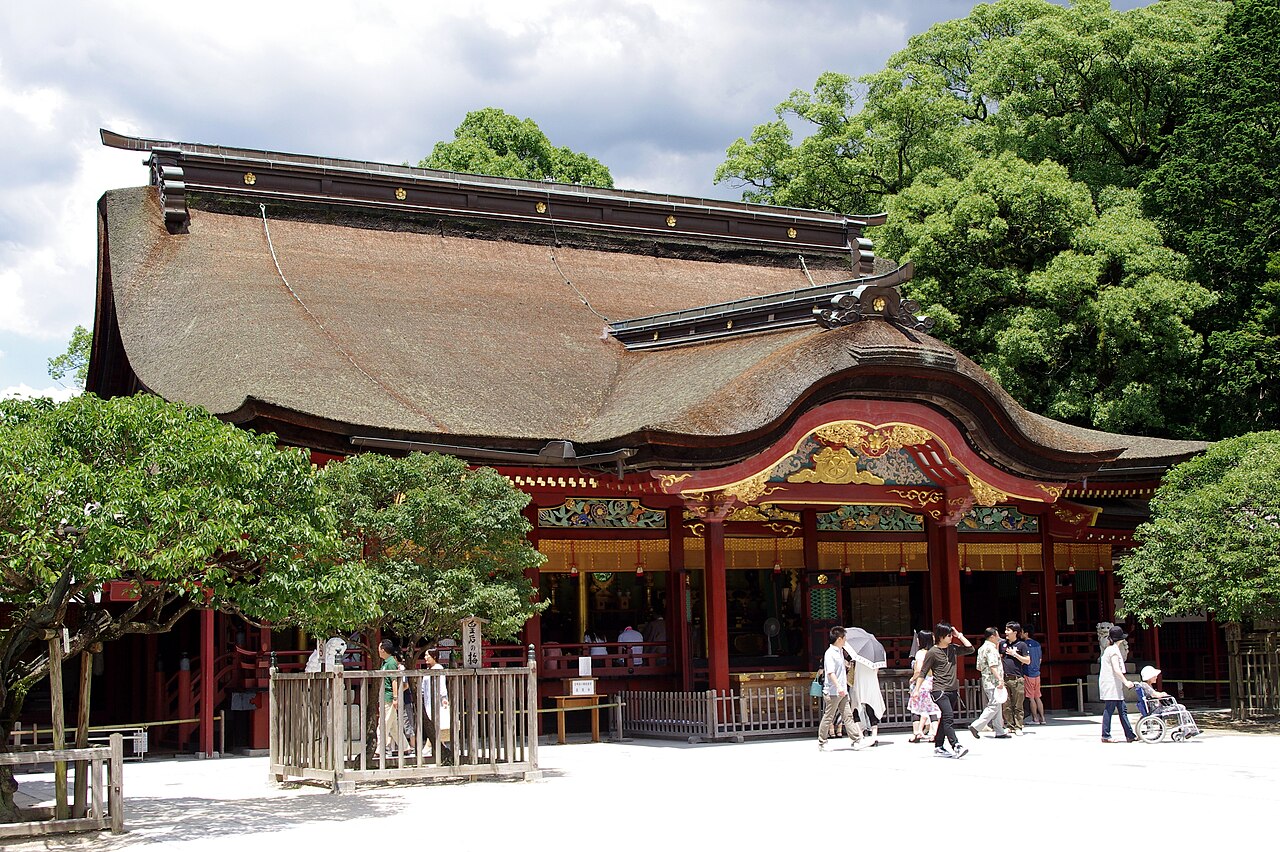
Spring is a beautiful time to come, when the plum blossoms for which Dazaifu is famous scent the shrine grounds below, and autumn brings warm colour to the surrounding hills. Because the museum sits just behind Dazaifu Tenmangu, it pairs naturally with a shrine visit and a stroll along the sweet-shop-lined approach where the local grilled umegae-mochi rice cakes are a must.
Getting there from central Fukuoka takes about 40 minutes by Nishitetsu train, changing at Nishitetsu-Futsukaichi for the short Dazaifu branch line; note this is a private railway not covered by the Japan Rail Pass, though IC cards work fine. From Dazaifu Station it is a ten-minute walk past the shrine to the escalator tunnel. Try to arrive on a weekday morning to enjoy the vast halls before tour groups fill them.
A local's tip
Enter through the Dazaifu Tenmangu approach and ride the rainbow-lit escalator tunnel behind the shrine — it is the most atmospheric way in and skips the road walk.
Best time to visit
Weekday mornings; spring plum season or autumn
Getting there
From Fukuoka take the Nishitetsu line to Nishitetsu-Futsukaichi and change for Dazaifu Station. Walk toward Dazaifu Tenmangu, then take the long covered escalator and moving-walkway tunnel that climbs the hillside directly to the museum entrance.
Good to know
- Cafe
- Wi-Fi
- Restrooms
- Wheelchair
- English signage
Plan the whole trip offline
Kyushu National Museum is one of many places in the Real Japan app — with turn-by-turn directions, nearby spots and full offline maps you can use with no signal.