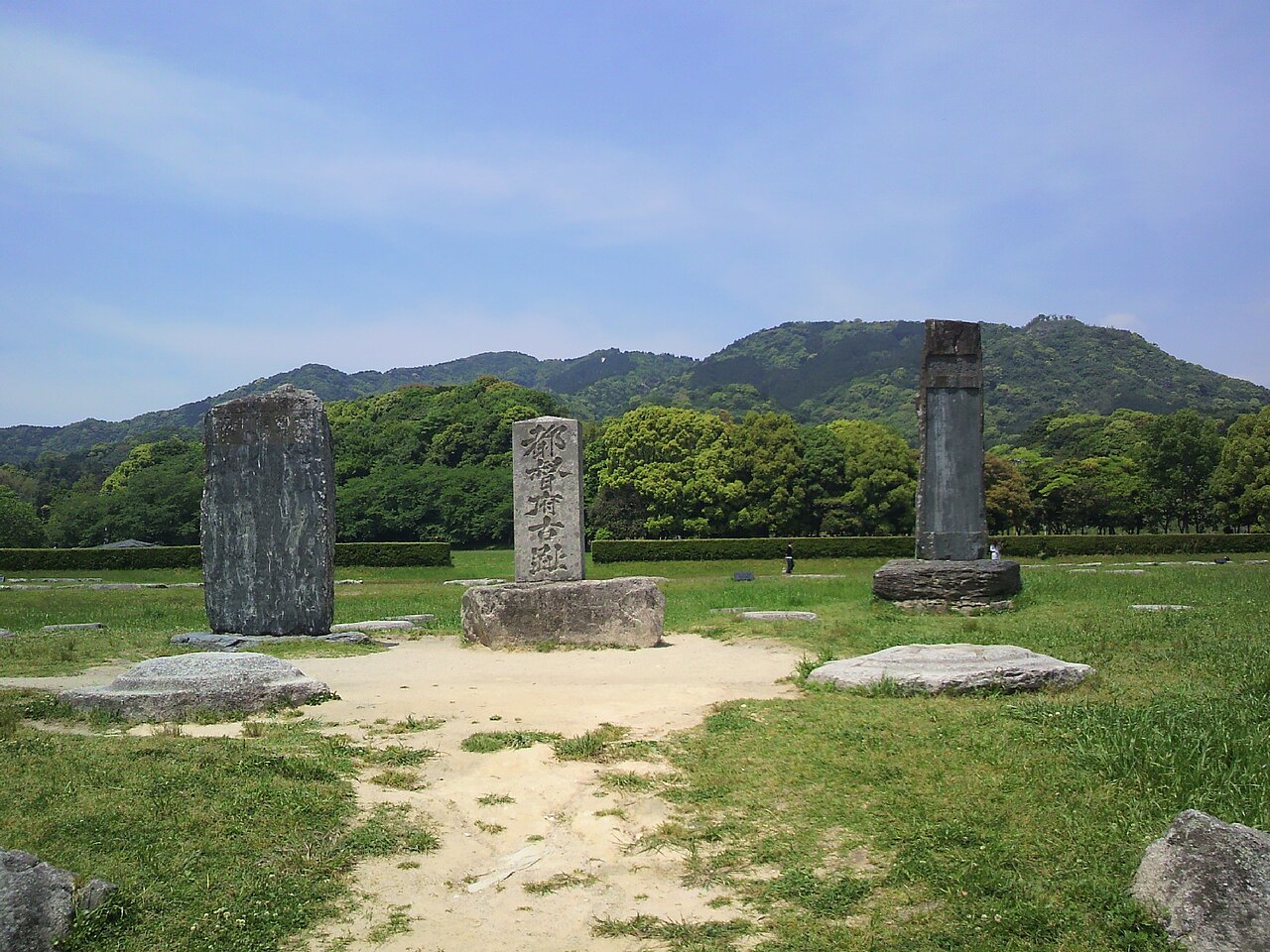
The broad foundation-stone field of Tofuro, the ancient capital that governed all of Kyushu for five centuries.
The Dazaifu Government Office Ruins, known locally as Tofuro, are the quiet, grassy heart of what was once the second most important seat of power in ancient Japan. For roughly five centuries, from the late 7th century onward, the Dazaifu administered the entire island of Kyushu, controlled foreign relations with China and the Korean kingdoms, and defended the nation's western gateway. Today the sprawling political capital that filled this plain has vanished, leaving only a serene expanse of lawn studded with the great stone bases of its long-gone halls.
Dazaifu was no provincial outpost. Contemporaries nicknamed it the distant court, a mirror of the imperial capital far to the east, and it wielded genuine authority over diplomacy, trade, and military affairs on Japan's most exposed frontier. Envoys, merchants, and monks bound for and returning from the continent passed through its offices; foreign guests were received and lodged nearby. The administrative complex laid out here followed a grand, symmetrical plan, with a ceremonial south gate opening onto a central courtyard and the main government hall beyond, all aligned on a formal axis in the continental style.
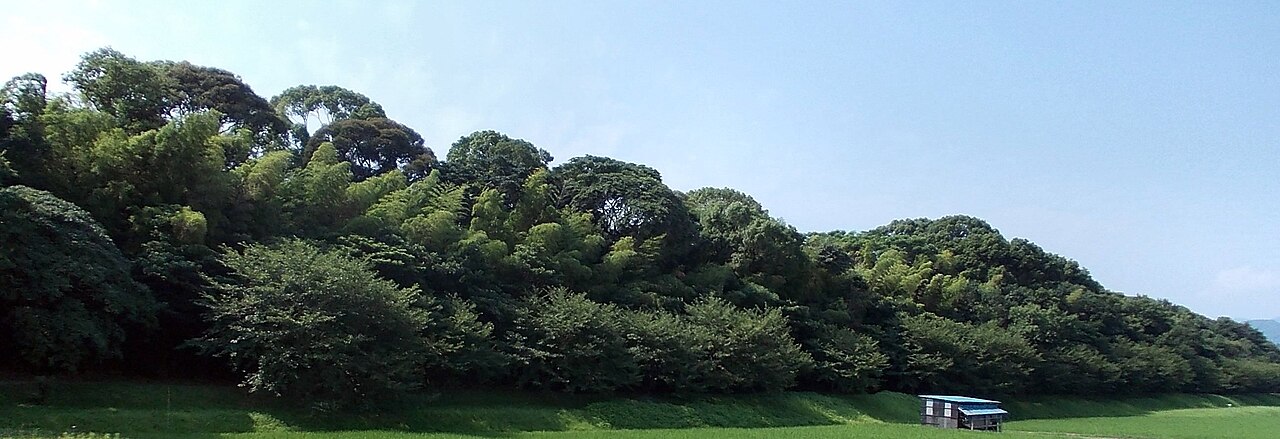
What you see now is the archaeology of that grandeur. Neat rows of foundation stones mark where massive wooden pillars once carried the roofs of the main hall and its flanking buildings, and low reconstructed platforms and a surviving monument help convey the footprint of the whole. It takes a little imagination to repopulate the field with officials in court dress and the bustle of a working capital, but the setting makes it easy: the ruins lie in an open basin ringed by hills, with Mount Shioji and the ancient Ono Castle rising behind, and the whole scene is framed in spring by rows of blossoming cherry trees that turn the site into a favourite local hanami spot.
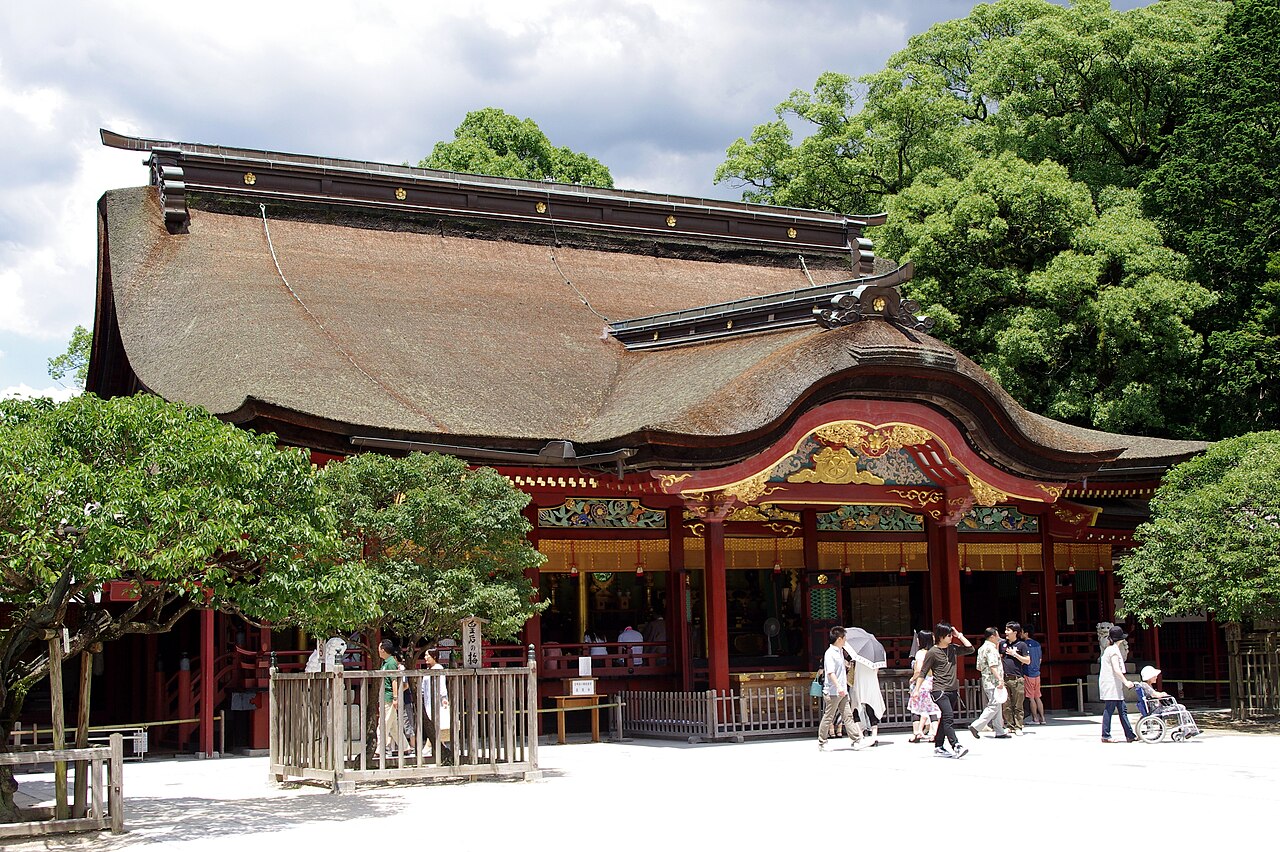
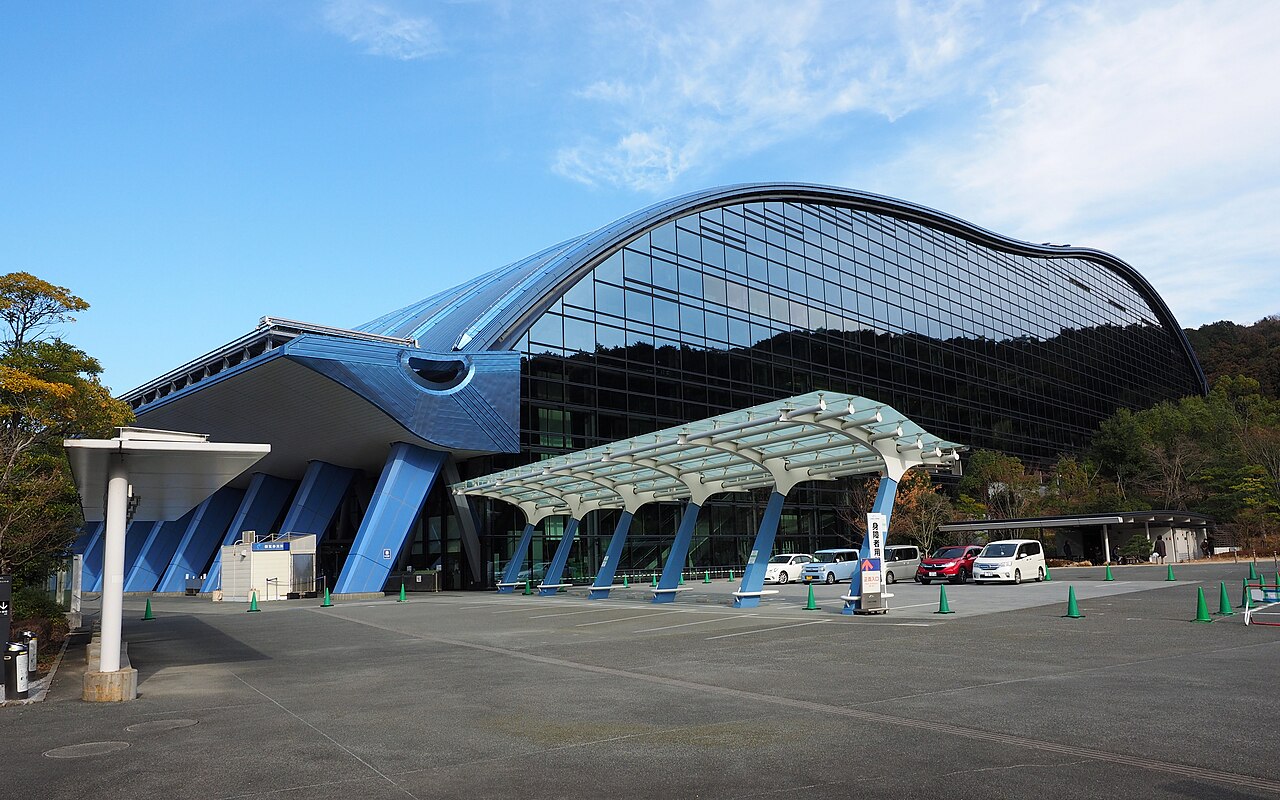
The history here is bound up with one of Japan's most beloved figures. The scholar and statesman Sugawara no Michizane was exiled to Dazaifu and died here in 903, an injustice later softened by his deification as Tenjin, god of learning; the great shrine of Dazaifu Tenmangu, a short distance away, grew up around his grave. The government ruins, the shrine, the Kyushu National Museum, and the defensive works of Mizuki and Ono Castle together form a dense cluster of heritage recognised as part of a Japan Heritage story of the western capital.
A small, free exhibition hall at the edge of the site displays excavated roof tiles, pottery, and a scale model of the vanished complex that brings the scattered stones to life; it is worth stepping inside before walking the grounds. The ruins themselves are free and open at all times.
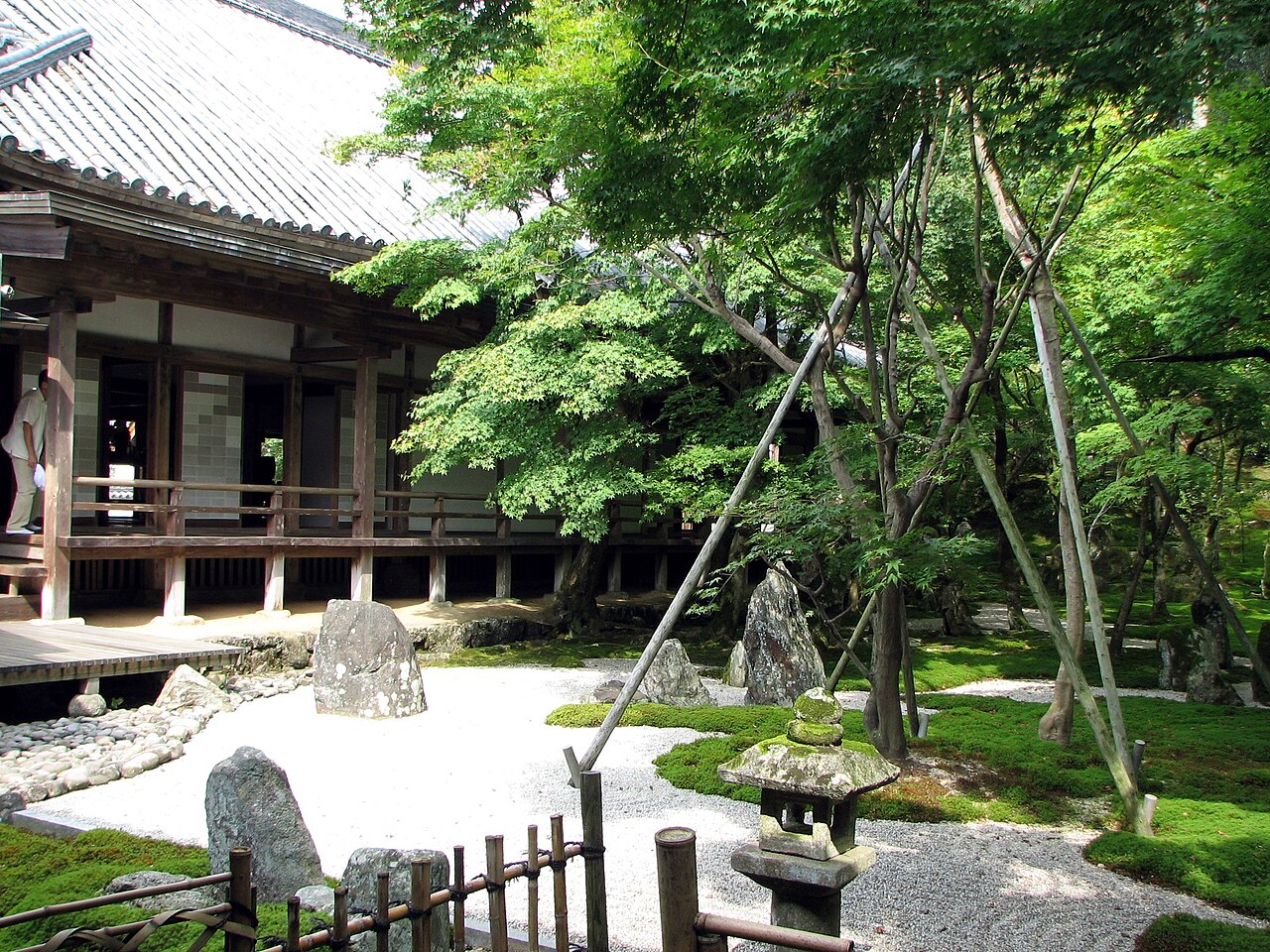
Come in spring for the cherry blossoms, or on any fine day for a peaceful stroll through deep history. Reach the site on a ten-minute walk from Nishitetsu Tofuromae Station, and combine it with Dazaifu Tenmangu, the Kyushu National Museum, and the Komyozenji moss garden for a rich, walkable day in one of Kyushu's most historic corners.
A local's tip
Visit the free Dazaifu Exhibition Hall at the edge of the site first; its scale model of the old government complex makes the scattered stones suddenly legible.
Best time to visit
Spring for cherry blossoms over the ancient foundations
Getting there
About a 10-minute walk from Nishitetsu Tofuromae Station on the Tenjin Omuta Line, or a short bus ride from Nishitetsu Futsukaichi. The grassy field of foundation stones sits below Mount Shioji, west of central Dazaifu.
Good to know
- Parking
- Restrooms
- Exhibition hall
Plan the whole trip offline
Dazaifu Government Office Ruins is one of many places in the Real Japan app — with turn-by-turn directions, nearby spots and full offline maps you can use with no signal.