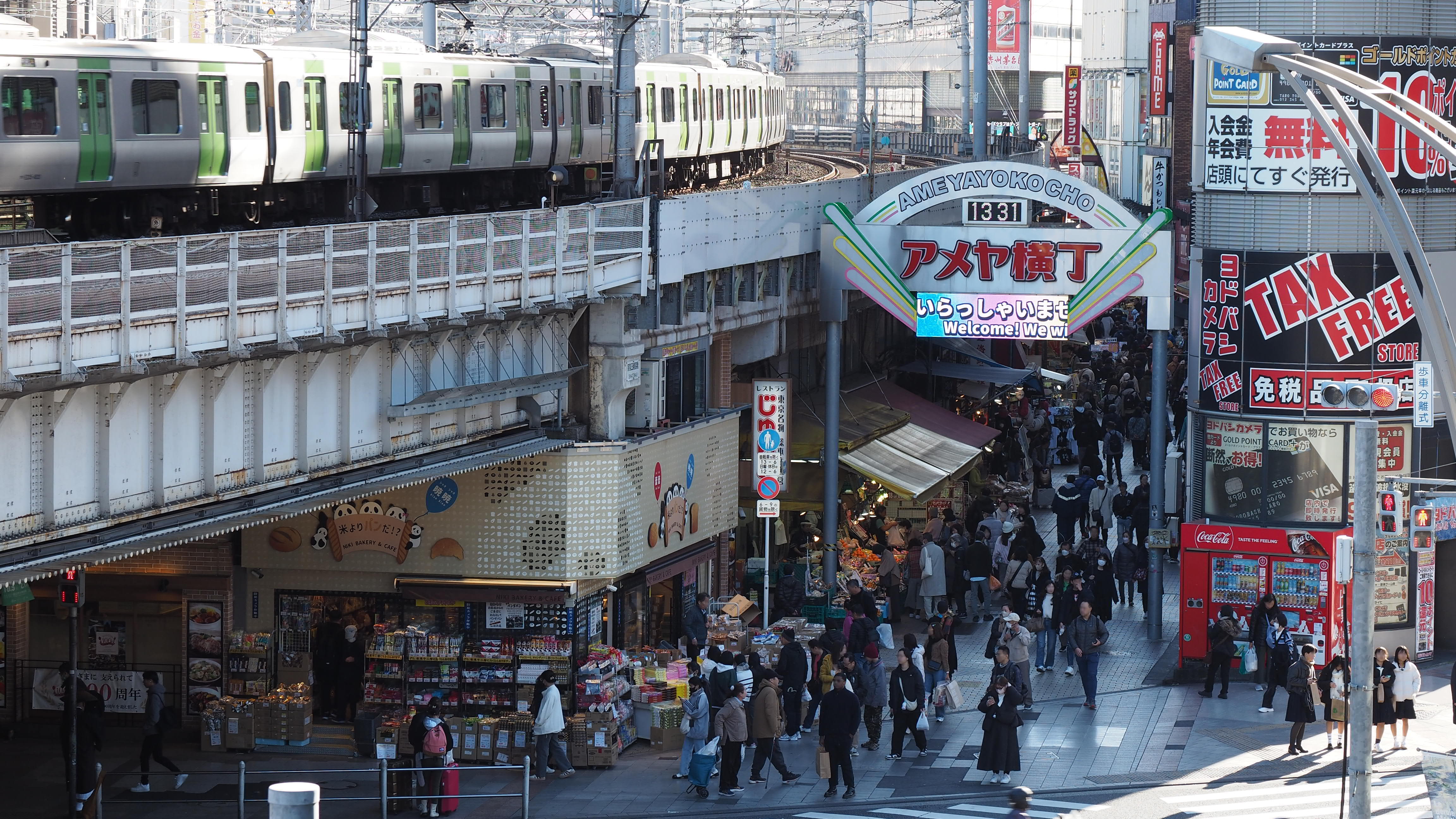
A raucous open-air market of over 250 stalls under the Yamanote tracks near Ueno, famous for cheap seafood, fruit and street snacks.
Ameya-Yokocho, universally shortened to Ameyoko, is one of Tokyo's most atmospheric and unpretentious market streets, a narrow, canopied corridor of more than 250 shops packed into the space beneath and beside the elevated Yamanote Line tracks between Ueno and Okachimachi stations. Loud, crowded and cheerfully chaotic, it is the antidote to Tokyo's polished department-store food halls, a place where vendors bellow prices, haggling is genuinely possible, and the smell of grilling seafood mixes with the roar of trains overhead.
The market's roots lie in the desperate years just after the Second World War, when this stretch became a bustling black market. Its name has two competing origins: ameya, meaning candy shop, for the many confectioners who set up here when sugar was scarce, or Ame as shorthand for America, after the stalls selling surplus American military goods. Both stories survive in the market's DNA, and you can still find old-fashioned sweet shops alongside stalls hawking everything imaginable.
Food is the main event. Fishmongers stack crates of tuna, crab legs, dried fish and sea urchin, calling out ever-lower prices as the day wears on. Fruit vendors sell perfectly ripe seasonal produce, often cut into skewers you can eat on the move, and there is a growing wave of street-food stands serving kebabs, takoyaki, Chinese dumplings, fresh oysters and steaming bowls of seafood rice. In recent years the southern end has developed a lively cluster of cheap standing bars and ethnic eateries, making it a popular spot for an early, informal drink and snack crawl.
Beyond food, Ameyoko is a bargain hunter's warren of discount cosmetics, sportswear, watches, spices and dried goods. Prices are noticeably lower than in the rest of Tokyo, and unlike almost anywhere else in Japan, polite haggling is part of the culture here, particularly in the final hours before closing.
The market reaches its frenzied peak in the last few days of December, when Tokyoites descend en masse to buy fresh seafood, crab and delicacies for their New Year feasts. The crowds are shoulder to shoulder and the energy is electric, an experience worth seeking out if your visit coincides with the year's end.
Ameyoko is a place to wander rather than plan. Most visitors spend an hour weaving through the alley, grazing on snacks, poking through the discount bins and soaking up an older, grittier side of Tokyo that has largely vanished elsewhere. It is entirely free to explore, open through the day into the evening, and requires no reservations or planning.
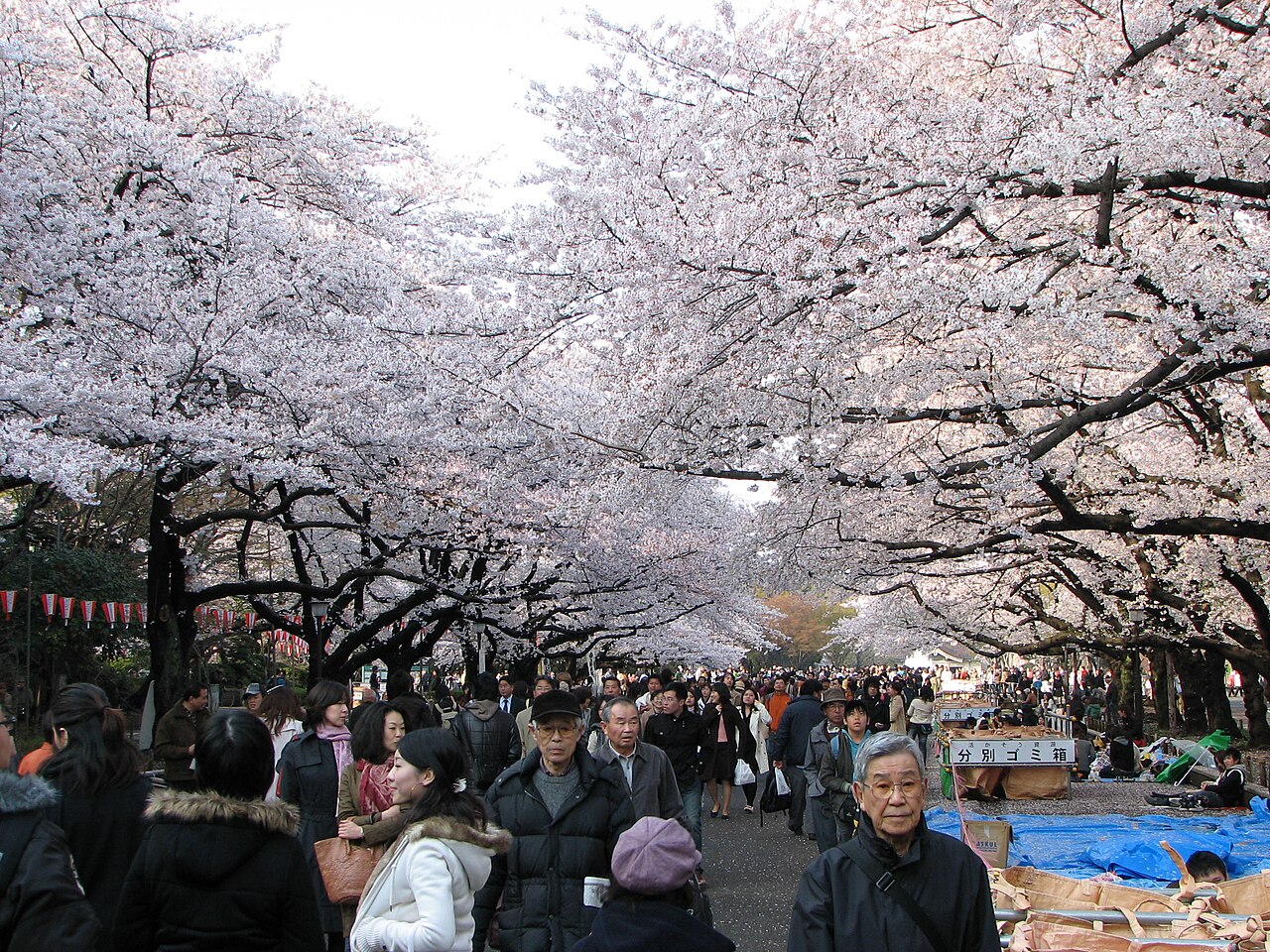
Getting there could not be easier: it sits directly between two major stations on the JR Yamanote Line loop, both covered by the Japan Rail Pass. Come in the late afternoon when the market is at its liveliest and the price-cutting begins, wear comfortable shoes, and pair it with a stroll through nearby Ueno Park for a rewarding half-day in northern central Tokyo.
A local's tip
Prices here are negotiable in a way that is rare in Japan, especially in the late afternoon when fishmongers slash prices to clear stock. Try a fresh-cut fruit skewer or a bowl of kaisendon standing up, and come hungry rather than planning a sit-down meal.
Best time to visit
Late afternoon on a weekday, or the last days of December for the New Year rush
Getting there
The market runs alongside the elevated Yamanote Line tracks between Ueno and Okachimachi stations. From JR Ueno Station take the Shinobazu exit; from Okachimachi Station the north exit puts you at the southern entrance. Both ends are signposted.
Good to know
- Wi-Fi
- Restrooms
Plan the whole trip offline
Ameya-Yokocho (Ameyoko) is one of many places in the Real Japan app — with turn-by-turn directions, nearby spots and full offline maps you can use with no signal.