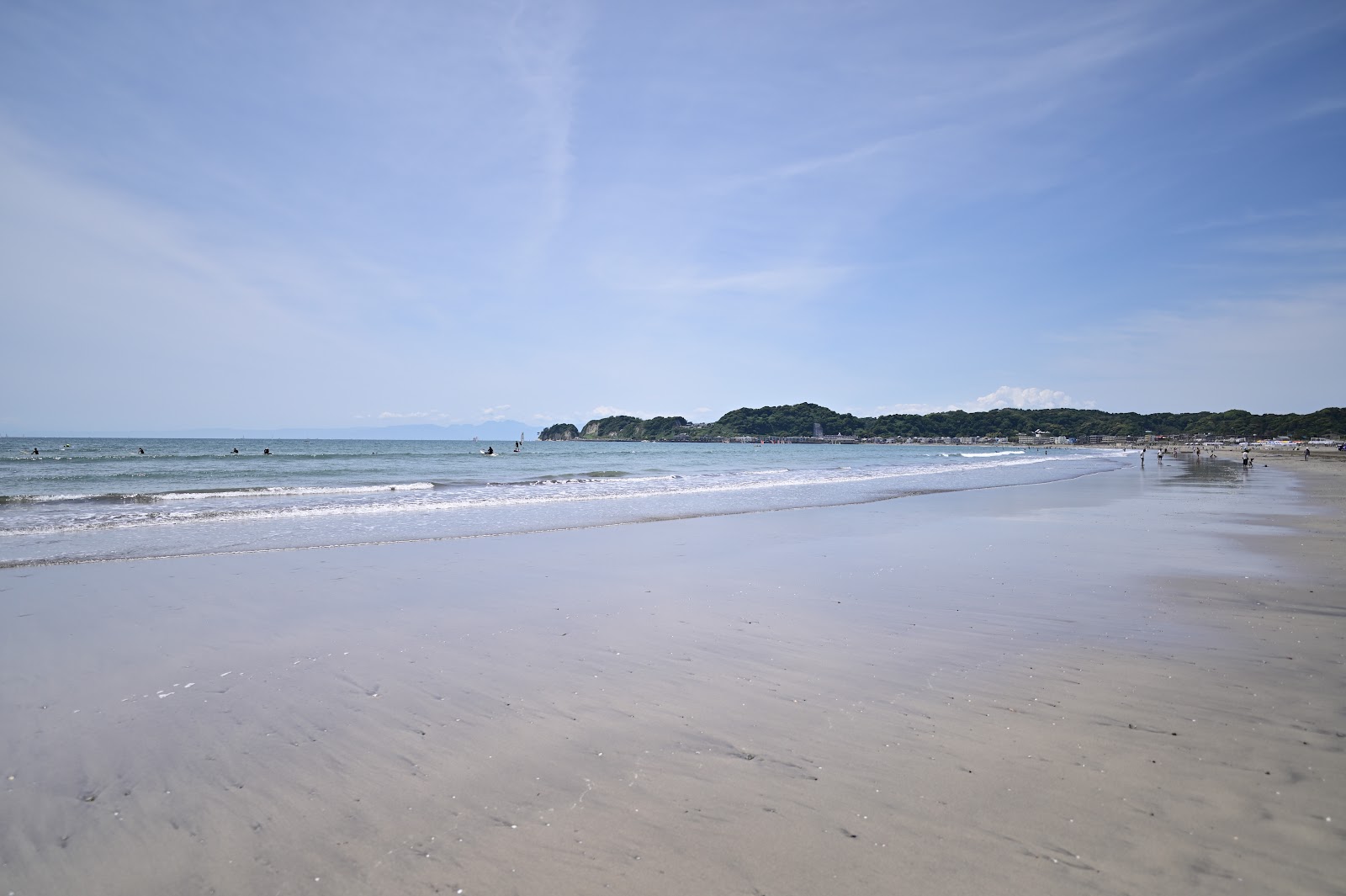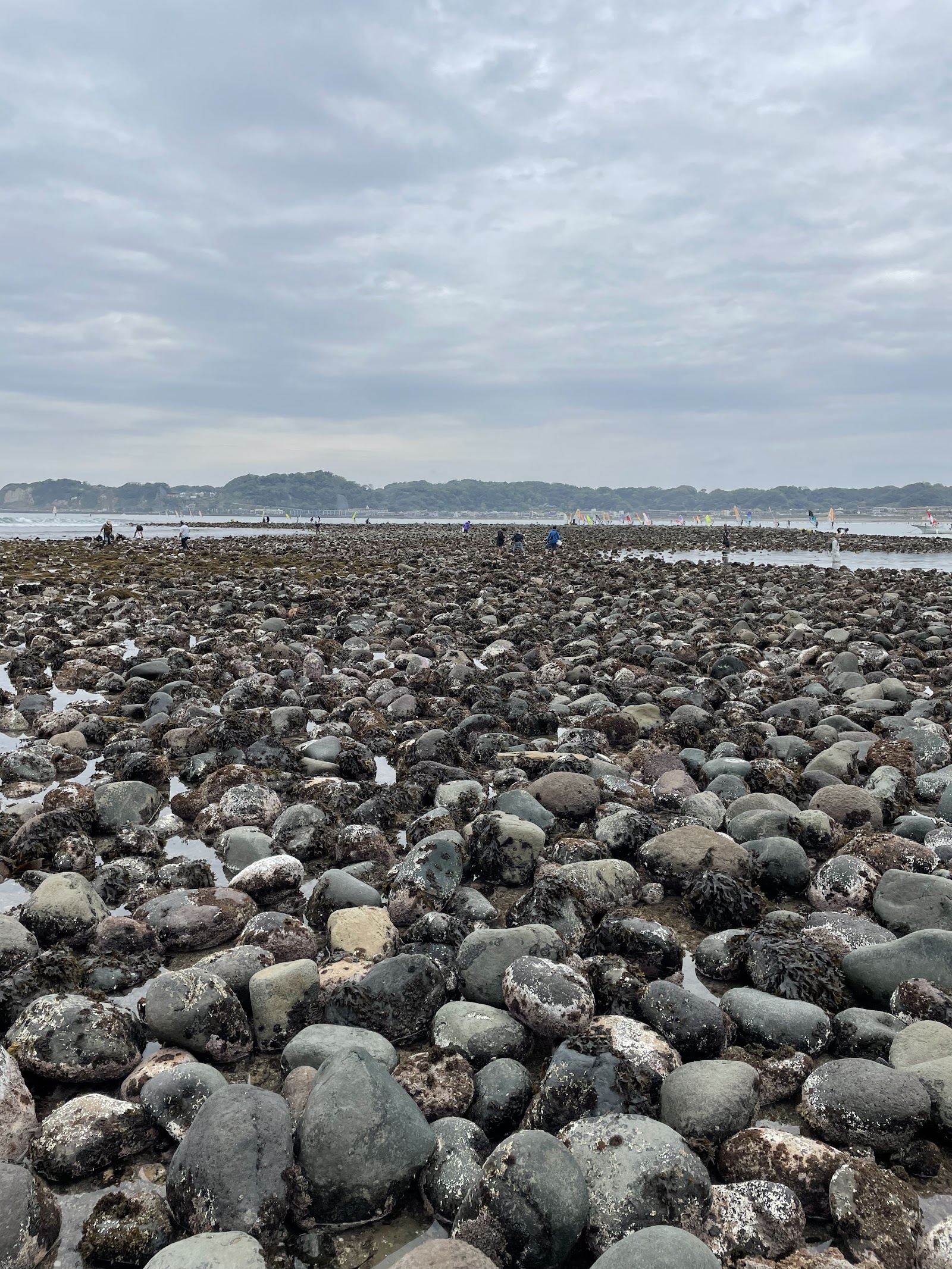
The offshore stone remains of Japan's oldest surviving man-made harbour, visible at low tide off Zaimokuza.
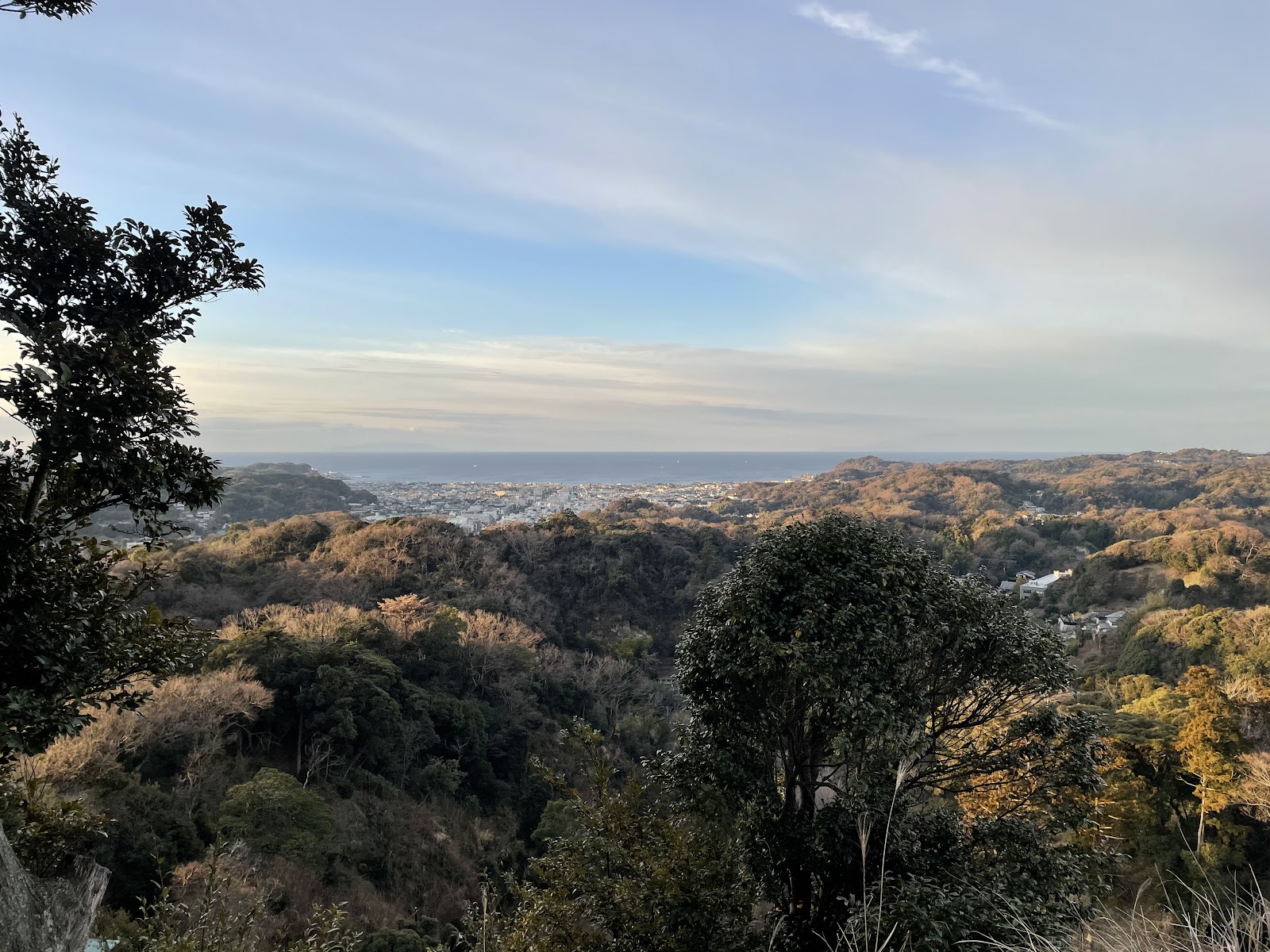
Wakaejima is one of Kamakura's most understated wonders: the stone remains of the oldest surviving artificial harbour in Japan, lying just offshore at the eastern end of Zaimokuza Beach near the Iijima cape. Built in 1232 during the height of the Kamakura shogunate, it is a national historic site and a rare, tangible relic of the medieval city's life as a seafaring capital. There is no grand monument here, only a scatter of ancient boulders in the shallows, but for those who know what they are looking at, it is a genuinely moving link to the thirteenth century.
In the early Kamakura period the town had no natural deep harbour, and the open, shallow bay made it dangerous for ships to land the timber, rice and goods that the growing capital needed. In 1232, at the urging of the priest Ojo-bo and with the support of the shogunate, labourers piled up great quantities of stone to build a breakwater and mooring, creating a sheltered artificial port. For centuries afterward Wakaejima served as Kamakura's gateway to the sea, and although storms and time have scattered and worn the stones, the core of the structure survives beneath the tides, making it the oldest extant harbour work in the country.
What visitors see today depends entirely on the sea. At low tide the dark, rounded boulders that formed the breakwater emerge from the shallow water, a rough line of stones stretching out from the shore that is easy to miss unless you know its story. At high tide they disappear beneath the waves, betrayed only by a change in the ripple and colour of the water. This tidal appearing and vanishing is part of the site's quiet magic, and it means a visit rewards a little planning: consult a tide table and aim for low water on a calm day.
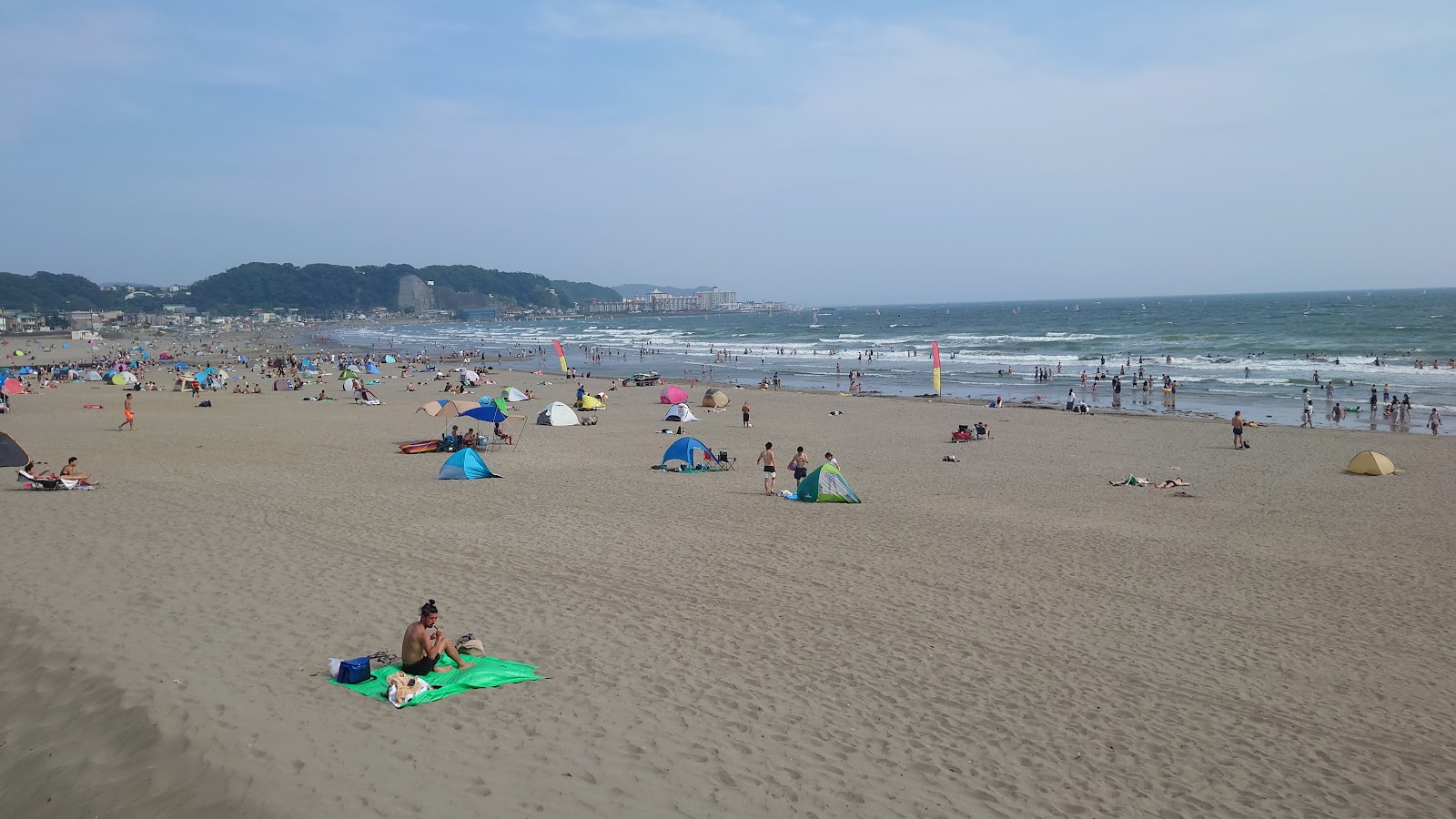
The experience is one for the curious and the history-minded rather than the thrill-seeker. There is nothing to enter or pay for; you simply walk to the far eastern end of Zaimokuza Beach, where an interpretive sign explains the harbour's significance, and look out to the stones offshore. It pairs naturally with a stroll along Zaimokuza itself and a visit to the nearby temples of Komyo-ji, giving a quiet, contemplative counterpoint to Kamakura's grander attractions. Wear shoes you do not mind getting sandy, and take care on wet rocks if you venture toward the water's edge.
Getting there is a pleasant coastal walk. From Wadazuka Station on the Enoden tram line it is about fifteen minutes on foot to the eastern end of the beach, or roughly twenty minutes from Kamakura Station heading toward the sea and then east along the shore. The Enoden is a private line not covered by the Japan Rail Pass, though IC cards work normally. Restrooms are available back along Zaimokuza Beach. For travellers who love history hidden in plain sight, Wakaejima is a small, evocative reward, eight centuries of Kamakura's maritime past resting just beneath the surface of the bay.
A local's tip
Check a tide table before you go - the historic breakwater stones are only visible at low tide, and vanish completely when the water rises.
Best time to visit
Low tide on a calm day, when the ancient stones break the surface
Getting there
Walk to the far eastern end of Zaimokuza Beach, about 15 minutes from Wadazuka Station or 20 minutes from Kamakura Station; the ruins lie just offshore near the Iijima cape.
Good to know
- Restrooms
- Interpretive sign
Plan the whole trip offline
Wakaejima is one of many places in the Real Japan app — with turn-by-turn directions, nearby spots and full offline maps you can use with no signal.