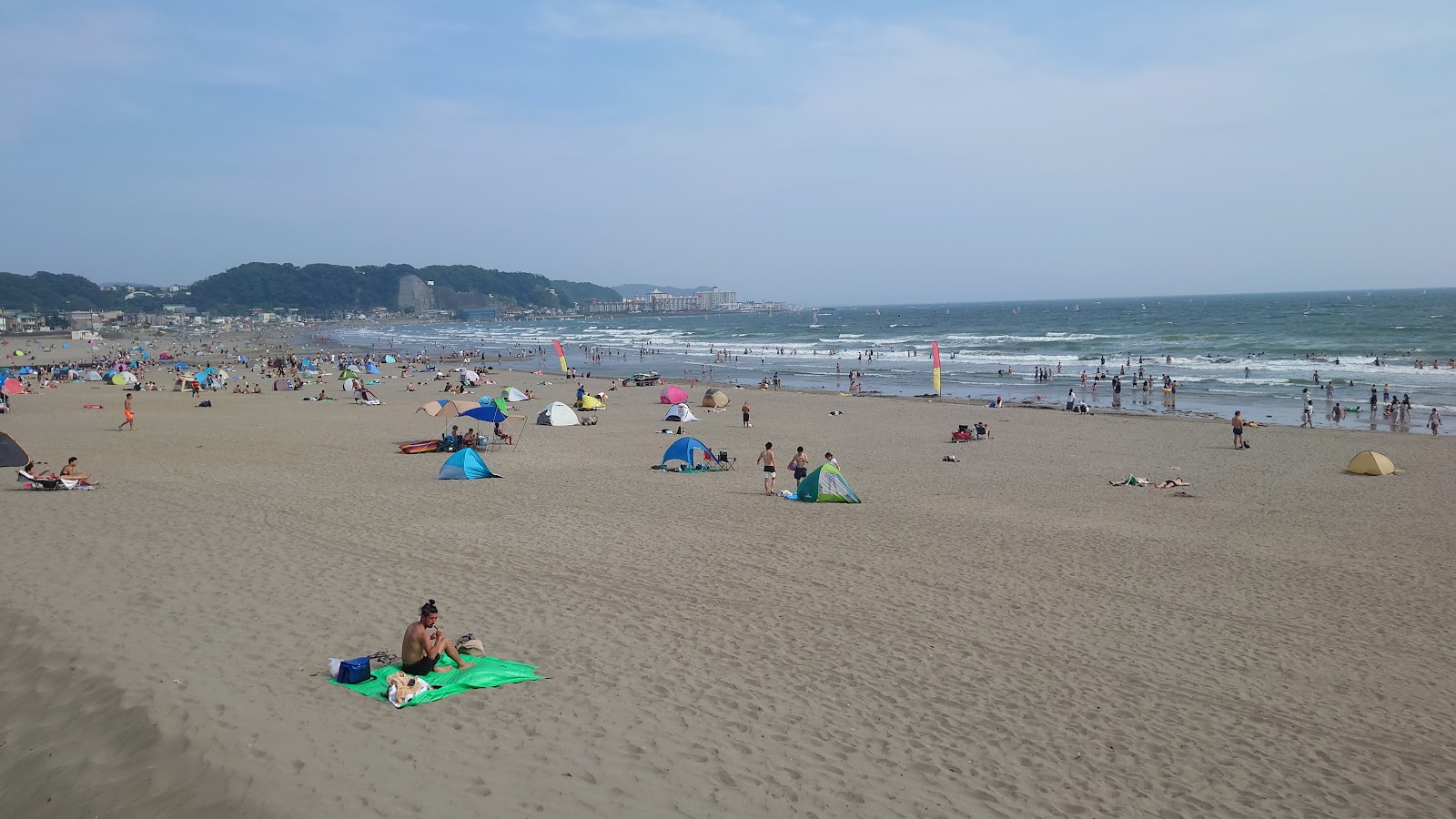
Kamakura's main sandy beach, a wide crescent for summer swimming, sunsets and seaside strolls.
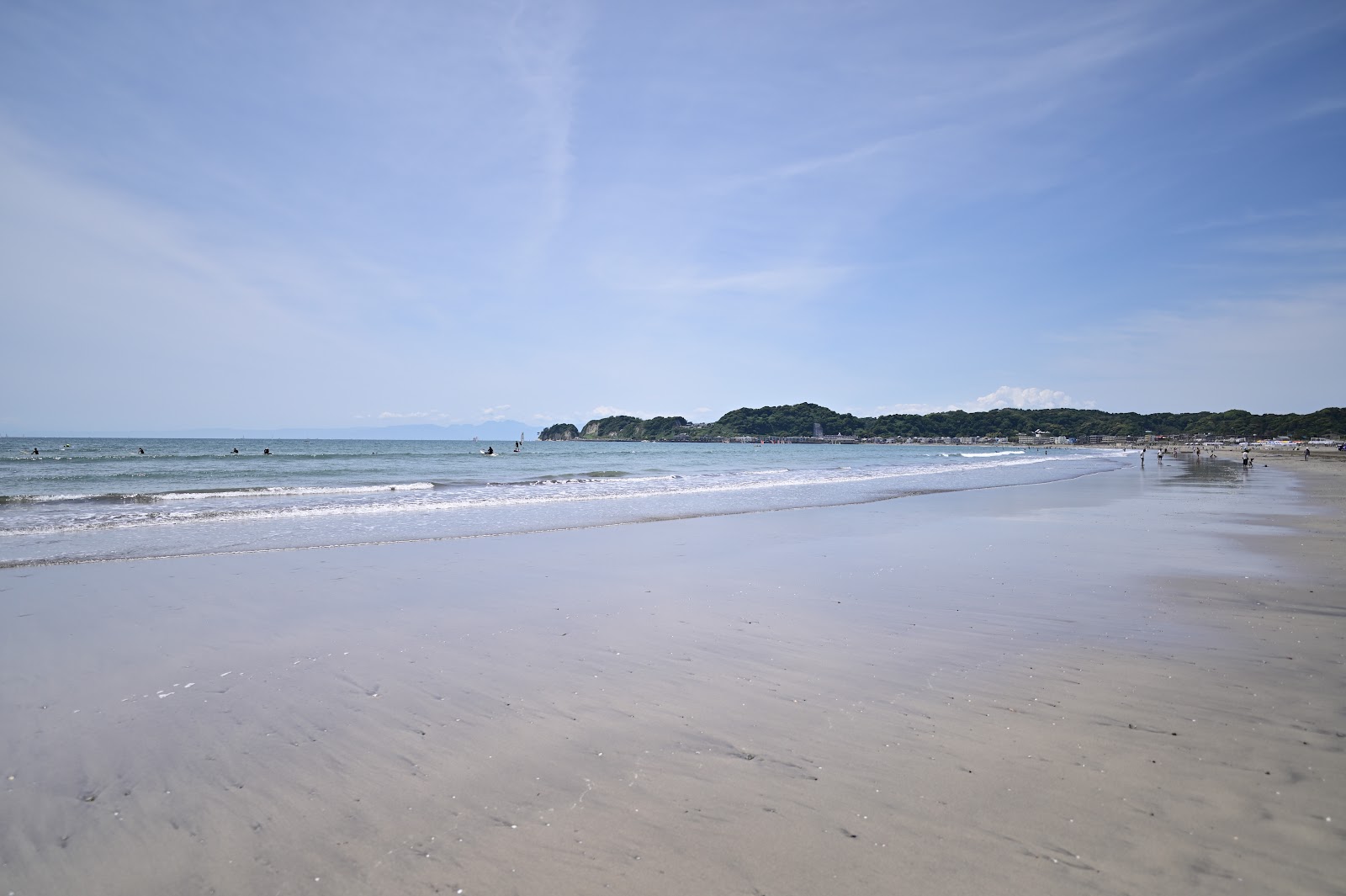
Yuigahama is Kamakura's principal beach, a broad crescent of grey-gold sand curving along Sagami Bay just south of the town centre. In the strict legal sense Yuigahama names the entire 3.2-kilometre shoreline running from the cape of Inamuragasaki in the west to the Iijima rocks of Zaimokuza in the east, but in everyday use it refers to the lively central stretch that has been Kamakura's playground for well over a century. Easy to reach and framed by the green hills behind the town, it is where the city meets the sea.
In summer Yuigahama transforms. From early July to the end of August the beach fills with swimmers and sunbathers, lifeguards patrol the water, and rows of temporary umi-no-ie, the seasonal beach houses, spring up along the sand serving grilled food, shaved ice and cold drinks. The mood is cheerful and distinctly local, a Shonan-coast summer scene that Tokyoites have flocked to since the Meiji era, when sea bathing here first became fashionable. The gentle gradient and generally calm water make it reasonably family friendly, though it can get busy on hot weekends.
Out of season the beach shows a quieter, arguably more beautiful face. In spring, autumn and winter the crowds vanish and Yuigahama becomes a place for long walks, kite-flying, dog-walking and, above all, sunsets. Looking west along the sand you can see the wooded bulk of Inamuragasaki and, on clear evenings, Enoshima and the distant cone of Mount Fuji catching the last light. Surfers and windsurfers are out year-round, and the flat morning sand at low tide is good for beachcombing, where patient visitors find frosted sea glass and small shells.
The beach also has deep historical roots. For centuries this shore served medieval Kamakura as a landing place and, at times, an execution ground, and archaeological finds along the coast have shed light on the city's samurai-era past. Today that history is invisible beneath the sand, but it adds a certain weight to a stroll along a shoreline that has watched Kamakura's fortunes rise and fall.
Visiting is free and simple. Yuigahama Station on the charming Enoden tram line is a six-minute walk from the sand, and it is only about fifteen minutes on foot from Kamakura Station down the main Wakamiya-oji avenue toward the water. Note that the Enoden is a private line not covered by the Japan Rail Pass, though IC cards work fine. Public restrooms are available year-round, with showers and beach facilities added in the summer season. There is little natural shade, so bring sun protection in summer and a windbreak in the cooler months. Whether you come to swim in July, watch the sun go down in November or simply feel sand underfoot between temple visits, Yuigahama is the easygoing seaside heart of Kamakura.
A local's tip
Visit at low tide in the early morning to hunt for sea glass and tiny shells along the shoreline - locals collect the frosted glass for jewellery.
Best time to visit
Summer for swimming and beach houses; off-season for quiet walks and sunsets
Getting there
A 6-minute walk from Yuigahama Station on the Enoden Line, or about 15 minutes on foot south from Kamakura Station down Wakamiya-oji and toward the sea.
Good to know
- Parking
- Showers
- Restrooms
- Beach houses
Plan the whole trip offline
Yuigahama Beach is one of many places in the Real Japan app — with turn-by-turn directions, nearby spots and full offline maps you can use with no signal.