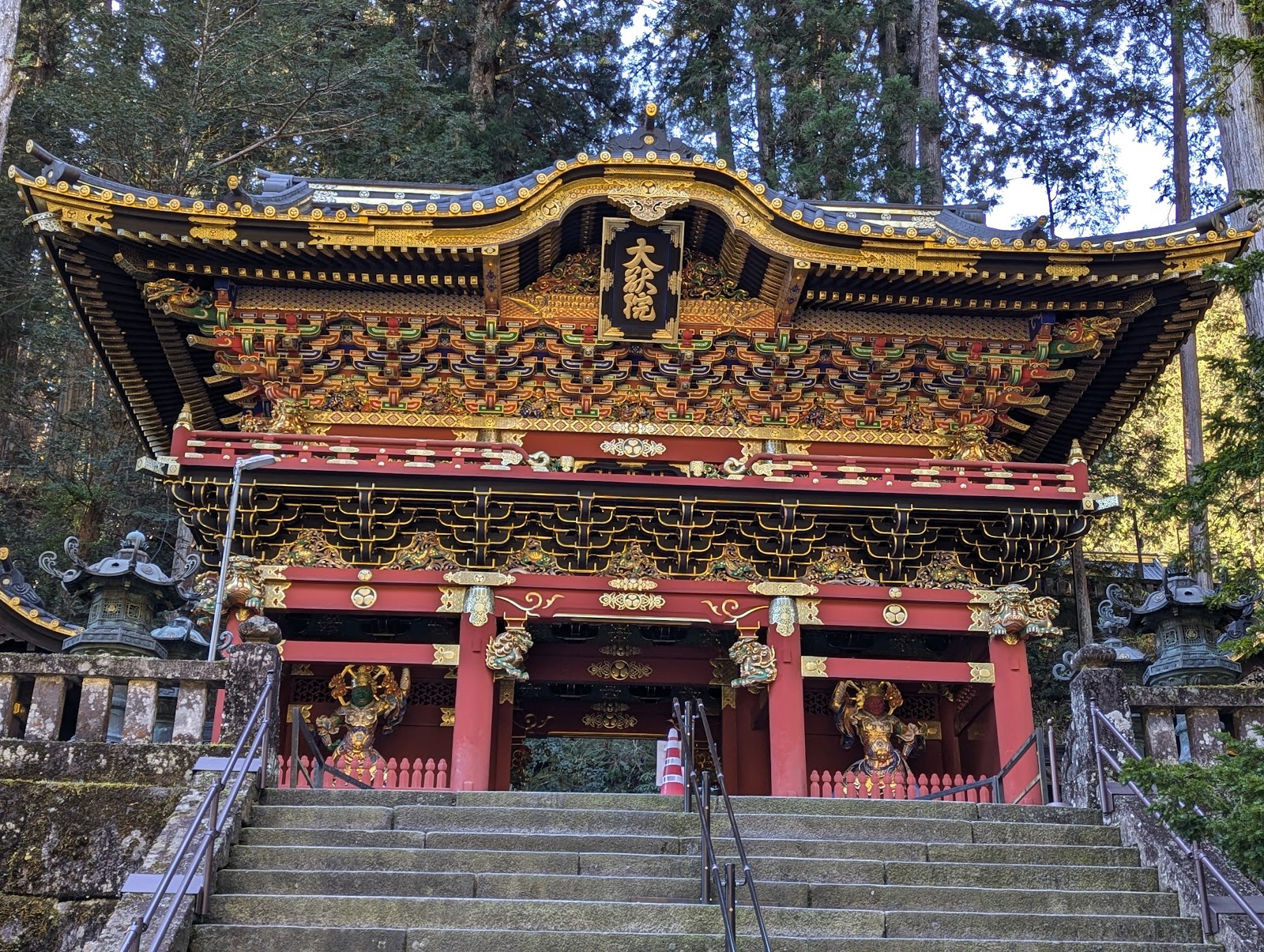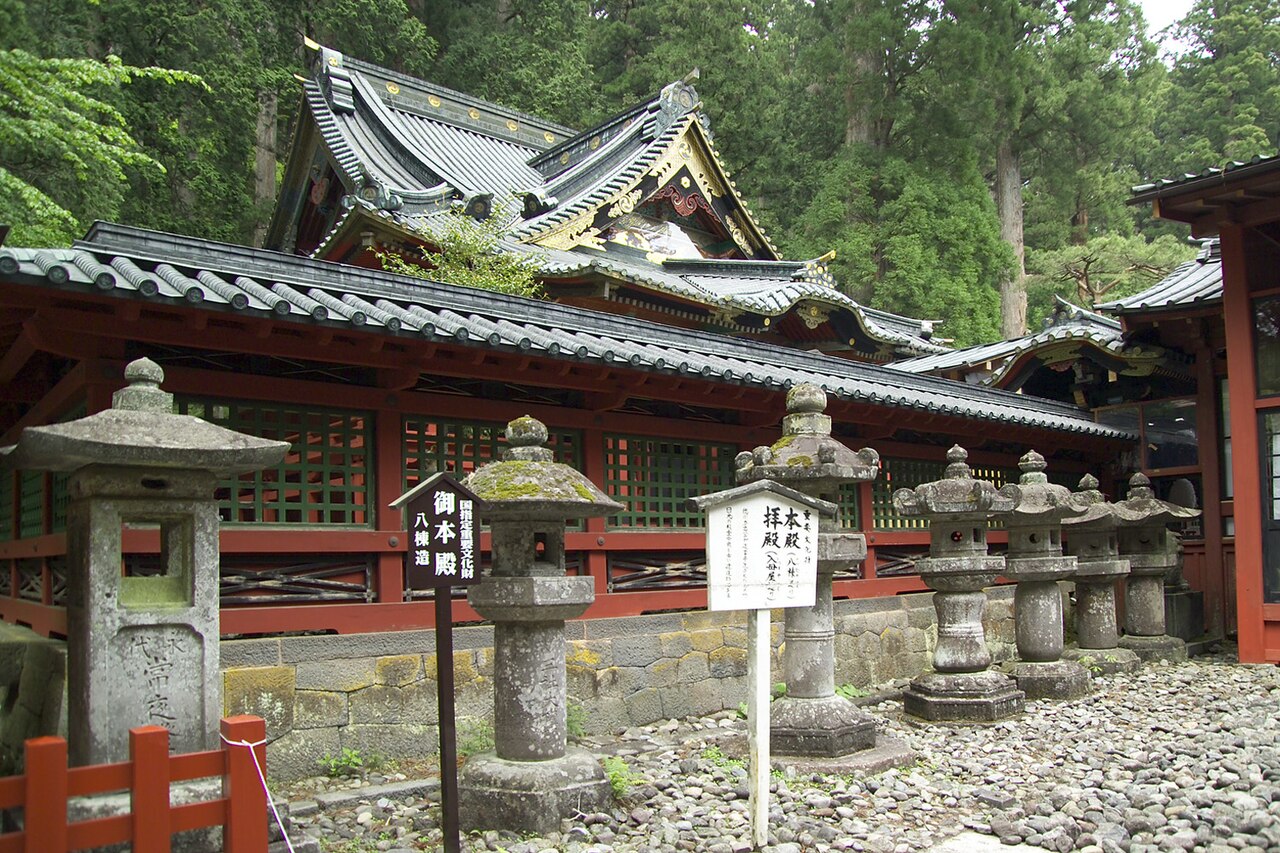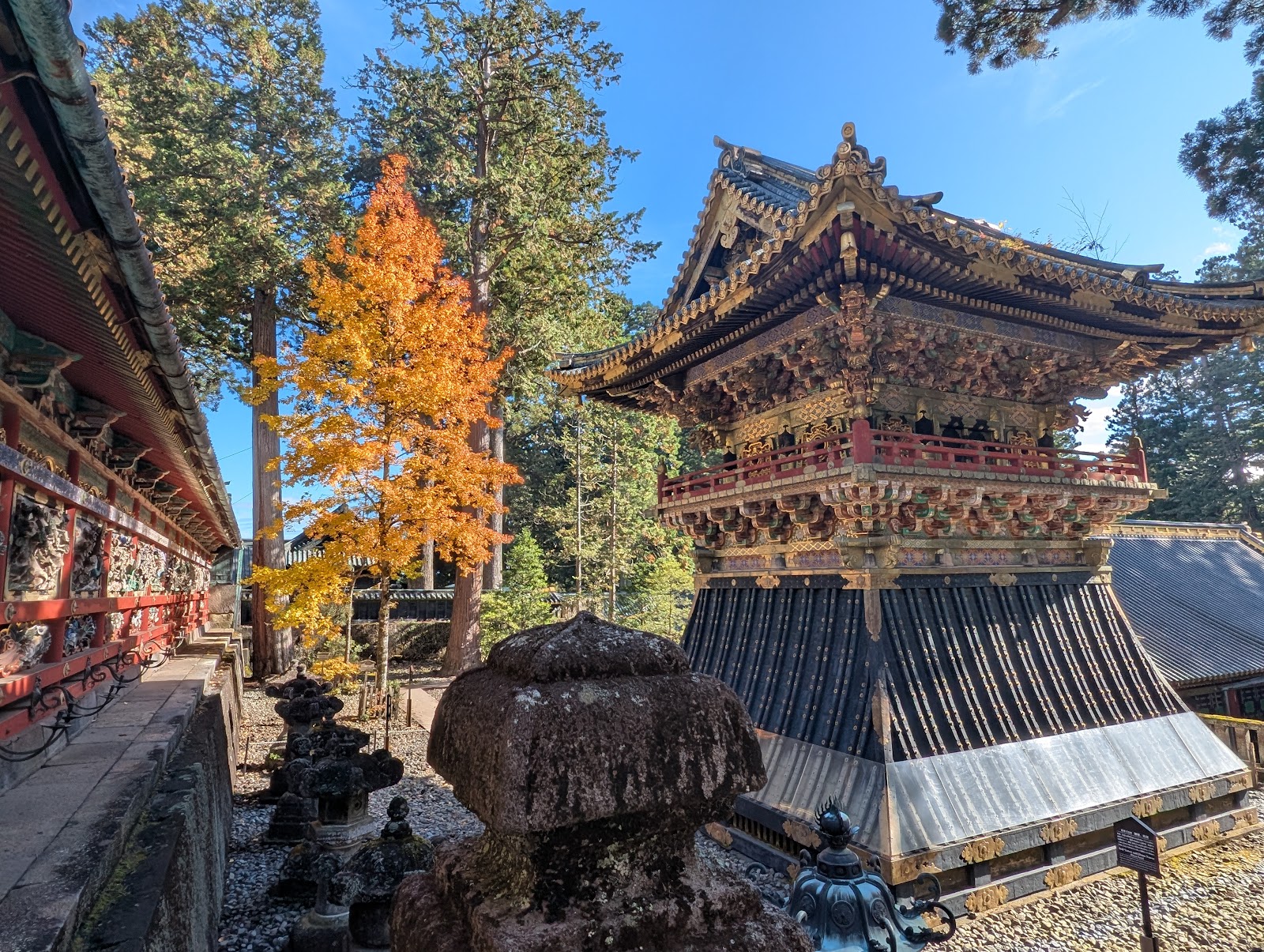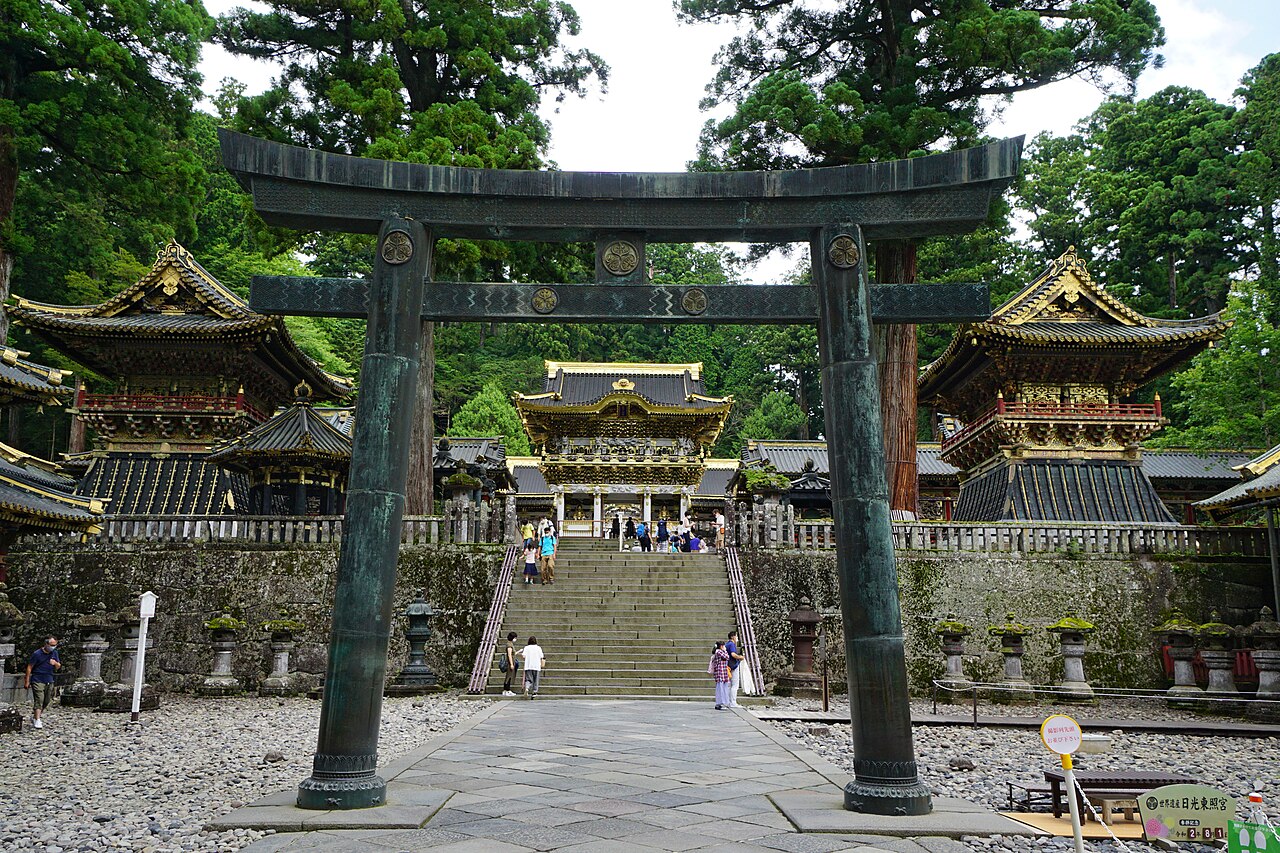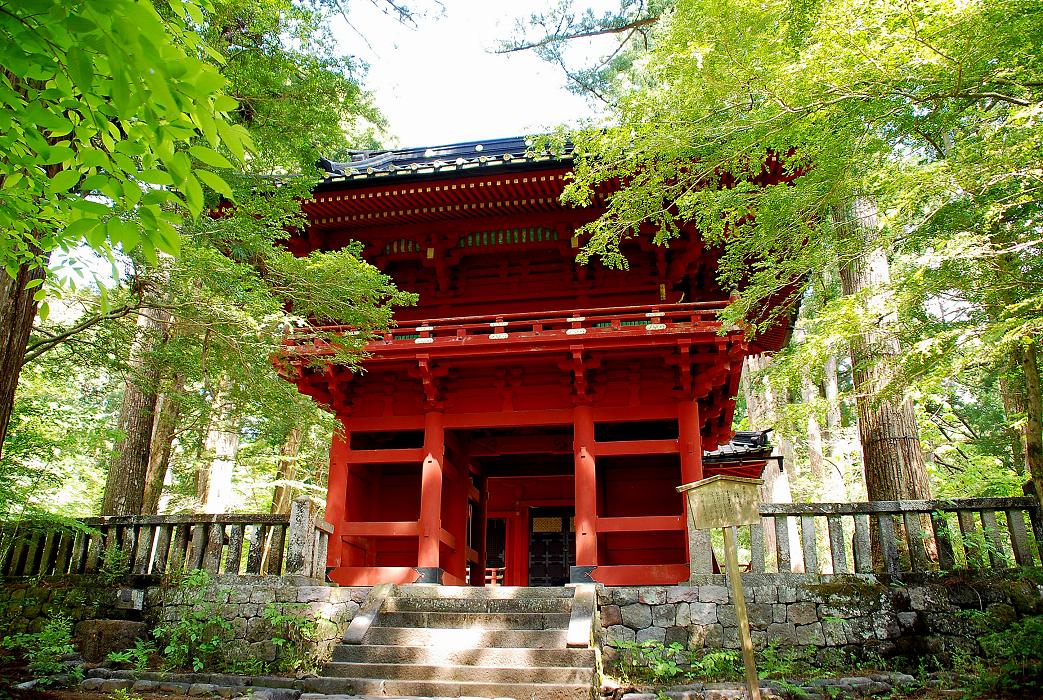
A moss-cloaked forest shrine reached by an atmospheric stone path, famed for its luck-testing torii and sacred spring.
Takinoo Shrine is one of Nikko's most atmospheric and least-visited sacred places, a moss-covered auxiliary shrine of Futarasan hidden in the forest above the main World Heritage complex. Reaching it is half the pleasure: a centuries-old stone-paved pilgrim path, the Takinoo-michi, winds uphill from behind Rinno-ji through dense cedar and cypress, passing weathered lanterns, small waterfalls and shrine ruins along the way. The walk of twenty to thirty minutes, dappled in green light and often deserted, feels like stepping back into old Japan.
Founded, according to tradition, in the year 820 by the monk Kobo Daishi (Kukai), Takinoo enshrines the goddess Tagorihime-no-Mikoto and has long been revered as a place of prayer for love, marriage and safe childbirth. Its buildings — a worship hall, main hall and gates — are modest and beautifully aged, wrapped in moss and set against a backdrop of forested slopes and a sacred spring whose clear water pilgrims still drink for good fortune.
The shrine is famous for several small rituals that make a visit memorable. At the stone torii near the entrance, visitors take part in 'un-dameshi', a test of luck: you throw three small pebbles and try to send one through the round hole cut in the gate's upper beam — success is said to grant your wish. Within the grounds stands the En-musubi-no-sasa, sacred bamboo grass tied with prayers for finding a partner, and the Sanko-no-ishi, a triad of stones linked to Kobo Daishi's founding vision. A short walk beyond leads to the Shiraito Falls, a slender ribbon of water for which the shrine is partly named.
Because it lies off the main tourist circuit and charges no admission, Takinoo offers solitude and a genuinely contemplative mood that the crowded Toshogu cannot. It rewards travellers willing to make the modest climb, and pairs naturally with the nearby Kaisando, the hall honouring Shodo Shonin, and the Gohotendo. Autumn cloaks the path in red and gold, while summer keeps it cool and shaded; even in light rain the wet stones and glistening moss are beautiful.
Practically, the route is uphill on uneven historic paving and can be slippery, so sturdy shoes are advisable and the walk is best described as moderate rather than easy; there are few facilities once you leave the main complex, so carry water. Allow around an hour including the walk each way.
Nikko sits about two hours north of Tokyo. Japan Rail Pass holders travel via the shinkansen to Utsunomiya and the JR Nikko Line, while the Tobu line from Asakusa is the direct option. From the shrine district — reached by the World Heritage sightseeing bus — follow the signposted Takinoo path on foot; there is no vehicle access to the shrine itself.
A local's tip
Try the 'un-dameshi' luck test at the sacred torii near the entrance — toss a small stone through the round hole in the gate's top beam, and if it passes through your wish is said to come true.
Best time to visit
Morning; autumn
Getting there
From the main shrine complex, follow the stone-paved Takinoo path past Rinno-ji's Kaisando for about 20-30 minutes on foot uphill through the forest. There is no direct bus.
Good to know
- Restrooms
Plan the whole trip offline
Takinoo Shrine is one of many places in the Real Japan app — with turn-by-turn directions, nearby spots and full offline maps you can use with no signal.