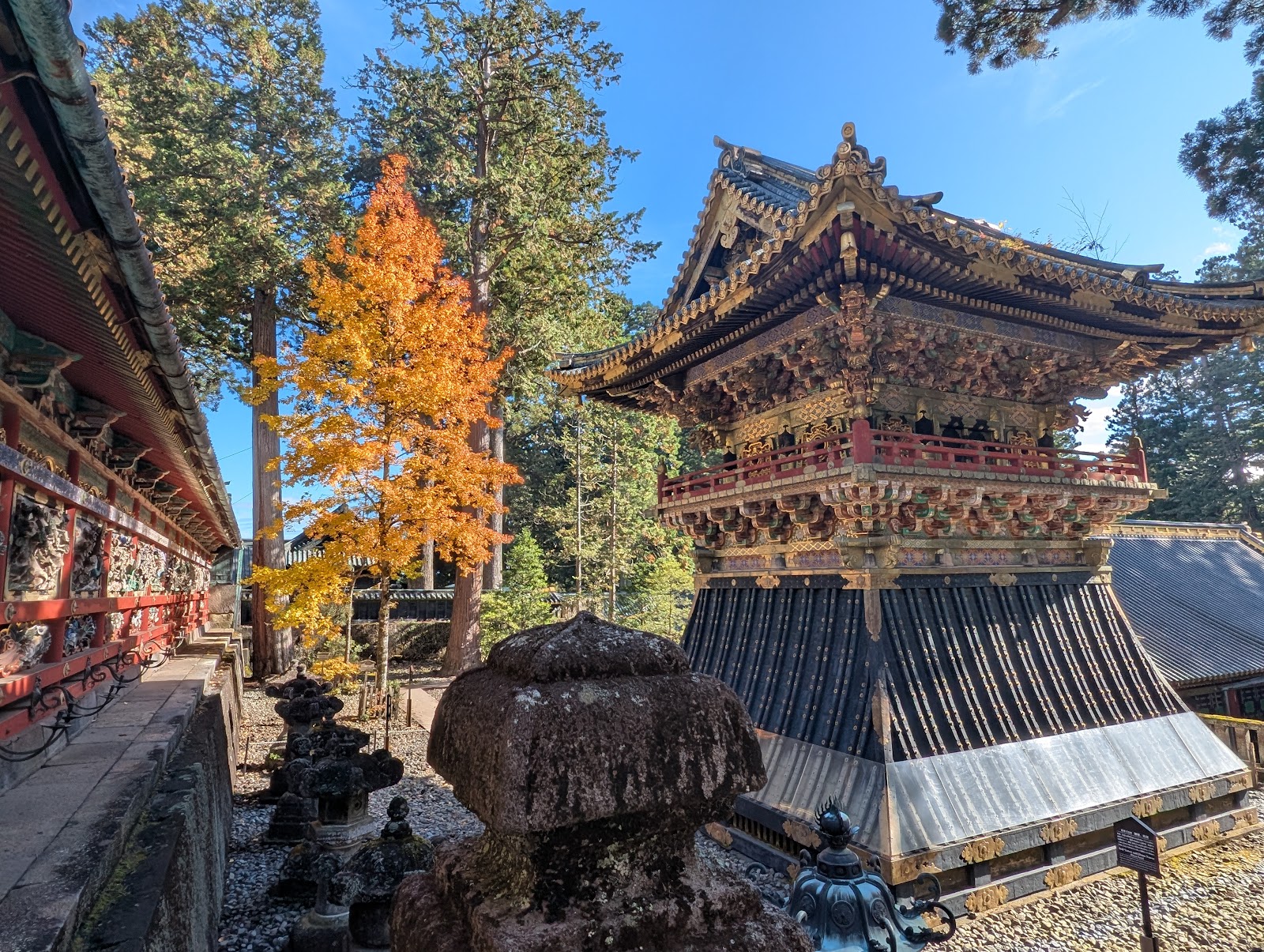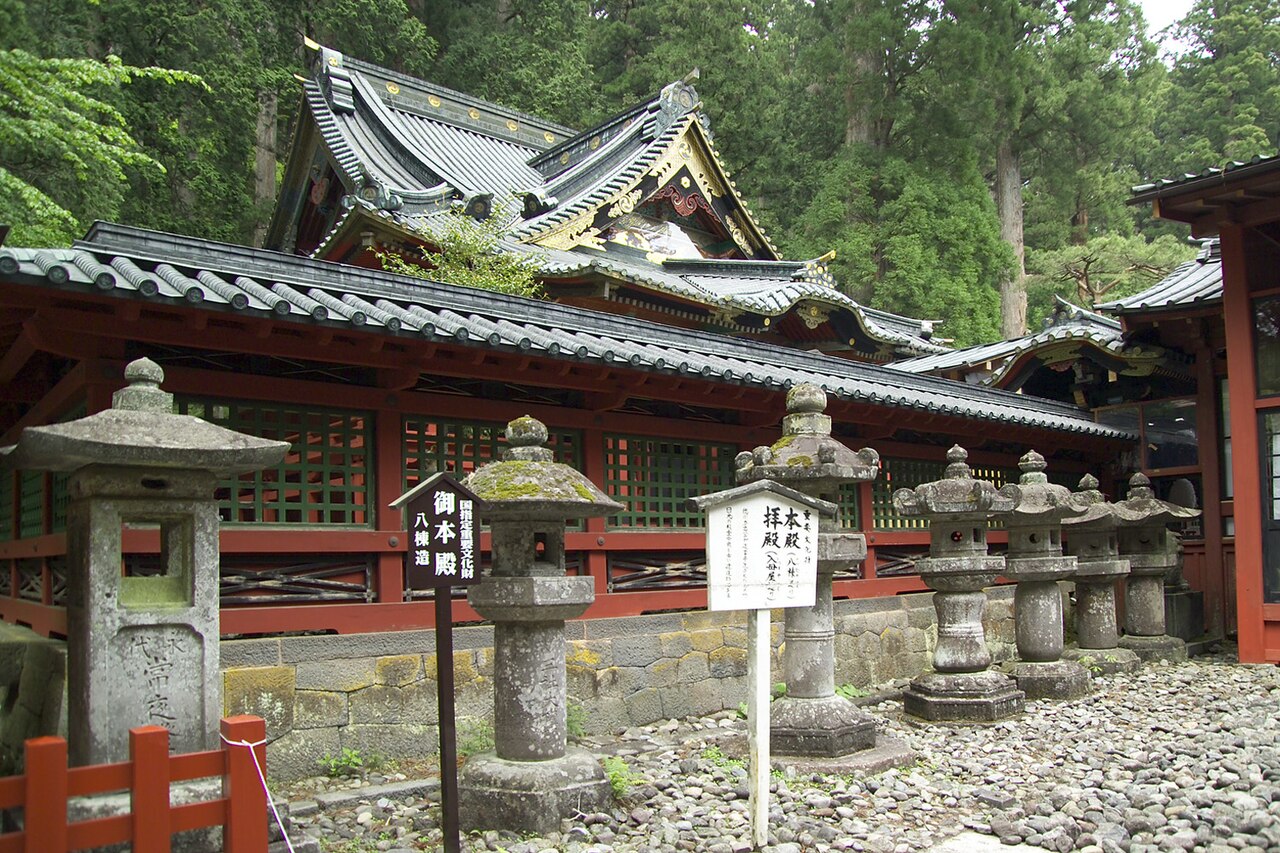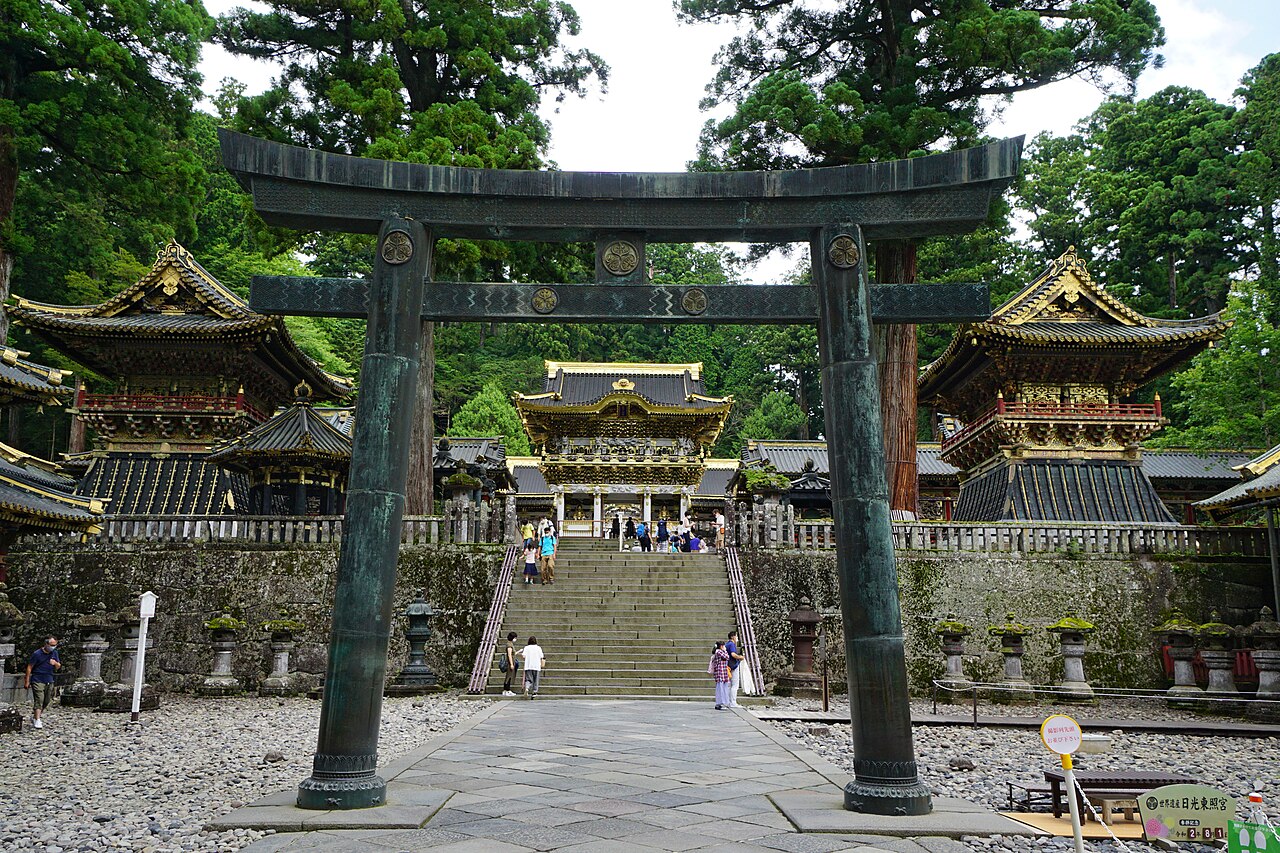
Lavishly carved mausoleum of shogun Tokugawa Ieyasu, home to the Yomeimon Gate, sleeping cat and three wise monkeys.
Nikko Toshogu is the resplendent mausoleum shrine of Tokugawa Ieyasu, the warlord who unified Japan and founded the shogunate that ruled for over 250 years. Completed in 1617 and dramatically enlarged by his grandson Iemitsu in the 1630s, it is the single most ornate religious complex in Japan and the centrepiece of the UNESCO World Heritage 'Shrines and Temples of Nikko', inscribed in 1999.
Where most Shinto shrines prize restraint and unpainted cypress, Toshogu overwhelms with colour and detail. More than five thousand carvings cover its gates, walls and eaves, gilded and lacquered in a deliberate display of Tokugawa wealth and power set deep in a forest of towering cryptomeria cedars. The undisputed highlight is the Yomeimon Gate, so densely decorated with dragons, sages, children and mythical beasts that it earned the nickname 'Higurashi-no-mon' — the gate at which you could gaze until sunset. Nearby, two carvings have become national icons: the three wise monkeys (see no evil, hear no evil, speak no evil) adorning the sacred stable, and the tiny Sleeping Cat (Nemuri-neko) attributed to the legendary sculptor Hidari Jingoro, guarding the path to Ieyasu's tomb.
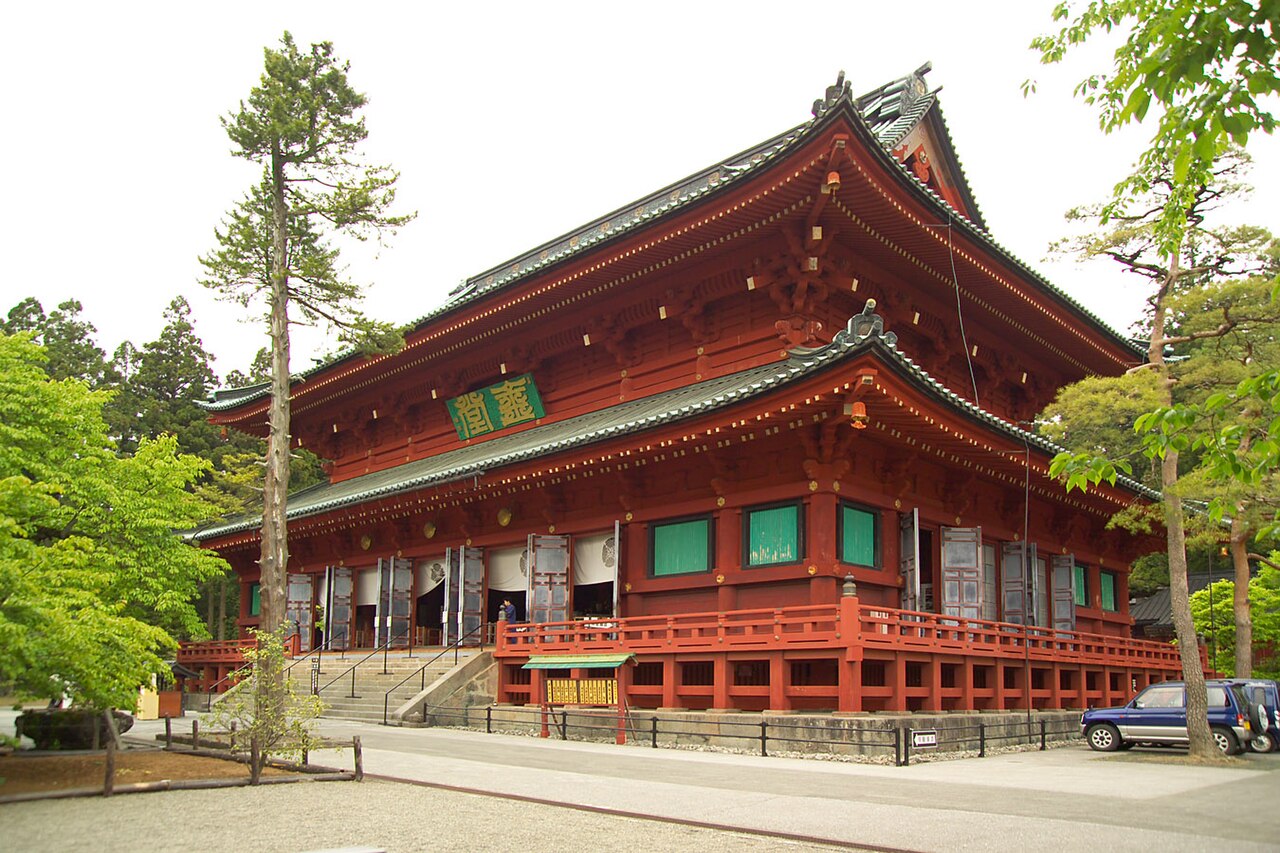
Beyond the Sleeping Cat, a stone stairway of more than two hundred steps climbs through the cedars to the Okusha, the actual burial site of Ieyasu, marked by a simple bronze urn — a striking contrast to the riot of decoration below. Other treasures include a five-story pagoda at the entrance, the Honjido hall with its ceiling painting of a roaring dragon (a monk rings a stick beneath it so visitors can hear the resonant 'cry'), and the Sacred Storehouses decorated with famous carvings of imagined elephants.
The experience is one of slow discovery: each gate and hall rewards a closer look, and English signage and audio guidance help decode the symbolism. Paths are largely paved but involve steady climbing and many steps, so comfortable shoes matter and the Okusha climb can be skipped by those with limited mobility. Allow at least two hours, more if you also visit the neighbouring Rinnoji Temple and Futarasan Shrine on the same World Heritage ticket route.
Spring brings cherry blossom to the approach and autumn sets the surrounding maples ablaze in mid-November, both spectacular against the vermilion and gold. Early morning is by far the best time, before day-trippers arrive from Tokyo and while mist still hangs among the cedars.
Getting there is straightforward: Nikko sits about two hours north of Tokyo. Japan Rail Pass holders can ride the shinkansen to Utsunomiya and change to the JR Nikko Line, while the Tobu Railway from Asakusa is the fastest direct route. From either Nikko station, the World Heritage sightseeing bus drops you a few minutes' walk from the shrine gate.
A local's tip
Arrive right at the 09:00 opening to photograph the Yomeimon Gate before the tour groups fill the courtyard, and look up inside the Honjido hall to hear the 'crying dragon' ring.
Best time to visit
Early morning; late October to mid-November for autumn colour
Getting there
From Tobu Nikko or JR Nikko Station take the World Heritage sightseeing bus to Omotesando or Shinkyo (about 10 minutes), or walk roughly 35 minutes uphill through the town along the Daiya River.
Good to know
- Wi-Fi
- Gift Shop
- Restrooms
Plan the whole trip offline
Nikko Toshogu Shrine is one of many places in the Real Japan app — with turn-by-turn directions, nearby spots and full offline maps you can use with no signal.