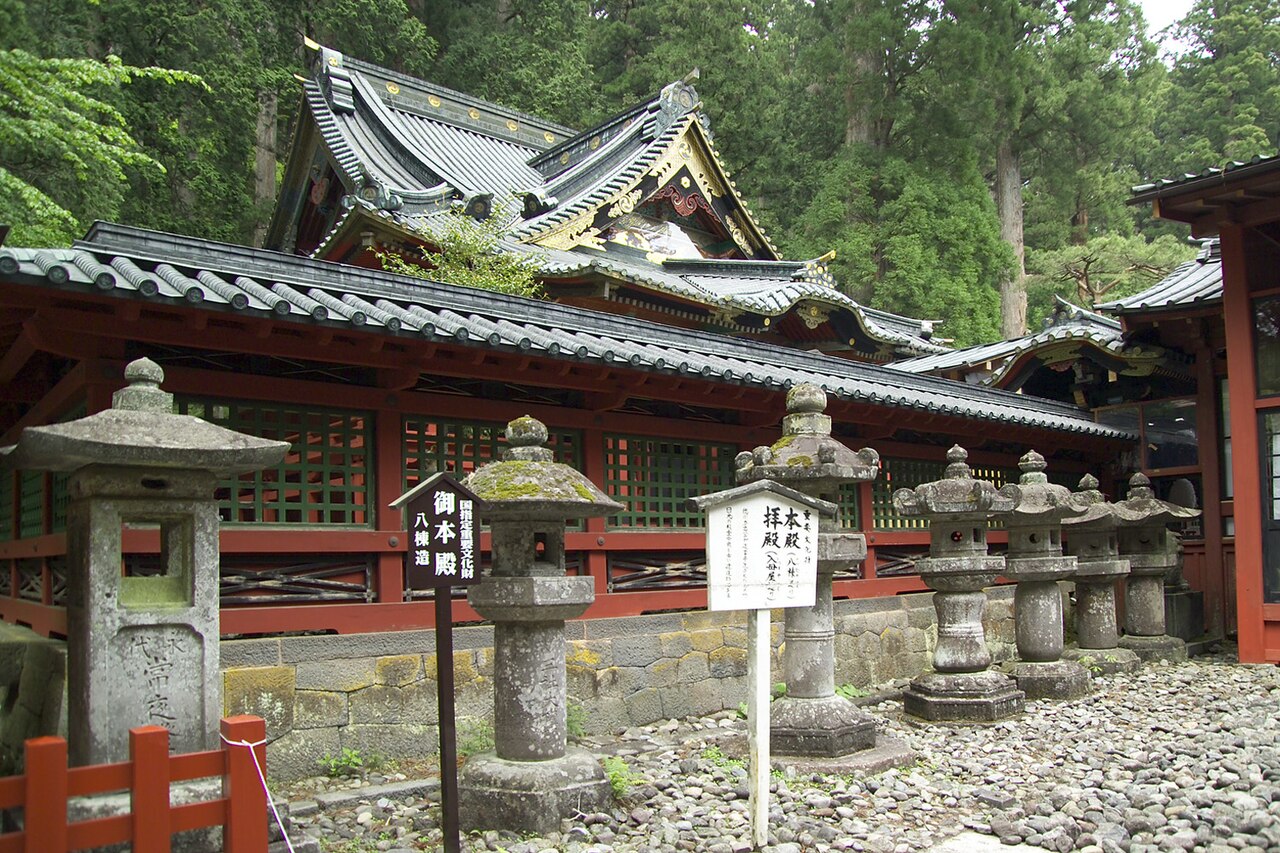
The ancient Shinto shrine devoted to Nikko's sacred mountains, older and more serene than its glittering neighbours.
Nikko Futarasan Shrine is the spiritual foundation of Nikko, a Shinto shrine dedicated to the three deities of the region's holy mountains — Mount Nantai, Mount Nyoho and Mount Taro — and to the natural forces that have drawn pilgrims here for more than 1,200 years. Founded by the monk Shodo Shonin in 782, it predates the flamboyant Toshogu by many centuries and offers a gentler, more traditionally Japanese atmosphere among the towering cedars.
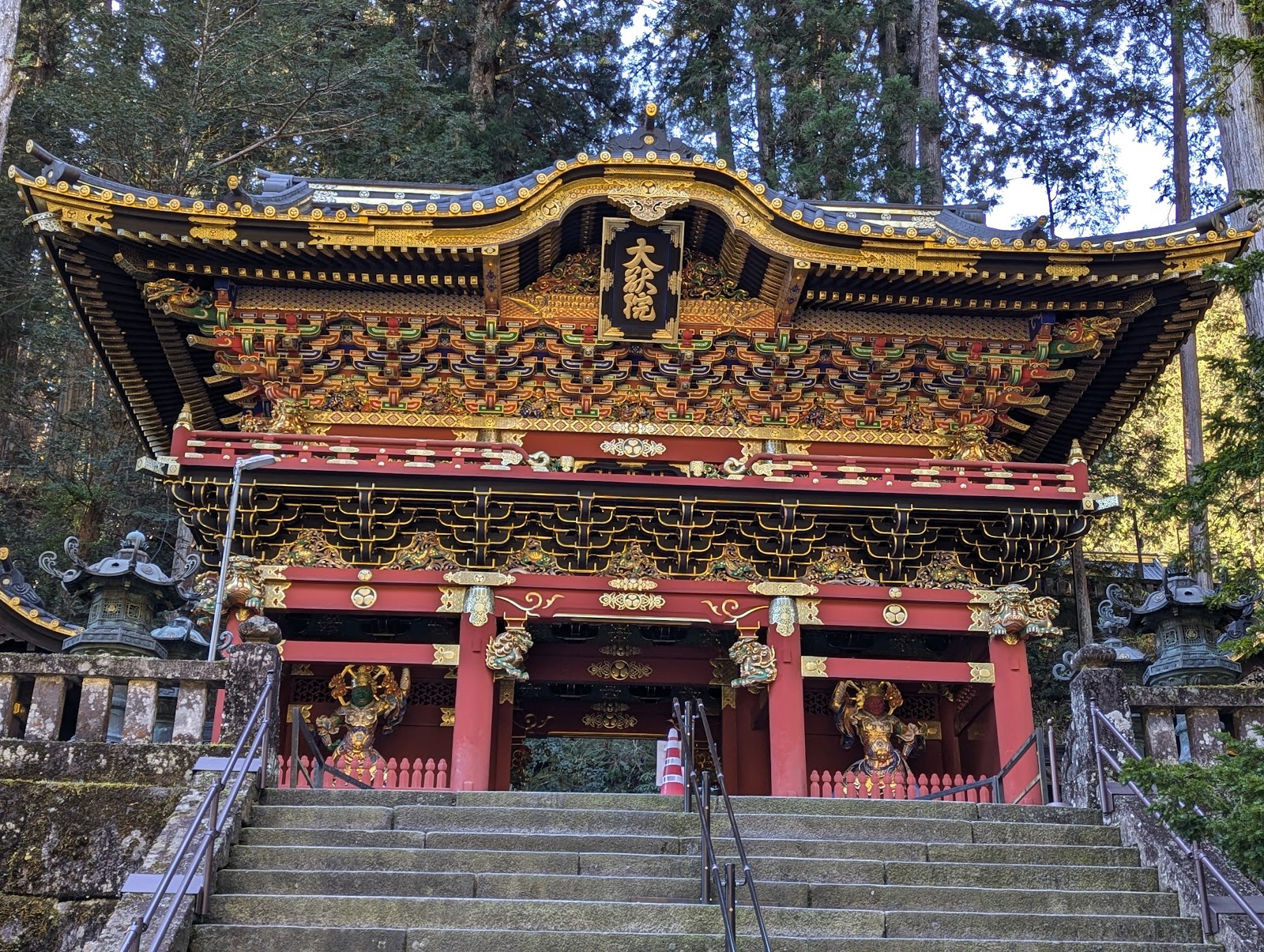
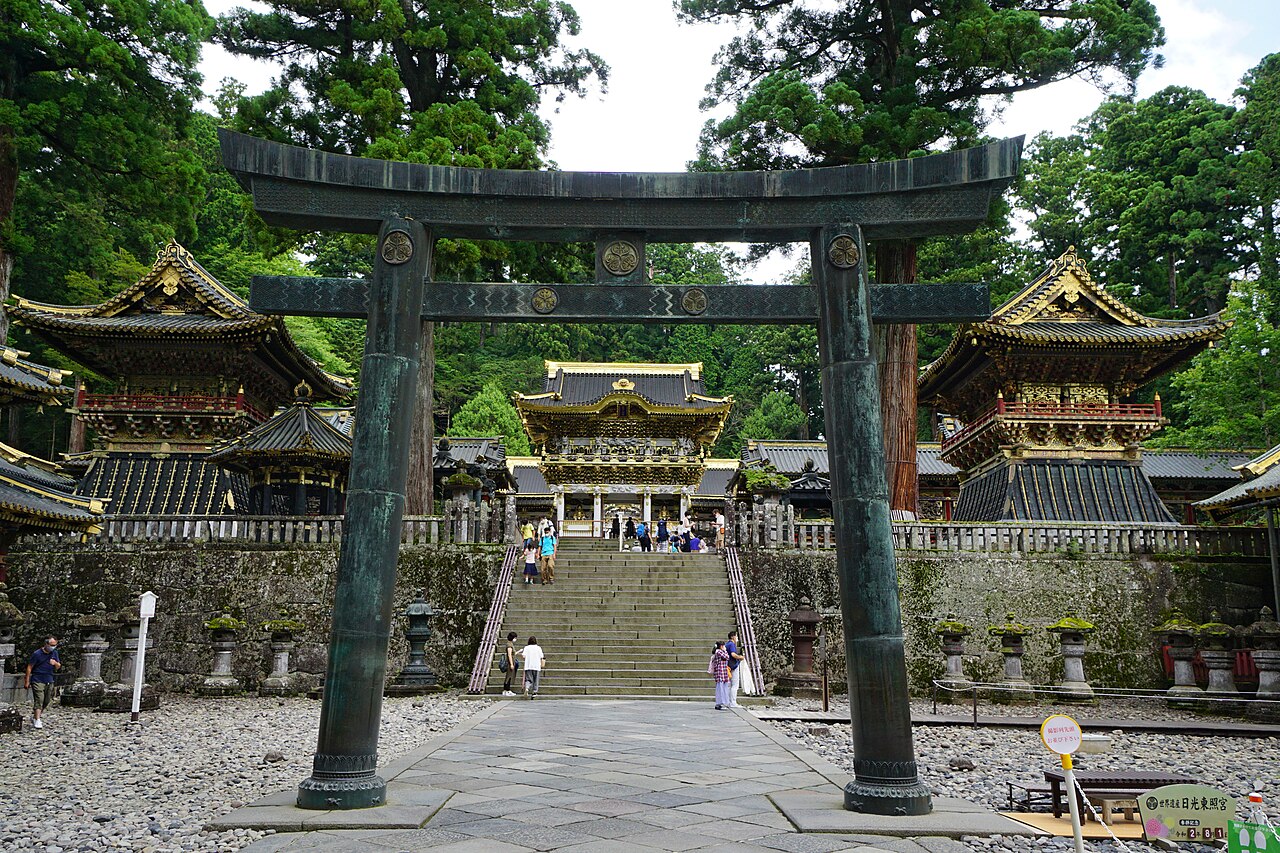
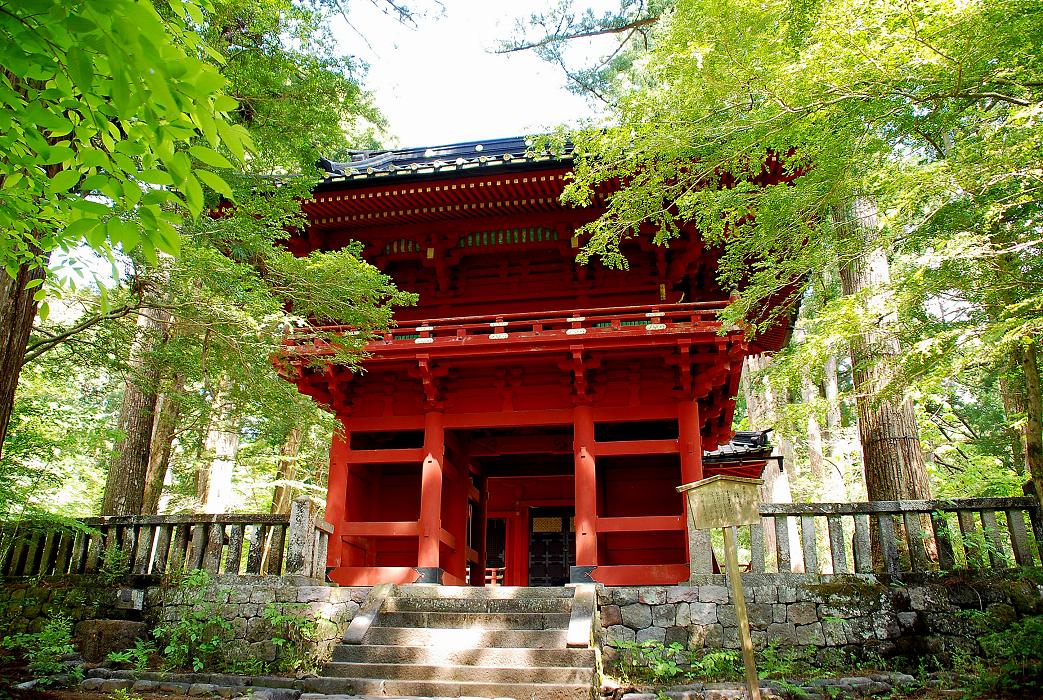
The shrine actually spans an enormous area. What most visitors see is the main shrine (honsha) beside the Toshogu complex, but Futarasan also encompasses the Chugushi 'middle shrine' at Lake Chuzenji and the Okumiya 'inner shrine' on the 2,486-metre summit of Mount Nantai itself. Together they trace the vertical geography of mountain worship, from the town below to the sacred peak above. The main shrine's vermilion buildings, copper torii and elegant gates are designated Important Cultural Properties, and its Honden dates to 1619.
The honsha grounds reward slow wandering. A short paid inner garden holds a sacred spring, ancient trees and the famous 'bake-doro' or goblin lantern — a bronze lantern whose eerie flickering once so unnerved night guards that they drew their swords on it, leaving cuts still visible in the metal. There is also a much-photographed pair of joined cedar trees revered as a symbol of happy marriage and matchmaking, for which Futarasan is especially popular with couples praying for good relationships and easy childbirth.
Because it sits at the western, uphill edge of the World Heritage precinct, Futarasan is noticeably quieter than Toshogu, and stepping from the gilded crowds into its shaded avenues is a welcome change of pace. The connecting path known as the Kaminarido leads onward toward Taiyuinbyo, making it easy to string the sites together. Most of the grounds are free to enter, with only the small inner garden charging admission.
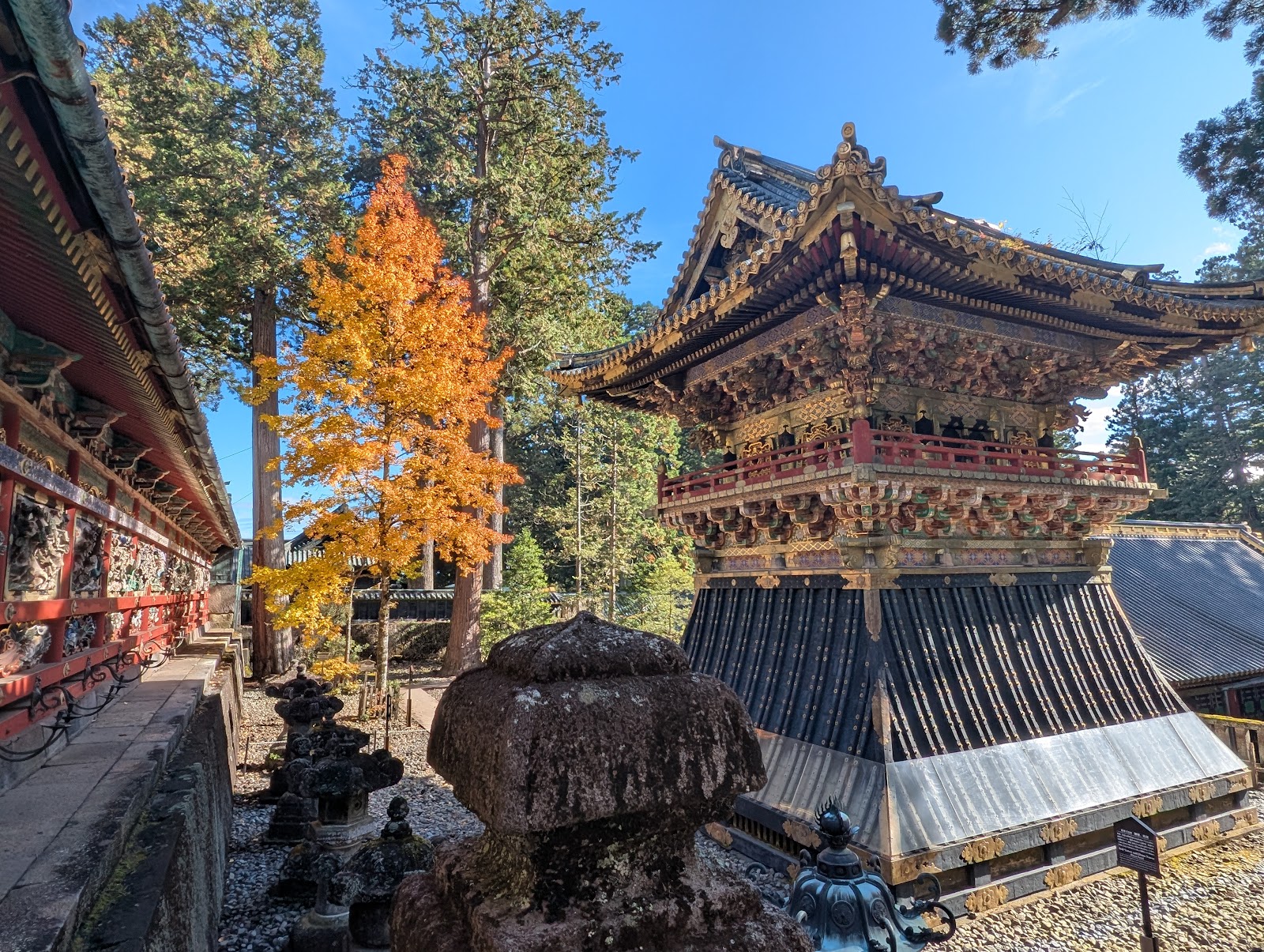
The shrine is a place of living ritual: you will often see visitors buying charms for love and family, and seasonal festivals fill the grounds with portable shrines and archery displays. Spring brings cherry blossom and fresh green, while the maples flame red in mid-November, framing the vermilion buildings beautifully.
Paths are mostly level and paved, with some gentle slopes and steps. Allow about 45 minutes for the main shrine, or far longer if you plan to continue to the Chuzenji shrines by the mountain. Nikko is roughly two hours from Tokyo; JR Pass holders reach it via Utsunomiya and the JR Nikko Line, others by the direct Tobu line, with the World Heritage bus serving the Nishisando stop closest to the shrine.
A local's tip
Seek out the 'bake-doro', a bronze lantern said to have been slashed by nervous samurai who mistook its flickering shape for a ghost — the sword marks are still visible.
Best time to visit
Morning; autumn
Getting there
Walk about five minutes uphill beyond Toshogu, or take the World Heritage sightseeing bus to the Nishisando stop. The shrine sits at the quieter western end of the complex.
Good to know
- Gift Shop
- Restrooms
Plan the whole trip offline
Nikko Futarasan Shrine is one of many places in the Real Japan app — with turn-by-turn directions, nearby spots and full offline maps you can use with no signal.